









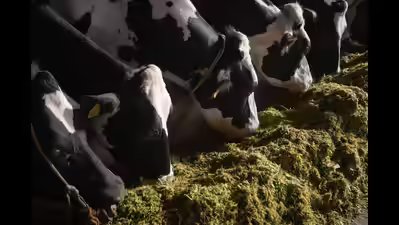
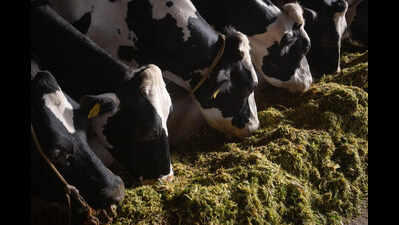
Ludhiana: Commercial dairy farms across Punjab are increasingly replacing conventional green fodder with silage-based feeding systems to ensure a steady, year-round supply of animal feed. While the transition is reshaping dairy management, veterinary experts emphasise that the nutritional and economic benefits of silage can only be fully realised if it is prepared using strict, scientific methods.The shift has insulated dairy operations from seasonal shortages and fluctuating market prices of fresh green fodder, as correctly prepared silage retains its nutritional value over extended storage periods. The success among commercial enterprises has prompted smaller backyard dairy farmers to adopt the practice. Furthermore, Punjab has emerged as a major commercial hub for the feed, exporting surplus silage to states like Maharashtra and Karnataka.Daljit Singh Sadarpura, president of the Progressive Dairy Farmers Association (PDFA), said, “Today, almost all commercial dairy farms are making and using silage in Punjab. It has become a big change in itself. Seeing its success, even smaller and backyard dairy farmers have started adopting the practice.” He added, “Demand for silage is increasing not only within Punjab but also in states such as Maharashtra and Karnataka. It has emerged as a new business opportunity and source of income for many farmers and entrepreneurs.”Maize remains the preferred crop for this industry, with 60% to 70% of Punjab’s maize acreage projected for silage production as adoption rises. The standing crop is harvested specifically while it is still unripe to ensure optimal fermentation quality.The science of fermentation and milk qualityBecause silage relies on anaerobic fermentation, maintaining completely airtight storage conditions is critical. From a biological standpoint, a uniform silage diet stabilises the rumen—the primary digestive organ in cattle and buffaloes—thereby boosting digestion efficiency and overall milk productivity. However, poor preparation or improper storage regularly degrades feed quality and triggers spoilage.Addressing concerns that silage taints milk with an unpleasant odor, experts clarify that such issues stem purely from substandard farm hygiene and poor management rather than the feed itself. Storing the fermented crop too close to the milking parlour allows ambient odors to seep into the milk.Dr JS Hundal, head of the department of animal nutrition at Gadvasu, said, “Silage is a globally accepted feeding practice and is widely used in advanced dairy-producing countries. It can effectively replace green fodder because it provides a consistent and nutritious feed source for dairy animals.”Regarding quality control, Dr Hundal explained, “The challenge is not silage itself but the way it is made. Poor fermentation, improper storage or failure to follow recommended practices can affect feed quality.” To protect the output, he advised, “Silage should be fed immediately after animals are milked, and it should be kept away from the milking area. These measures can effectively prevent silage-related odours and maintain milk quality.”