









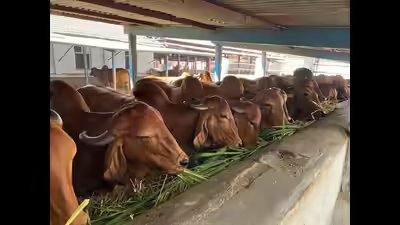
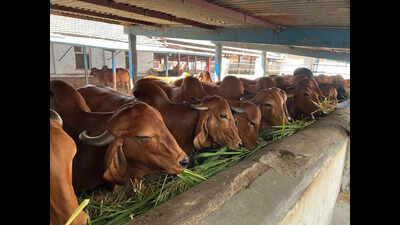
Ludhiana: As soaring temperatures trigger severe heat stress in dairy livestock—leading to lower feed intake and reduced milk production—experts from Guru Angad Dev Veterinary and Animal Sciences University have issued a comprehensive management advisory. The university underlines that immediate interventions in shelter design, water application, feeding practices, and biosecurity are vital to protect animals from the detrimental effects of extreme thermal stress.Dr Yashpal Singh, head of the department of livestock production management, emphasised the need for well-ventilated sheds that offer adequate standing and resting space. To cool the housing, open ends of sheds should be covered with thatched bamboo, jute, or curtains, while roofs can be thatched, or painted white on top and dark underneath. Planting shady trees along the southern boundary walls provides additional cooling. Furthermore, cooling devices like fans, wet curtains, air coolers, or air conditioners should be deployed during peak heat.Water management remains the most critical factor during extreme weather. Dr Singh advised splashing, showering, sprinkling, or fogging water on the animals and inside the sheds three to four times during the hottest hours of the day, alongside allowing animals to wallow in clean water ponds. For breeding management, heat detection must be conducted two to three times a day during the early morning or late evening hours when the animals are relaxed and stress-free.Dietary adjustments are also essential to mitigate losses. Dr Jaspal Singh Hundal, head of the department of animal nutrition, advised farmers to maximise the use of highly digestible, quality fodders—such as maize silage, berseem hay, and fresh green fodder—while strictly limiting poor-quality straw in the daily ration.Health and farm security form the final line of defence. Dr Paramjit Kaur, professor-cum-head of veterinary parasitology, warned that ecto-parasite infestations rise sharply during summer. She recommended using suitable acaricidal sprays on the animals and thoroughly treating shed corners and crevices, alongside adhering strictly to routine deworming and vaccination schedules. Finally, the university experts emphasised strict biosecurity, advising farmers to bar outsiders from the farm and use disinfectant dust at all entry points.