








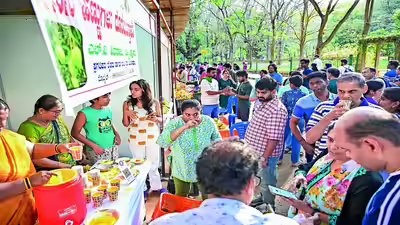
Bengaluru’s mango frenzy has officially begun, with crowds flocking to the city’s annual farmer’s market in search of fresh, chemical-free mangoes at competitive prices. The excitement comes amid hopes that export disruptions this season could lead to a dip in prices for several popular varieties.
Though I usually buy mangoes from my neighbourhood store, purchasing them at the mela makes me feel more connected to the farmers. It also gives me confidence that the fruits are naturally ripened and safe for my children
Akash, customer
The prices are similar everywhere, the mela is a lovely reason to bring the entire family to Cubbon Park and explore the many mango varieties on display
Lakshmi, customer
Shop and EatWhere: Mango lovers from across the city are heading to Cubbon Park for the Bengaluru Mango and Jackfruit Mela 2026, being held near the Band Stand and Bal Bhavan gate from May 8 to 17. The mela is open daily from 6 am to 7 pm.What to buy: The 10-day mela features nearly 50 stalls offering fresh, chemical-free mangoes sourced directly from farmers. Visitors can shop for popular Karnataka varieties such as Badami (Alphonso), Raspuri, Mallika, Sendhura, Imam Pasand and more. A few stalls are also selling jackfruit varieties including Rudrakshi and Tubagere.Must try: Apart from fresh fruit, several stalls are serving mango and jackfruit-based treats such as mango ice cream, jackfruit ice cream, mango juice, jamun shots, amla shots, jackfruit papad and snacks like mango bhel.Will the decline in exports affect mango prices?Bengaluru may witness an unusual mango season this year as the West Asia crisis disrupts India’s export market. With overseas shipments reportedly dropping by nearly 20–30% and freight costs rising sharply, exporters are finding it harder to send premium mangoes abroad. The result could be an oversupply of mangoes — including export-grade produce — in domestic markets, thus leading to softer prices.Prices of popular varietiesBadami (Karnataka’s Alphonso): `100–150 per kg (export quality)Imam Pasand`300–350 per kgIndian variant of Miyazaki: `2,000–2,500per kgRatnagiri Alphonso:`150–350 per kg (export quality)Sindhura: `60–80 per kgKesar and Raspuri`100–150 per kgConsumers should not expect a dramatic fall in rates for premium export-quality mangoes, as these are often organically grown and naturally ripened, making them significantly more expensive to produce than regular market fruit—Compiled by Karthikeyan Sairam and Trisha Majumder