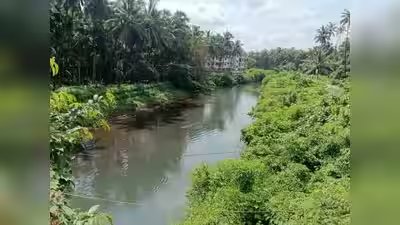

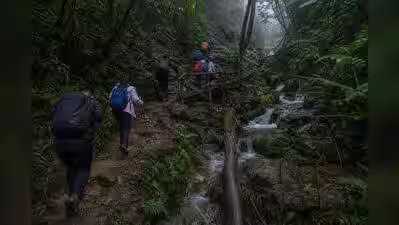
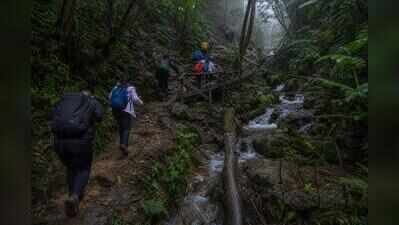
Canacona: Keri is inhabited by members of the Velip and Gaonkar tribal communities and lacks conventional road connectivity and electricity. A solar panel provides limited electricity during sunlight hours. The absence of basic infrastructure has significant consequences for access to essential services and opportunities.During a recent field visit, students from DPM’s Shree Mallikarjun College, Delem, Canacona’s sociology department interacted with the community members and learnt about the difficulties they face in accessing healthcare, education, transportation and livelihood opportunities.The visit was aimed at sociological learning beyond the classroom and enabling the students to understand marginalisation, social exclusion and deprivation through direct interaction with the tribal community.Reaching Keri itself became a part of the learning experience, says sociology department in-charge and assistant professor Sandhya Kharat.The students undertook a nearly 3.5km uphill trek through dense forest, negotiating streams, wooden bridges, slippery slopes and difficult pathways.For elderly persons, pregnant women, children and those requiring medical assistance, the difficult terrain makes this journey challenging.The interaction showed the students the community’s aspirations to remain on their ancestral land while gaining access to basic amenities and development opportunities. Rather than viewing development simply as relocation, the students were encouraged to understand the community’s desire for development that respects their cultural identity, traditional way of life and connection with their land.The trek showed that social exclusion is not only about social relationships or economic disadvantage, but can also be reinforced by geographical isolation and limited access to infrastructure and public services.Reflecting on the experience, TYBA sociology student Pradnya Gosavi said, “We read about marginalisation, social exclusion and deprivation in class, but at Keri, we walked it and felt it. The absence of electricity and the children’s long walk to school made these sociological concepts real.”Kharat said, “The people of Keri are not seeking to abandon their identity. They want development to reach them where they are, without compromising their cultural identity and traditional way of life.”