








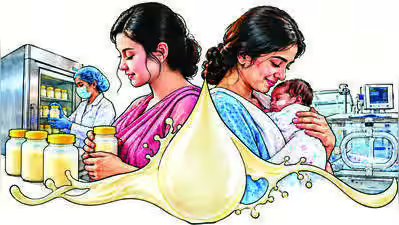
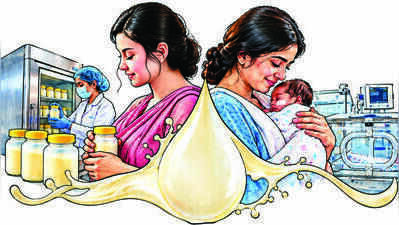
When Nidhi Soni’s son arrived at 30 weeks, she spent nearly a month beside his bed in the neonatal intensive care unit. For the first two or three days, before she could feed him herself, another mother’s milk nourished him. Until then, the Godhra resident had not known that donated human milk was even an option.What stayed with her was the thought that the milk her son needed had come from a woman whose name she would never know. “If someone’s surplus milk could help my baby, I wanted my milk to help someone else’s,” Soni says.She began donating at the Ahmedabad hospital where her son was being treated. Later, after learning about the human milk bank at Parul Sevashram Hospital in Vadodara, she began donating there. Between Jan and May, she donated about 25 litres. Soni had also donated through a Bengaluru-based agency, but stopped after learning that recipients were charged. For her, that mattered. There were many families who needed the milk but could not afford to buy it, she says.The circumstances that bring women to these milk banks can be very different. Some have premature babies of their own. Some spend weeks beside children receiving intensive care. Some continue donating even after their babies leave the hospital. For many others, donation begins with the memory of how helpless they felt when they themselves could not produce enough milk after childbirth.Over the past 18 years, Gujarat’s six public-sector human milk banks have collected 17,025 litres from 52,000-plus donors, benefiting 47,579 babies.
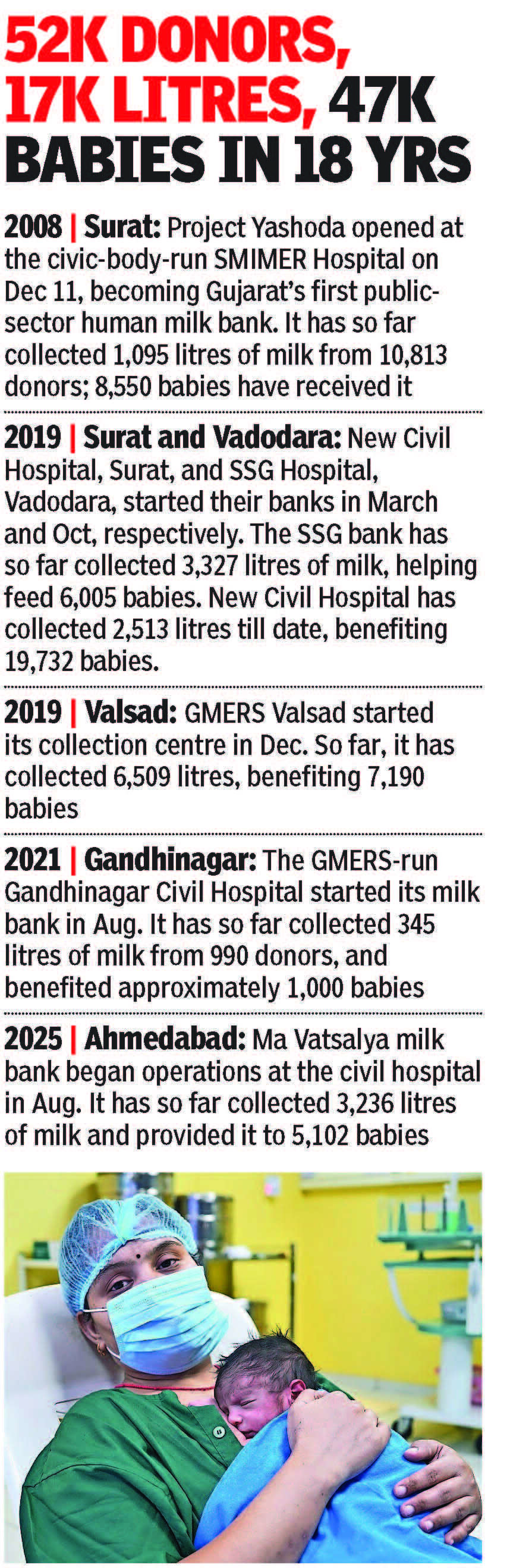
Gujarat has six operational public sector milk banks
Beyond their ownAt Ahmedabad Civil Hospital’s Ma Vatsalya milk bank, many donors are mothers already spending long days, sometimes weeks, at the ward with their own children. Here, mothers express milk in a private room with light music, with staff available round the clock. The bank has so far collected 3,236 litres of milk, benefiting 5,102 babies. Ma Vatsalya receives around 100 lactating mothers a day, according to Dr Sucheta Munshi, associate professor of paediatrics and in charge of the milk bank.Rajal, 25, from Banaskantha, had been at the hospital for nearly three months while her child underwent surgery and was kept under observation for a brain-related condition. Since he could not be breastfed, doctors suggested that she express milk. Then she began to notice the women around her.“I saw so many mothers here struggling because they did not have enough milk. So I started donating the extra milk I had,” she says. “If my milk can give another child a new lease of life, I will donate for as long as I am here.”Mothers who spend weeks or months in the ward often form informal support groups and strong bonds, says Dr Jolly Vaishnav, head of paediatrics.
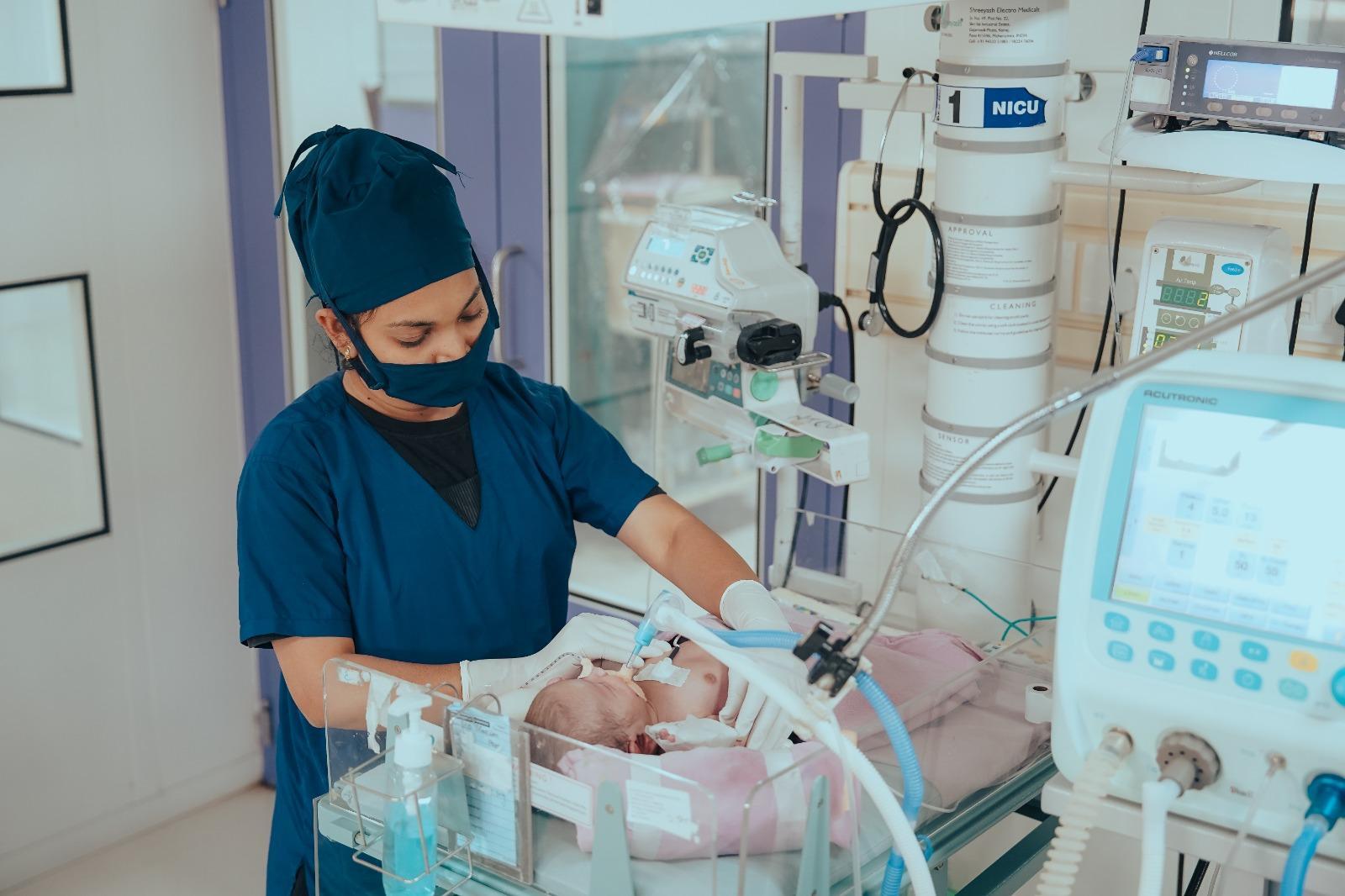
For very young, premature and low-birth-weight babies, a feed may be only 10 to 25 ml
Sometimes the act of giving emerges from loss itself. Staff at Ma Vatsalya remember a mother who delivered twins, one of whom died from congenital complications. Despite her grief, she continued donating her milk. In time, staff say, she found some solace among other mothers and their babies. Another mother, Pooja Patel, spent 44 days at the hospital after delivering a baby weighing just 815 grams. Her child spent 12 days on CPAP and later stayed with her in the Kangaroo Mother Care unit. By the time the baby was discharged at 1.25kg, Patel had also become a regular milk donor, an official at the hospital said.When even a little is a lotFor babies that young, donor milk is not simply an alternative feed. “A mother’s own milk is like a live vaccine — nectar for the baby,” says Dr Shwetal Bhatt, professor of paediatrics and nodal officer of SSG Hospital’s Comprehensive Lactation Management Clinic. “Donor milk is a substitute when the mother’s own milk is unavailable.”Dr Rakesh Joshi, medical superintendent at Ahmedabad Civil Hospital, says the benefits are particularly important for premature babies, including support for weight gain, brain development and immunity. Hospital officials say their data also indicate lower infection rates among admitted infants since the initiative began. All of this, however, depends on mothers being willing to share what they can spare.From hesitation to habitSurat’s experience shows how long it can take for that idea to become socially familiar. The Diamond City began organised work on human milk donation nearly two decades ago, and a milk bank opened at SMIMER Hospital in 2008.Doctors and community groups began holding donation camps, initially confronting an idea that many families found unfamiliar — expressing breast milk, storing it and allowing it to be fed to another woman’s child. “When Dr Ketan Bharadva first approached our Kutch Kadva Patidar community, most of us did not really understand the idea of donating milk and storing it for later use,” recalls Damyanti Bhavani, immediate past president of KKP Samaj Surat. “Gradually, we understood its importance and began encouraging lactating mothers in the community.”

From nutrition to immunity: Why doctors call mother’s milk a lifeline for newborns
Dr Bharadva, a paediatrician, says Surat built the movement gradually. “The KKP women supported us initially, and later other women’s groups joined in and helped give shape to Project Yashoda.”“During routine hospital visits, I saw many children deprived of mother’s milk, and the challenges their families faced moved me deeply. That led me to help paediatricians organise donation camps and set up a milk bank. For the past 18 years, we have been working to expand this network,” says Kunj Pansari of Amrutam Foundation.Paying it forwardFor photographer Henny Shah, 31, the decision to donate came from her own experience after childbirth. She struggled for several days to produce enough milk for her baby while comments from elders only added to her anxiety. “My child wasn’t premature and everything else was normal, but I did not have enough milk initially. That was when I understood how important milk donation is,” she says.
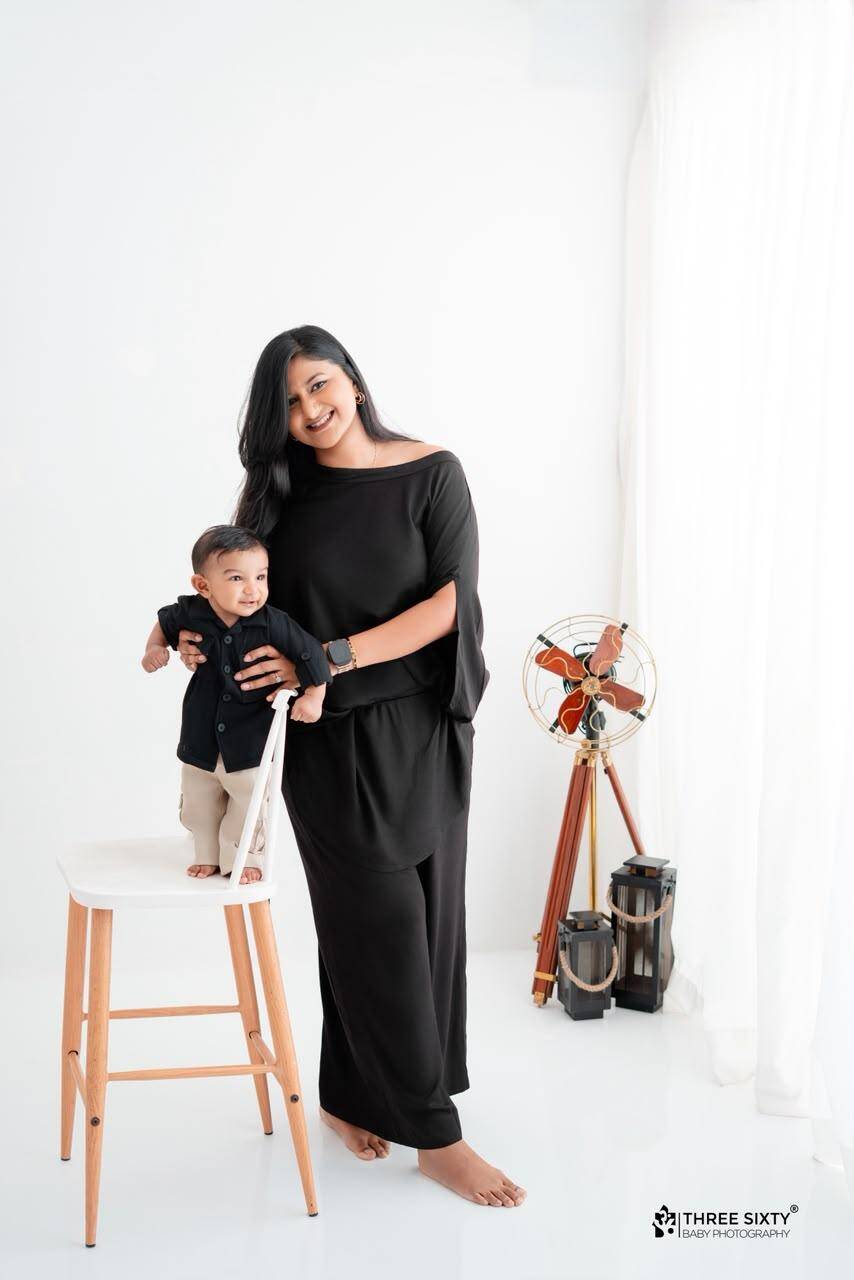
For photographer Henny Shah, 31, the decision to donate came from her own experience after childbirth
She later donated four litres to an organisation in Bengaluru and subsequently donated again at a Surat camp. Those personal motivations matter because willingness to donate cannot be taken for granted.Dr Sheila Aiyer, professor of neonatology at Parul Sevashram Hospital (PSH) and former professor and head of the paediatrics department at SSG Hospital, says most donors at PSH are women whose own babies are in the NICU. The hospital says donor milk is provided free of charge to recipients.Seven years, seven donationsBack in Surat, Hetal Sonani, 37, a mother of three, has donated seven times in seven years. “When I get a call about a donation camp, I cancel all other plans. It makes me happy to be able to help another mother,” she says. Pooja Bhadani, 28, waited until her twins were six months old before she began donating milk. She continues to pay particular attention to her diet. “I eat nutritious food not only for my twins but also for the babies who receive the milk I donate,” she says.
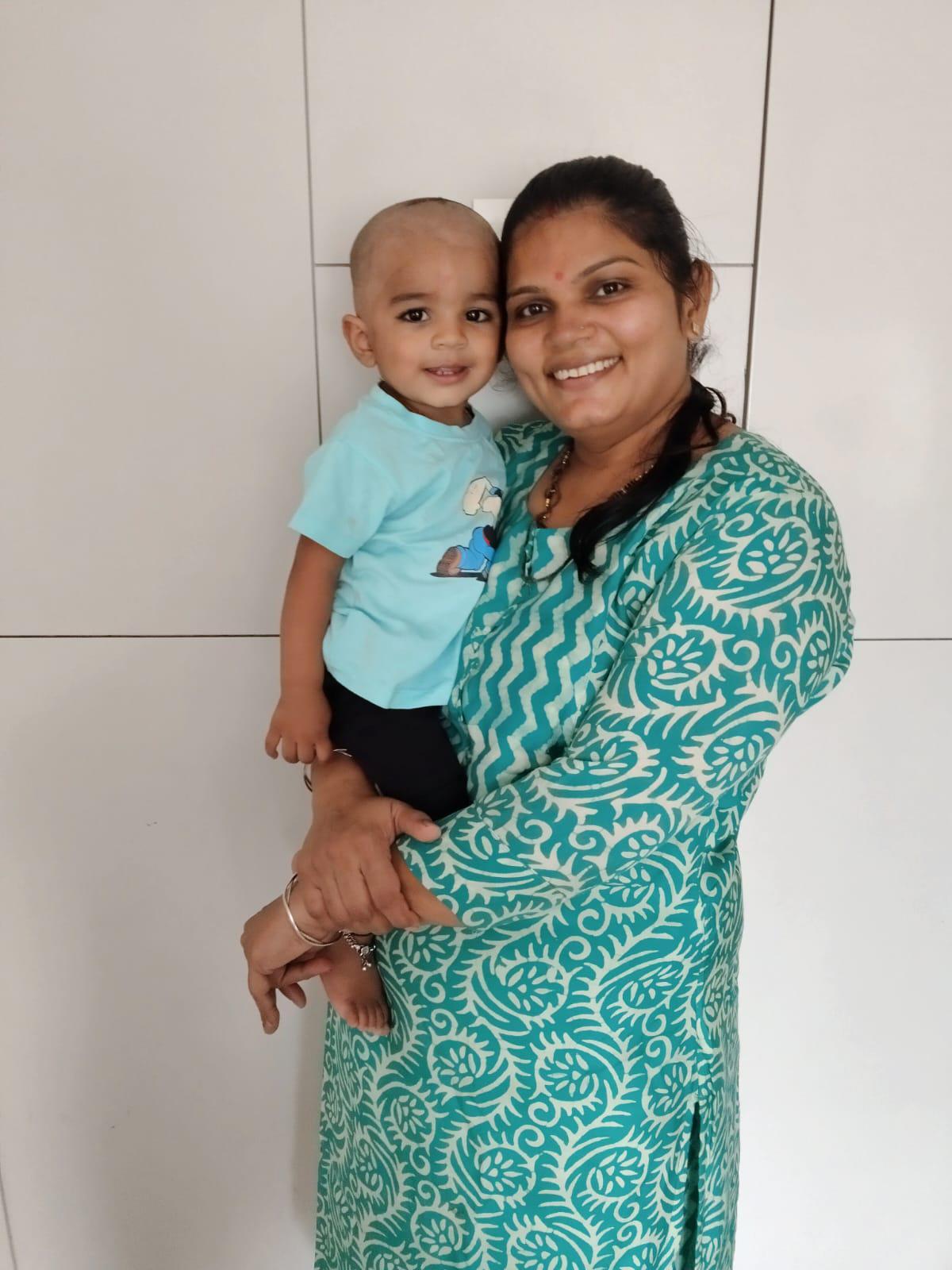
Hetal Sonani, 37, a mother of three, has donated seven times in seven years. When she gets a call about a donation camp, she cancels all other plans
“We regularly collect milk through camps to increase our supply. Our efforts are supported by NGOs and Surat Pediatric Association Charitable Trust. The first camp was held in 2009,” says Dr Nirali Mehta, associate professor, paediatrics, SMIMER.In a hospital, a few millilitres of milk can seem like almost nothing. For a premature baby, they can be enough for a feed. One mother may donate for weeks; another only once. And somewhere, often without ever knowing who received it, a mother knows that the milk her own baby did not need that day helped nourish someone else’s baby.‘What if my baby goes hungry?’A 2024 study by Dr Sheila Aiyer and Dr Vaishali Chaudhari at SSG Hospital, Vadodara, found that mothers’ hesitation around donation was often rooted in a mix of practical difficulties and anxiety. Some worried that expressing milk would leave too little for their own babies; others cited pain after a Caesarean delivery, discomfort from pumping, the time involved, travel costs and family responsibilities. The researchers also encountered misconceptions, including fears of infection, the belief that expressing milk could “empty” the breast, and even that a baby might acquire the donor mother’s habits or character through her milk. The study recommended antenatal counselling, support groups and collection centres linked to milk banks.What happens to donated milk?The precise protocol varies by milk bank, but the broad journey is similar. A donor is first assessed and screened. At SSG Hospital, screening includes tests for HIV, HBsAg, VDRL and CRP. Certain illnesses, recent surgery, transfusion or transplantation, cancer and chemotherapy can make a woman ineligible; acute infection, mastitis and herpes simplex may lead to temporary suspension. Milk is expressed under hygienic conditions, using a hospital-grade breast pump.
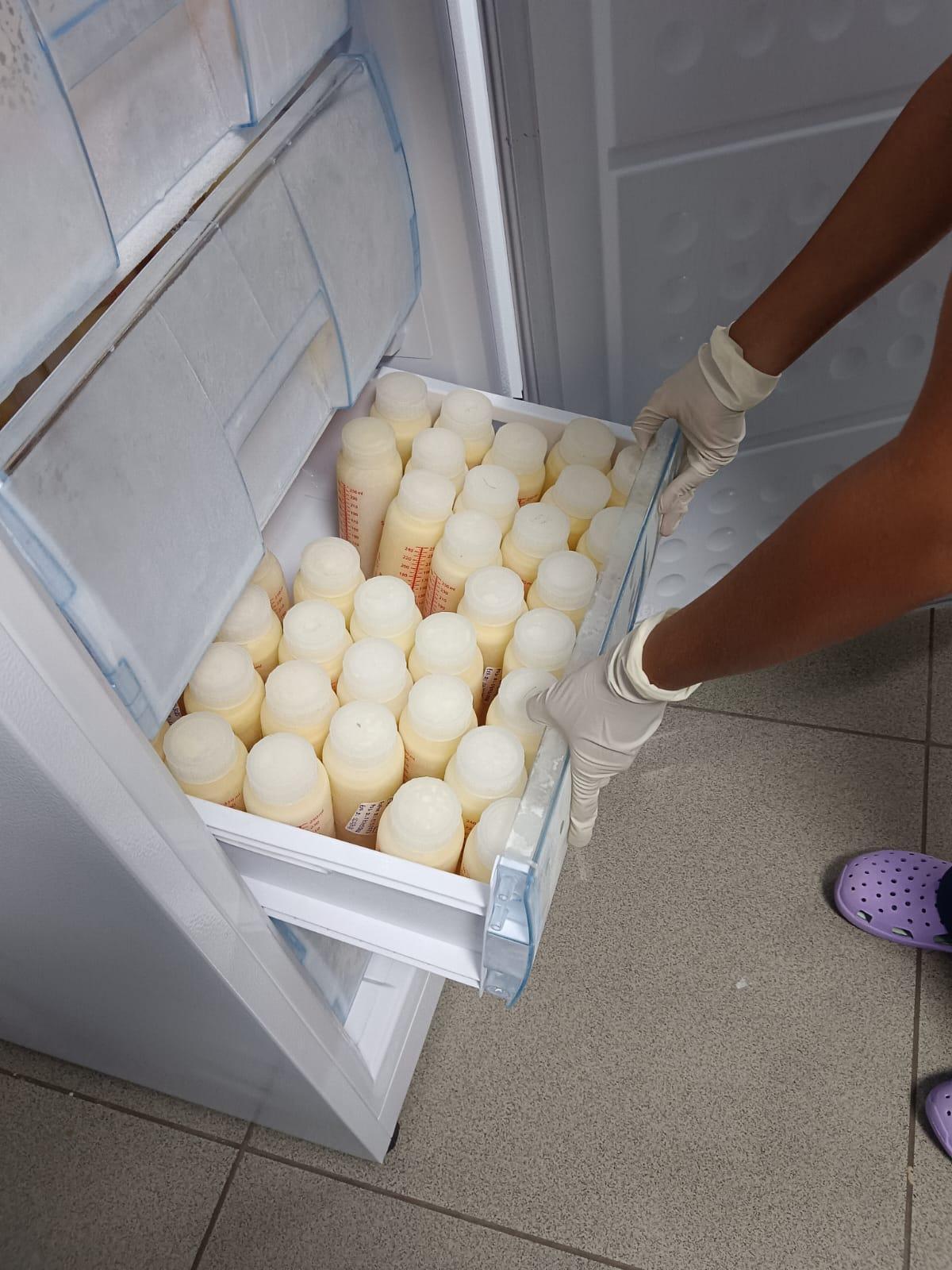
Milk is expressed under hygienic conditions, using a hospital-grade breast pump. The milk is sealed, pooled, where applicable, and pasteurised
The milk is sealed, pooled, where applicable, and pasteurised. It then undergoes post-pasteurisation culture testing; milk that tests positive is discarded. Approved milk is frozen. The Ahmedabad milk bank reports storage at around -18°C, while SSG reports -20°C and storage for up to six months. Barcoding, and donor and pooling registers at SSG allow individual batches to be traced. Before use, frozen milk is thawed and brought to an appropriate temperature.Every millilitre countsA baby who cannot be breastfed is usually given its own mother’s expressed milk. When the mother cannot produce enough, pasteurised donor human milk is used. For very young, premature and low-birth-weight babies, a feed may be only 10 to 25 ml. At SSG Hospital, babies weighing below 1.8kg are among those prioritised for donor milk.
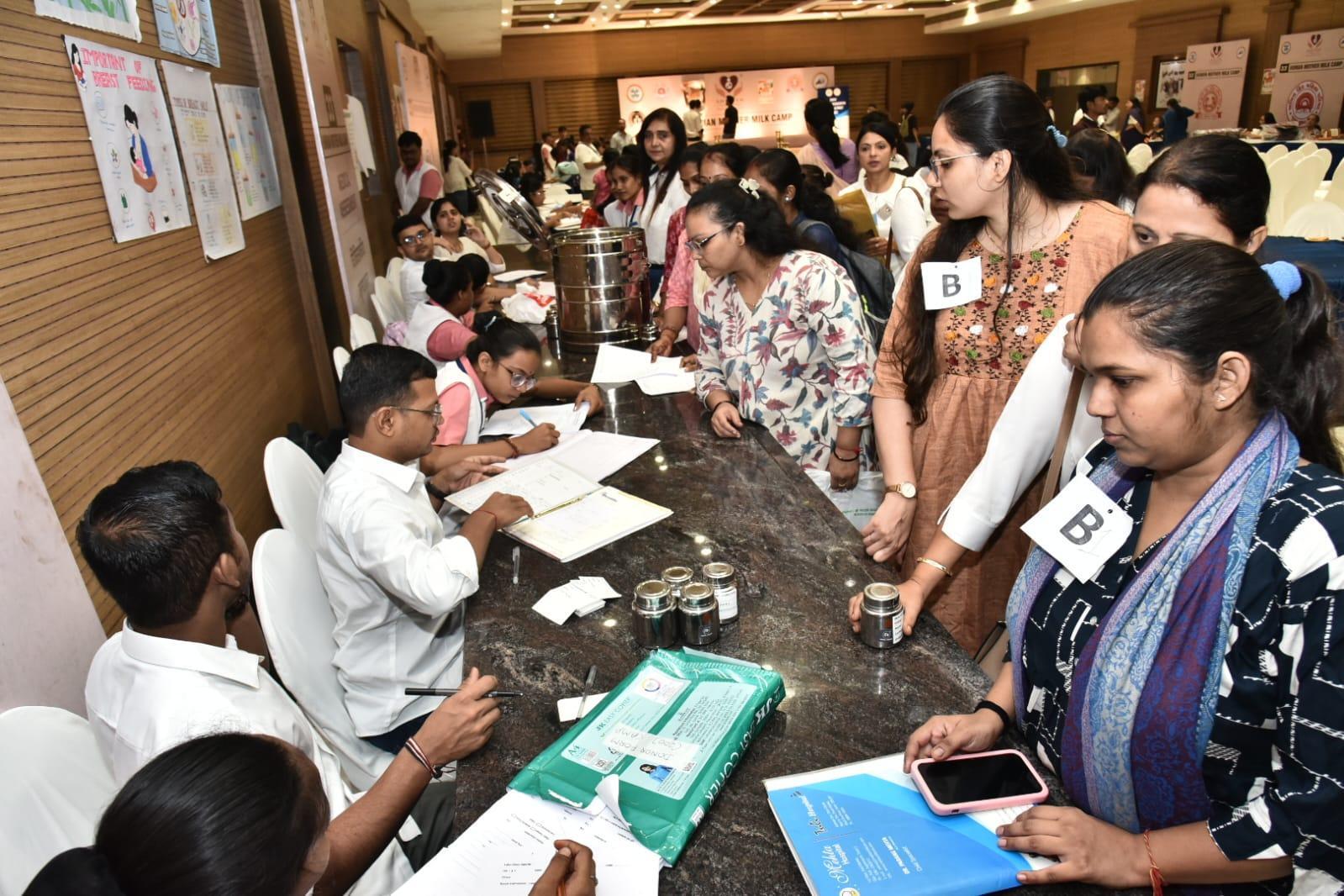
Donor mothers getting registered at a milk donation camp in Surat
Doctors say human milk is particularly valuable for premature babies, helping support weight gain, brain development and immunity. Ahmedabad Civil Hospital officials also say their data indicate lower infection rates among admitted infants after the initiative.The donors who keep coming backAhmedabad’s Ma Vatsalya milk bank has recorded individual donations of as much as 24 litres, including from mothers whose babies needed prolonged hospital care. At SSG Hospital in Vadodara, the largest recorded donation from a mother was 16,400 ml over Aug and Sept 2023. The same donor accounted for the bank’s longest-distance and largest-volume donation.