










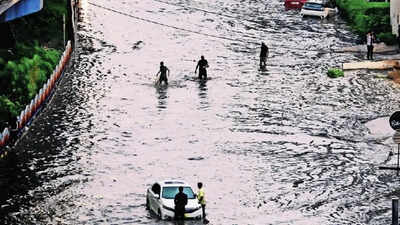
HYDERABAD: As the three municipal corporations in Greater Hyderabad struggle to tackle flooding triggered by rains, a comprehensive flood mitigation blueprint prepared years ago by Jawaharlal Nehru Technological University, Hyderabad remains largely unimplemented.In 2018, the Centre of Excellence in Disaster Management at JNTUH, in collaboration with the GHMC, conducted an audit of flooding in the city and identified 229 waterlogging locations spread over 750 sq km.The study proposed a flood management strategy costing Rs 4,900 crore. Though the project reportedly received cabinet approval under the previous govt, it was later put on hold due to funding constraints.The report recommended separating stormwater movement from road traffic through an integrated flood management network. Key proposals included stormwater drainage systems, flood bypass channels, interconnected rainwater harvesting structures, water storage tanks and solar-powered pumping systems for quick evacuation of excess rainwater.A major component of the plan was the creation of 636 water storage tanks across public and private lands. The blueprint also proposed 2.7 lakh rainwater harvesting pits citywide, including 17,767 on govt land. In addition, experts recommended developing about 450 km of major stormwater drains linked to over 1,000 km of minor drainage channels across the city.
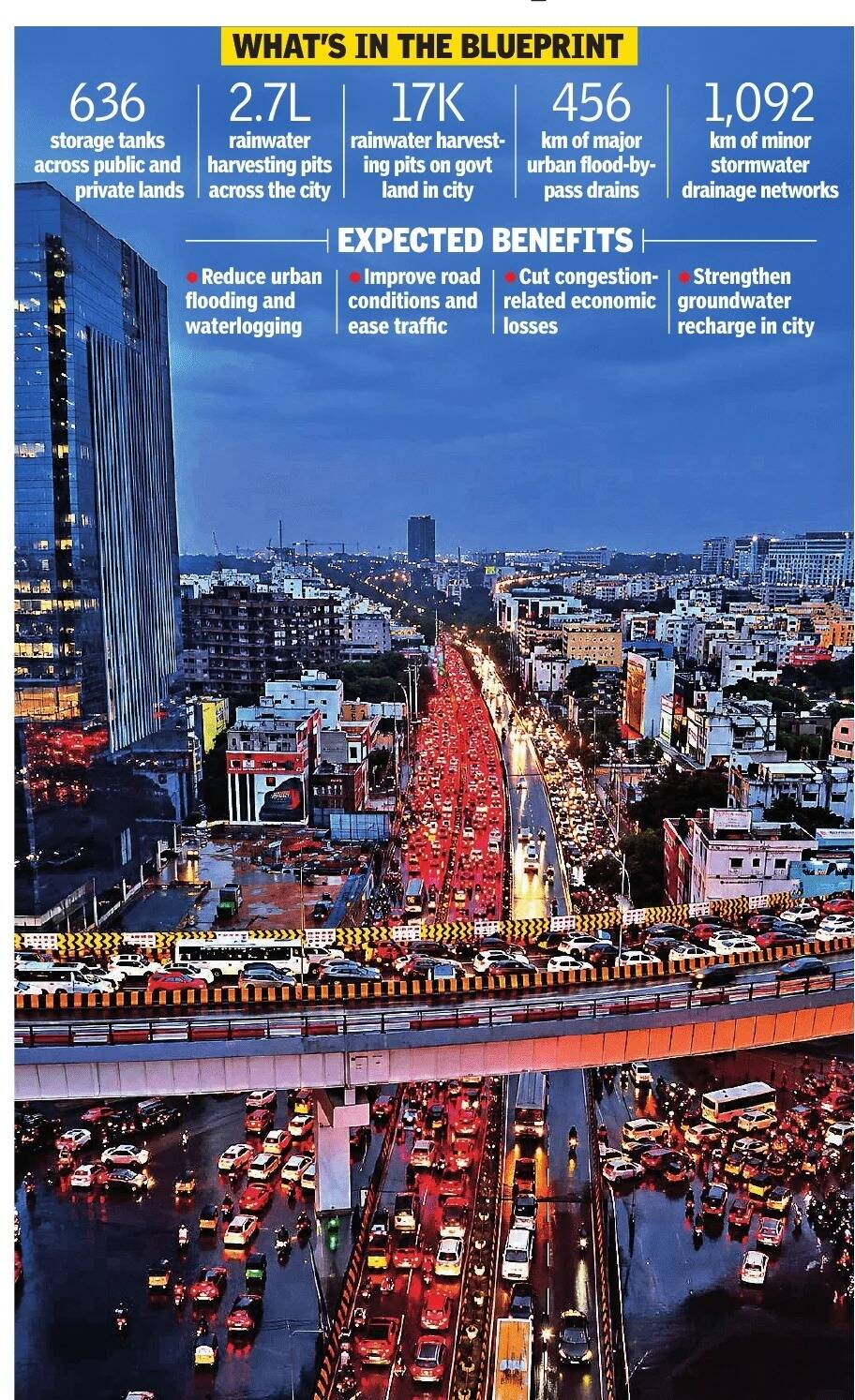
What’s in the blueprint
Flood bypass network
Drawing a parallel with road bypasses that ease traffic congestion, JNTUH proposed a dedicated urban flood bypass system to divert excess rainwater efficiently.The study suggested relocating major stormwater drains to road medians, protecting them from encroachments, utility works, roadside activities and waste dumping. To finance and maintain the infrastructure, the report proposed a Build-Operate-Transfer (BOT) model involving private investors.Under this model, private operators would manage water tanks, borewells, solar installations and pumping systems while recovering investments through regulated water supply services. Solar panels installed on tanks could also generate electricity for public lighting and other civic needs.
How the system works?
The proposed system integrates rainwater harvesting pits, storage tanks, stormwater drains and flood bypass channels into a single network.Once rainwater harvesting pits reach capacity, excess water would flow into storage tanks. If those tanks fill up, solar-powered pumps would transfer surplus water into stormwater drains and bypass channels, carrying it safely to other locations.Each storage tank was proposed to be equipped with a 10-15 kW solar-powered pumping system supported by batteries or grid connectivity. During non-rainy periods, surplus power generated by the solar installations could be used for municipal services or supplied to the grid.
Key concerns flagged
The study identified several factors aggravating flooding. Rainwater frequently mixes with sewage because of inadequate stormwater infrastructure. Many buildings lack effective rainwater harvesting pits, allowing runoff to flow directly onto roads.Other concerns include encroachments along drainage channels, dumping of waste, poor integration between road design and water management systems, uneven rainfall patterns and groundwater levels, and the loss of natural drainage paths due to rapid urbanisation.Experts noted that unchecked urban growth, inadequate rainwater harvesting and poorly maintained drainage infrastructure have increased the severity of flooding across the city.The report also highlighted the economic impact of waterlogged roads. Rain-induced damage lowers travel speeds, reduces road capacity and increases vehicle operating costs. With an estimated 25-30 lakh vehicles using city roads daily, even modest traffic disruptions translate into substantial losses. During the monsoon, travel speeds can drop by 20-30%, increasing fuel consumption and commute times.According to the study, if congestion results in an average additional travel cost of ₹6 per vehicle per day, economic losses could touch ₹9 crore daily. On an annual basis, the impact could exceed ₹2,700 crore. Including health impacts and the value of travel time, the economic burden is estimated at ₹3,000 crore every year.
What experts suggest
Experts argue that Hyderabad requires a scientifically engineered flood-management system rather than cosmetic measures that merely create an impression of action for taxpayers.“The current approach being implemented through the Storm Water Drainage Project (SNDP) and rainwater holding structures appears to focus mainly on creating storage space for floodwater.However, effective flood management is not just about holding water; it is about ensuring its efficient movement and evacuation,” said KM Lakshmana Rao, former principal investigator of the Centre of Excellence in Disaster Management, JNTUH.“Floodwater must have a clear path. This requires detailed hydraulic and geometric analysis of drainage networks, assessment of flow capacities and the creation of interconnected cross-drainage channels wherever necessary,” he added.