

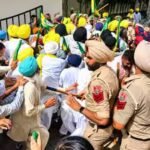
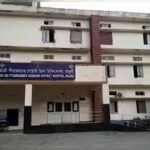


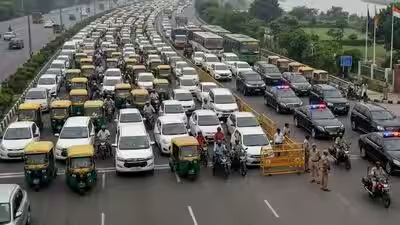
For commuters, this has become a repeat ordeal every time a visiting head of state takes a trip to Rajghat. The latest movement of Swiss President Guy Parmelin Monday once again left commuters stranded mid-journey with roads sealed and no viable alternate route for many. Some found themselves stuck in a traffic no-man’s land, waiting for restrictions to lift before they could resume their journeys. Others were forced to turn back or wait as vehicles piled up on key arteries. The visit may last minutes. The disruption can stretch for hours.Rajghat visit: Protocol or tradition?A visit to Rajghat is not mandatory for visiting foreign leaders.But over the years, paying homage at Mahatma Gandhi’s memorial has become an important part of the itinerary for visiting heads of state.MEA has said such visits have acquired significance as a mark of respect to Gandhi, with foreign leaders often considering it important to include Rajghat in their programmes.There are exceptions. Gulf leaders have generally avoided the visit for religious reasons. The Saudi king, who was chief guest for Republic Day in 2006, did not visit Rajghat, and the Saudi crown prince has also not done so during his recent visits.But it does not have to end in gridlockThere was one notable recent exception: Russian President Vladimir Putin’s visit in Dec.The familiar pattern was expected: a VIP movement, restrictions and severe congestion around ITO.But the experience was different.There was congestion. It cleared within minutes. Traffic kept moving. The standstill did not stretch into hours.What commuters facedStuck at ITO45+ MINUTESStuck at PWD HQ25+ MINUTESComplaints on social media described chaos around ITO, with commuters questioning the lack of traffic regulation and on-ground monitoring.Advisory came. But when?Delhi Traffic Police did issue an advisory for the Rajghat programme — at 9.09am, for a programme scheduled from 10am to noon.By that time the advisory came, many commuters were already on the road.It is not a sudden visit. MEA told TOI in the pastSecurity restrictions may be triggered by a VIP movement, but the movement itself is not necessarily a last-minute event. An official aware of the security arrangements told TOI in the past that Delhi Police’s VIP security wing is informed well in advance about programmes involving visiting heads of state. In some cases, police may get information 10 days ahead.Under MHA guidelines, traffic stoppages for protected persons are meant to facilitate the movement of the President, Vice-President and Prime Minister, as well as visiting foreign dignitaries given President/PM-level security cover.Police can therefore have 7-10 days to prepare.A chief liaison officer (CLO) is also appointed by MHA to coordinate efforts among different agencies for the movement.Extent of ripple effectWhat appeared to make the difference?Advance warning.Sustained deployment.Traffic kept moving.Big questionFor thousands using ITO and surrounding corridors every day, the question is simple: If it can be managed better once, why does every VIP movement have to feel like a fresh traffic emergency?When roads are sealed without a workable alternative, commuters can be left with nowhere to go. Traffic backs up on adjoining roads, junctions choke and a short security restriction can turn into an hours-long commute. The Putin visit showed advance planning can work wonders.What traffic police saidSources from traffic said this was MEA protocol. “As far as advisories are concerned, we will see if it was not issued in advance this time, as it is part of the usual exercise now. Further, the traffic is stopped for the shortest time possible”