








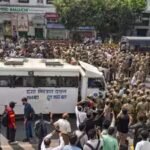
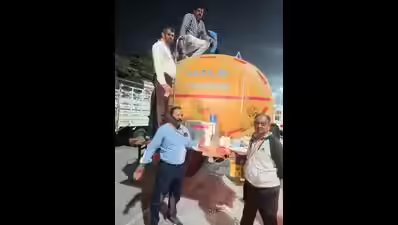
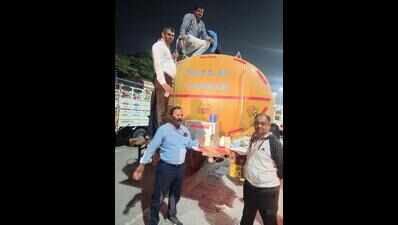
Bengaluru: Every day, thousands of litres of low-cost milk quietly enter Bengaluru from neighbouring states, eventually finding their way into cups of tea and coffee, bakery products, sweets, and restaurant kitchens. But how safe is this milk?The steady inflow of milk, sold at prices significantly lower than those offered by Karnataka Milk Federation (KMF), has triggered concern among food safety authorities, prompting the Food Safety and Standards Authority of India (FSSAI) to launch a major crackdown. In a coordinated operation in the early hours of Saturday, officials intercepted more than 30 vehicles carrying unregulated milk consignments from neighbouring Tamil Nadu into Bengaluru.The early-morning raids, conducted simultaneously at Hoskote, Attibele, and Hosur check-posts, exposed what officials suspect is an unregulated milk supply chain operating outside the food safety framework. Preliminary investigation revealed that the network was allegedly bypassing licensing norms, cold-storage requirements, and quality-control standards while undercutting KMF prices by a considerable margin.A special FSSAI team led by Bengaluru South assistant commissioner Vishwanath VR launched inspections at the three entry points, which serve as major transit corridors for milk tankers and transport vehicles entering Bengaluru from Tamil Nadu. Officials stopped and inspected more than 30 vehicles transporting bulk milk consignments. Samples were immediately collected and sent for laboratory analysis amid suspicions that the milk may have been adulterated to increase volume and extend shelf life.However, more than the possibility of adulteration, officials were surprised by the business model driving the trade. Vishwanath told TOI, “We found that none of these shipments contained milk belonging to any famous brands. More alarmingly, the operators possessed no valid FSSAI licence. The product was being sold at prices significantly lower than the standard KMF rates, making it highly lucrative for commercial buyers in the open market.”Preliminary investigation also revealed that the milk originated from various private dairies in Tamil Nadu before being routed to local distributors operating within Bengaluru. Officials found that much of it was being supplied as ‘loose, unpasteurised milk’ at reduced rates and later repackaged in generic polythene pouches under little-known local brand names for normal distribution.Where was it headed?The low-cost supplies were primarily destined for commercial establishments, including bakeries, small eateries, tea and coffee shops, condiment manufacturers, and sweet marts, where cheaper milk can substantially reduce operating costs. Officials who collected samples from the tankers noted that the milk lacked basic traceability, making it nearly impossible to determine its source, quality, and handling standards.“Visual inspections during the raids raised immediate concerns about purity. Hence, we’ve dispatched samples for lab testing to determine the extent of possible chemical and bacterial contamination,” said another official who was part of the operation. The unhygienic transport conditions further heightened concerns. “Most of these vehicles lacked the mandatory cold-chain infrastructure required to preserve perishable dairy products during long-distance transit. Without refrigeration, milk becomes highly vulnerable to bacterial growth, significantly increasing health risks,” the official added.The authorities have served show-cause notices on several distributors and manufacturers allegedly involved in the trade. Officials said the operators violated multiple food-safety norms relating to licence, cold-storage, and transportation standards. FSSAI, in coordination with the district administration, is now investigating whether Bengaluru’s appetite for cheaper milk has inadvertently fuelled a shadow supply chain operating outside the regulatory net.