









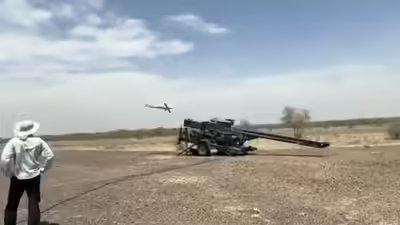
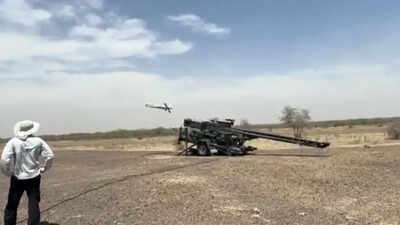
JAISALMER: Pune-based defence technology company Nibe Limited has successfully completed the first technical trials and No-Cost, No-Commitment (NCNC) demonstration of its indigenous loitering munition system ‘Vayu Astra-1’ at the Pokhran firing range in Jaisalmer district in Rajasthan. Senior army official & scientist were present during this trial.The successful trials mark another significant milestone in India’s growing focus on precision-guided weapon systems and indigenous defence manufacturing under the “Make in India” initiative.According to the company & army, the demonstration was conducted in response to a Request for Proposal (RFP) issued by the Indian Army for a 100-km-range loitering munition system. During the trials, the Vayu Astra-1 carried out an anti-personnel strike mission with a 10-kg warhead and successfully destroyed the target located 100 km away in a single attempt.The company stated that the system achieved a Circular Error Probable (CEP) accuracy of less than one metre, highlighting its high precision strike capability. The trials also validated advanced operational features such as abort attack, re-attack capability and intelligent target engagement systems, which are considered crucial for next-generation loitering weapon platforms.Officials said the loitering munition is based on advanced Israeli loitering munition technology and has been adapted and developed to suit Indian operational requirements. Defence experts consider loitering munitions increasingly important in modern warfare because of their ability to hover over target areas, identify threats, and execute precision strikes with minimal collateral damage.In another major achievement during the Pokhran trials, the company successfully conducted an anti-armour night strike mission using an infrared (IR) camera-guided targeting system. The loitering munition reportedly struck the target with a CEP accuracy of less than two metres in a single attempt during night operations.The trials also demonstrated an advanced battlefield capability where operational control of the weapon system was successfully transferred from the Ground Control Station (GCS) to a Forward Control Station (FCS) positioned nearly 70 kilometres away.Defence analysts believe this feature significantly enhances battlefield flexibility, operational reach and survivability during combat situations.The successful Pokhran trials came just days after the successful testing of the long-range “Suryastra” rocket system, further underlining India’s rapid advancements in indigenous defence technologies. Industry observers say the success of Vayu Astra-1 reflects the increasing role of private Indian defence companies in strengthening the country’s self-reliance in advanced military systems and strategic weapon technologies.