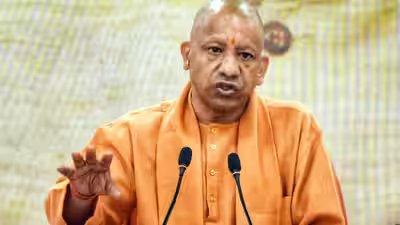








LUCKNOW: For eleven months, the Lucknow-Kanpur expressway sat finished and empty. The six-lane, access-controlled corridor was ready for traffic by June 2025, its 63 km of bitumen laid, its 21 Variable Message Signs and 63 PTZ cameras installed, its Rs 4,200-crore price tag fully spent.And then it waited — for a ribbon-cutting, for a ministerial calendar to align, for the optics of an inauguration to be worked out.Defence minister Rajnath Singh, Union road transport minister Nitin Gadkari and UP chief minister Yogi Adityanath finally cut that ribbon on July 13, 2026, promising commuters a 40-minute dash between the two cities that used to take three hours.
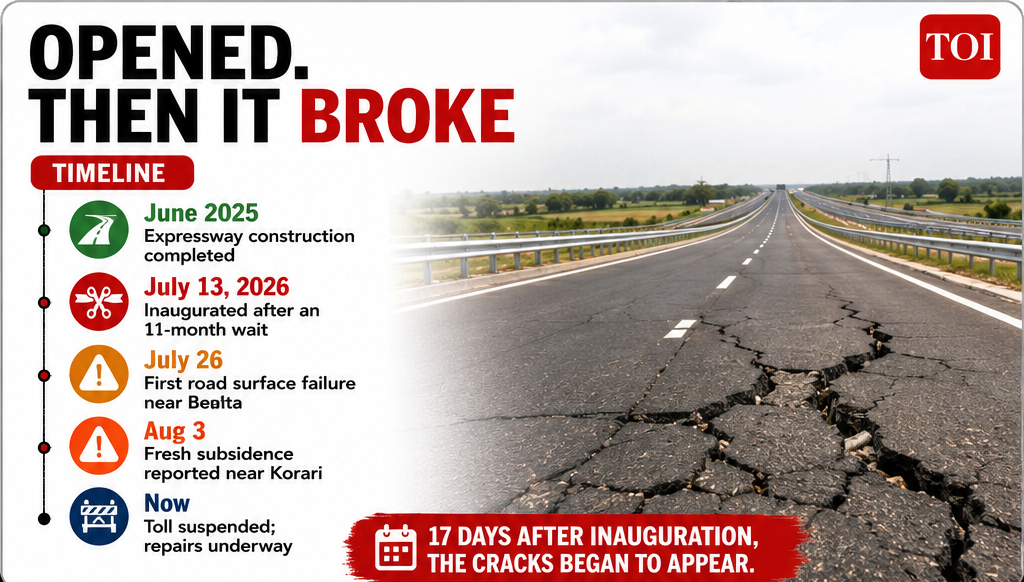
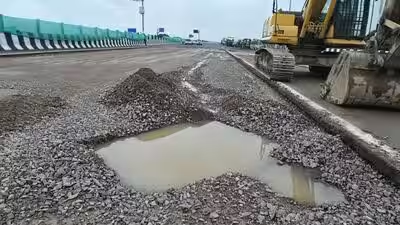
Seventeen days later, the road began to fail.The first sign came on July 26, when a private vehicle travelling from Unnao towards Lucknow hit a sudden bump near Behta. Investigators found the road surface had slipped.It was patched within 24 hours, and the National Highways Authority of India (NHAI) quietly barred three engineers — the construction company’s deputy general manager and two independent monitors — from future projects.A week later, on August 3, the damage reappeared, this time at Korari, at the approach embankment of a bridge. NHAI’s project director called it a continuation of the same stretch rather than a fresh crisis; critics called it the fifth episode of subsidence in under a month.By then, cracks, ravelling and cavities had turned up at half a dozen locations along the corridor, including a 1.5-metre-wide fissure near the 64-km marker and paved shoulders soft enough to swallow a truck’s tyres.
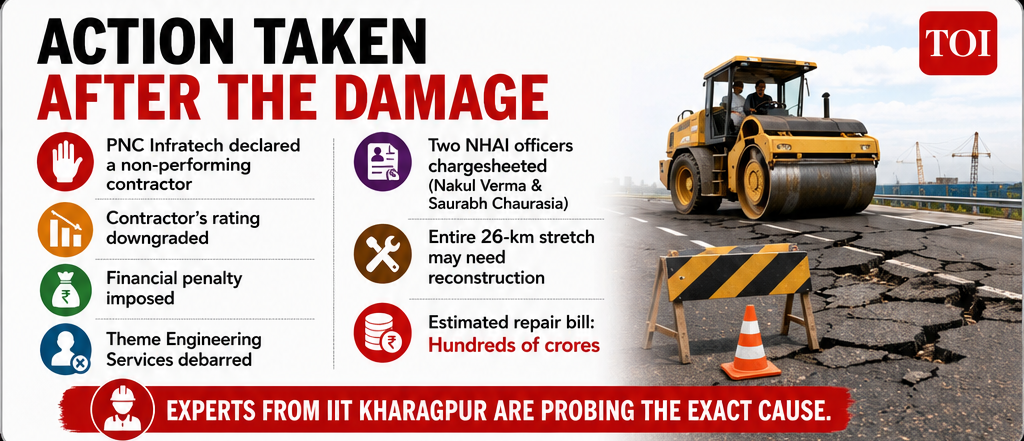
NHAI has now moved to declare the expressway’s builder, Agra-based PNC Infratech, a non-performing contractor — a designation that would bar the firm from bidding on any future NHAI project until it fixes what it broke, at its own cost.The authority has slapped a financial penalty on the company, downgraded its performance rating, and ordered it to restore every damaged stretch. It has also turned the scrutiny inward: chargesheets have gone out to the director and former director of the Lucknow Project Implementation Unit, Nakul Verma and Saurabh Chaurasia, both now being repatriated to the ministry in Delhi for what NHAI describes as lapses in monitoring and implementation.An independent consultancy hired to supervise construction, Theme Engineering Services, has been debarred outright. Toll collection, meanwhile, remains suspended in both directions until repairs are complete — a small mercy for commuters on a road that was supposed to save them time, not cost them a fresh detour.
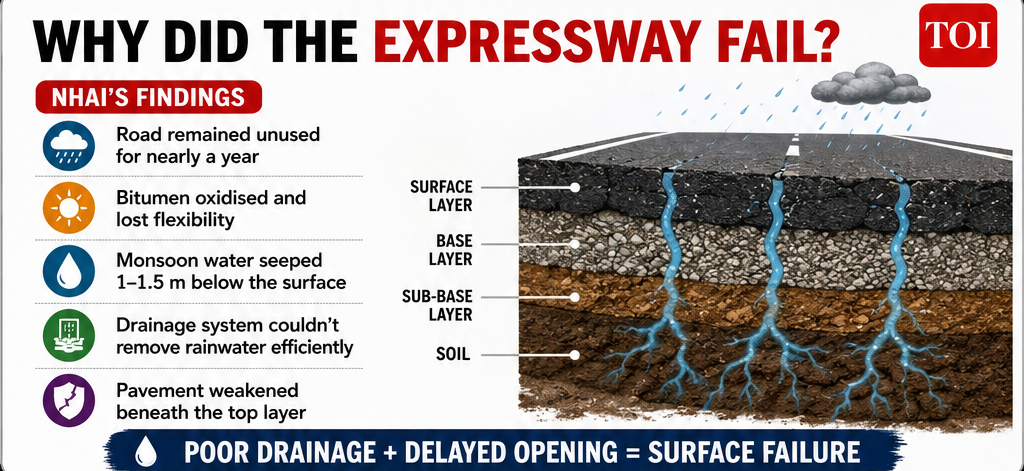
The official explanation for what went wrong is almost poetic in its irony: the road broke because nobody drove on it. NHAI’s preliminary findings suggest that a carriageway sealed and waiting for a year, through one full monsoon and dry season, oxidised and grew brittle in its upper layers — the ductility and waterproofing that regular traffic would ordinarily have preserved simply weren’t exercised.“Had it been opened soon after completion, regular vehicle movement could have improved the ductility and waterproofing characteristics of the bituminous surface before the monsoon,” an NHAI official said. Instead, the pavement sat idle until the very season most likely to expose its weaknesses, and then absorbed the season’s first heavy rain.At four of the six flagged locations, monsoon moisture has been traced to a depth of one to 1.5 metres beneath the surface — deep enough to compromise the base and binder layers, not just the top coat. A parallel, and equally damning, finding points to design: the drainage system meant to carry water off the pavement was inadequate, so even normal rainfall had nowhere efficient to go.An expert committee led by IIT Kharagpur’s Prof KS Reddy has now been tasked with establishing the exact cause and prescribing fixes. The scale of what may be required is sobering — officials have floated the possibility that the entire 525-mm pavement package across a 26-km stretch could need reconstruction, a bill that could run into hundreds of crores, on top of the Rs 4,200 crore already spent.NHAI insists the expressway remains structurally safe for commuters even as repair crews work through it; regional officer Gautam Vishal has repeatedly said there has been no cave-in of the carriageway or sub-structure. But the authority’s own admission — that satellite tests found the top-layer materials satisfactory even as deeper layers failed — makes the diagnosis less about shoddy material and more about a process failure.
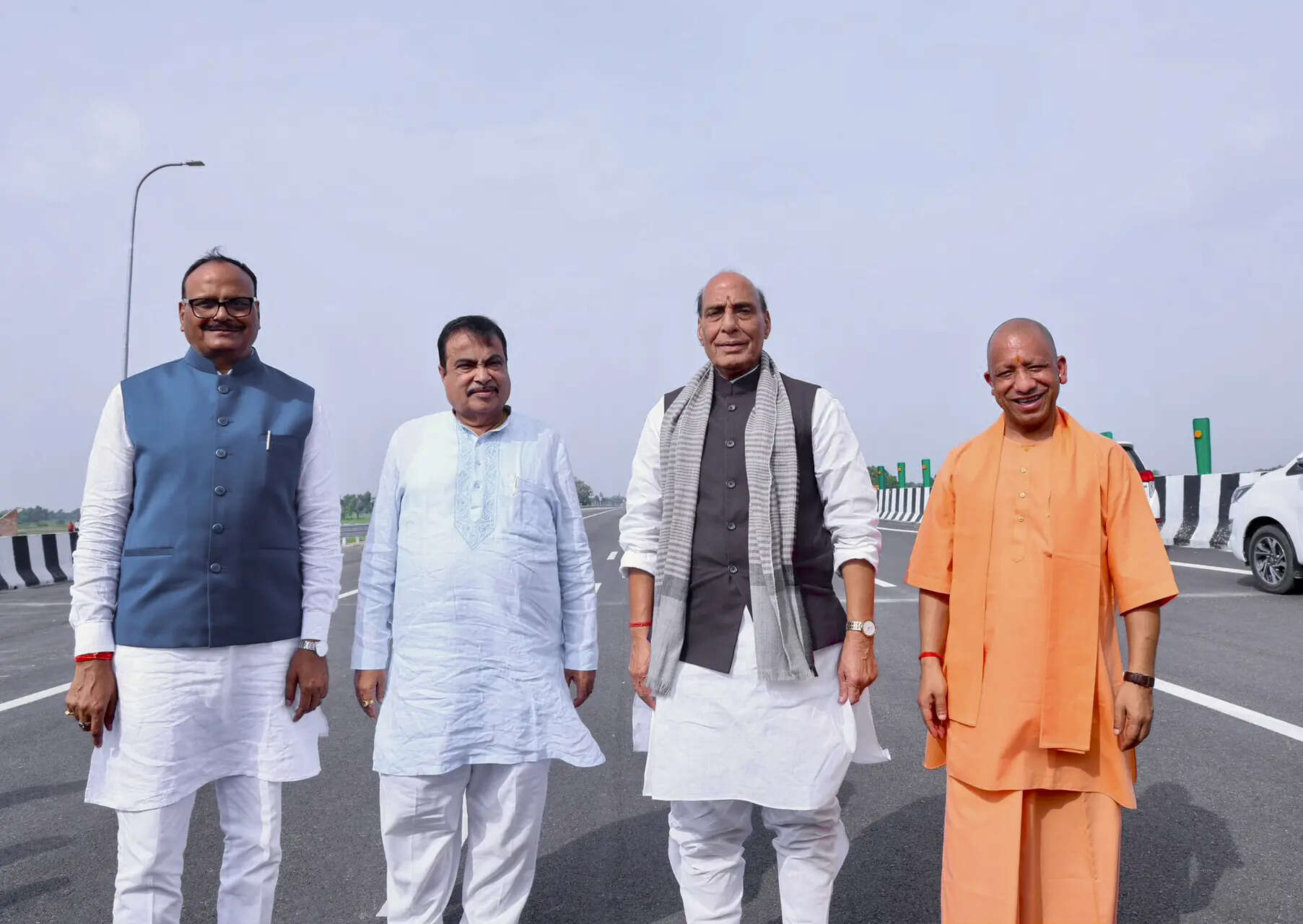
**EDS: THIRD PARTY IMAGE** In this image posted on July 13, 2026, Union Defence Minister Rajnath Singh, Union Minister for Road Transport and Highways Nitin Gadkari, Uttar Pradesh Chief Minister Yogi Adityanath and Deputy Chief Minister Brajesh Pathak during the inauguration of the Lucknow-Kanpur Expressway, in Lucknow. (@rajnathsingh/X via PTI Photo)(PTI07_13_2026_000271B)
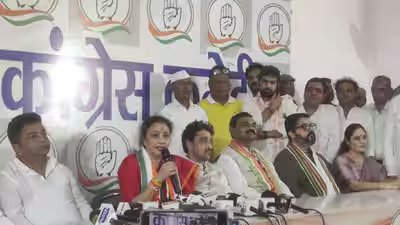
The politics have followed predictably. Samajwadi Party president Akhilesh Yadav has seized on the repeated damage as evidence of what he calls rampant corruption under the state’s BJP government, alleging that potholes reappeared within 17 days of inauguration and drawing a direct line from Lucknow-Kanpur to the Bundelkhand expressway, the Gorakhpur link expressway, and — reaching outside UP — Maharashtra’s Mumbai-Pune “Missing Link,” which he says was similarly compromised soon after its own opening.That comparison isn’t rhetorical excess; it points to a pattern this monsoon has made hard to ignore.The Mumbai-Pune Expressway’s Missing Link — a 13.3-km bypass through twin tunnels and a cable-stayed bridge, opened only in May — saw its Mumbai-bound carriageway shut for more than 18 hours in early July after a landslide near a tunnel exit sent rock, soil and water crashing down a slope whose protective water-channel wall had given way.The tunnel itself held; the surrounding infrastructure around it didn’t.Barely three weeks before that, a section of the Delhi-Dehradun Expressway — a Rs 12,000-crore, 213-km corridor inaugurated by Prime Minister Narendra Modi in April — caved in on camera and went viral.
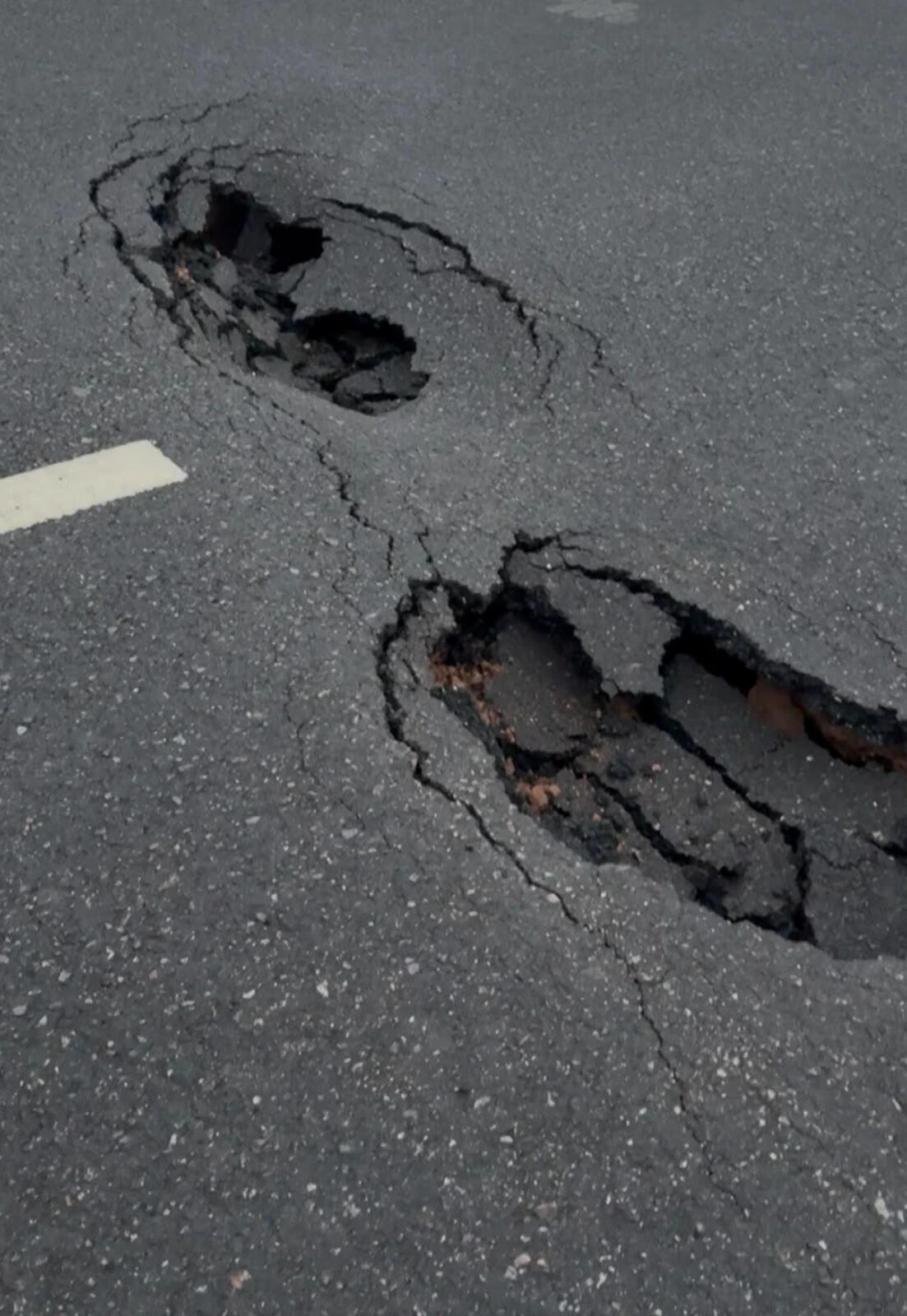
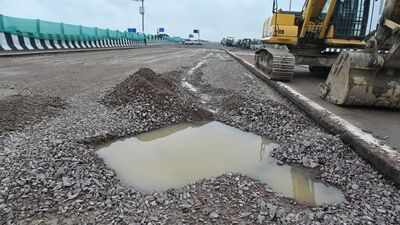
Barely months old, Delhi-Doon expressway develops large potholes after season’s first monsoon rain.
NHAI’s explanation there, too, traced back to drainage: A permanent cross-drainage system that had never been commissioned because local residents objected to it, leaving water stagnation to do the damage that engineering was meant to prevent. Officials suspended an authority engineer and a contractor’s project manager and began building an interim drain.Three flagship expressways, three governments’ worth of inauguration photographs, and in each case a monsoon that found the same seam: Drainage systems that weren’t finished, weren’t tested, or weren’t used before the rain arrived.What distinguishes Lucknow-Kanpur is the additional variable of time — not a rushed opening but a delayed one, a project that had every chance to prove itself against traffic and weather before its ceremonial debut, and instead spent that year as an expensive, silent stretch of asphalt waiting for a photo opportunity. Commuters now face at least three more months of diversions and repair work before the “smooth ride” promised in July becomes anything more than a projection.NHAI’s own officials concede that this monsoon “would keep exposing the weak links” — an admission that the road, even now, is still being tested for the first time.