








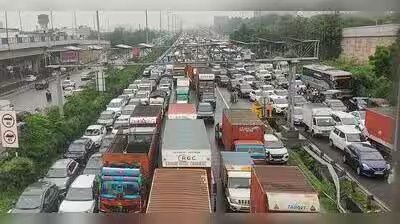
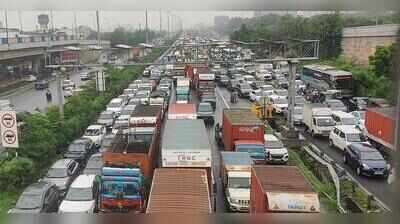
Gurgaon: I left home in Sector 48 by cab at 1.10pm on Monday to catch a 4.10pm train from New Delhi Railway Station.The plan was to reach the Metro and take Yellow Line to New Delhi. And I thought a three-hour buffer was enough, even by Gurgaon rainy-day standards. I was wrong.The sky had turned cloudy around 11.30am, but the forecast gave no hint of rain. Then, at 12.45pm, it began. By the time my cab arrived at 1.05pm, the roads outside were already waterlogged.Google Maps put the journey to New Delhi Railway Station at one hour 45 minutes — tight, but doable. That estimate meant nothing once we hit Sohna Road.Traffic barely moved. Instead of falling, the ETA kept climbing. After nearly an hour crawling forward, I abandoned the plan to reach the railway station by road and redirected the cab to Millennium City Centre, Yellow Line’s terminal station, hoping to cover the rest of the distance by Metro. It was barely 6km away, and with the train still two hours off, I thought I had a chance.Gurgaon had other plans.Sohna Road was completely choked. By 3pm, nearly two hours after I had set out, I had covered barely 500 metres, reaching only as far as Subhash Chowk. I turned the cab toward the Metro station anyway, clinging to the hope that I could park and walk in. I couldn’t. As 4.10pm came and went, the cab had made it only as far as Sector 47 — nowhere near the Metro, further still from the railway station.The train was gone.Turning back was no easier. Sohna Road remained flooded in stretches, and a journey that should have taken minutes stretched into another ordeal. Sitting in that crawling traffic, one question kept returning: how many others had missed their trains or flights that day, through no fault of their own?There is a difference between missing a train through personal error and missing one because a city’s roads simply stop functioning after rain. The first is an inconvenience. The second carries a financial cost, a disrupted itinerary and the particular frustration of being stranded by circumstances entirely outside one’s control.What makes it harder to accept is how familiar it all feels. Every time the city sees heavy rain, the same cycle plays out. Residents flood social media with complaints, authorities promise a waterlogging-free city, officials point to drains being cleared and water being pumped out, and assurances follow that roads will be passable within two or three hours. Then the next spell of rain arrives, and the same roads flood, the same jams return, the same commuters get stranded. Only the promises and explanations change; the experience doesn’t.On Monday, I left home three hours before a train that should have taken 40 minutes to reach. Instead, two hours in, I had travelled barely 500 metres. That is not a traffic problem; it is an infrastructure failure that commuters keep paying for, in time, money and disrupted plans.Unless something changes at the root of it, this will not be the last time this city steals someone’s train or flight after a spell of rain. It will simply happen again.