






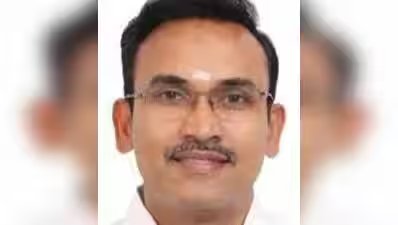
Chennai: Health minister Dr K G Arunraj on Monday said mental illness should be treated like any other disease, and that families’ understanding and support are the first step in recovery.He inaugurated a state-level stakeholder consultation and consensus-building workshop at Institute of Mental Health (IMH). The event was organised with National Health Mission (NHM), Tamil Nadu, under the theme “Lived Experiences Heard: Real Voices, Real Change.”“Mental illness is a disease caused by chemical changes in the brain. It can be treated, especially when detected early,” Arunraj said. “Mental health treatment succeeds only when a patient can contribute to society again. The govt will listen to persons with lived experience, their families, caregivers and community groups. This workshop will do that.”Setting out three priorities, he said mental health conditions should never be seen as a sign of personal weakness. The priorities are early identification and timely treatment, continuity of care through family support and rehabilitation, and protection of patients’ dignity and rights.About 120 crore people worldwide lived with a mental disorder in 2023, according to WHO, he said. The 2015-16 National Mental Health Survey by NIMHANS found that about 10.6% of adults surveyed had a mental disorder. Depending on the disorder, 70% to 92% of those affected did not receive treatment. “The biggest challenge is that many people do not know they are ill,” he said.District Mental Health Programme operates in all 38 districts, offering counselling and treatment at district hospitals, govt hospitals and block primary health centres. For 2026-27, an integrated mental health programme costing ₹26.87 crore has been announced for 12 districts, he said. It will strengthen mental health service units, school counselling, regional tele-mental health centres, and de-addiction and rehabilitation facilities.Fifteen concurrent workshops brought together psychiatrists, psychologists, social workers, nurses, administrators, voluntary groups, caregivers and persons with lived experience. Topics included caregiver perspectives, district services, primary care integration, substance-use recovery, and emergency, geriatric and adolescent psychiatry, and telepsychiatry.“We will be compiling the workshops’ recommendations and will submit them in two days. They will be used when the govt frames mental health policies in the future,” said IMH Director Dr M Malaiappan.