








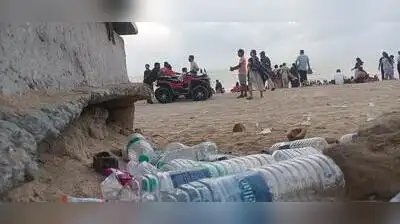
Vadodara/Ahmedabad: After making global headlines for slowing ships in the Persian Gulf during the Strait of Hormuz crisis, barnacles—tiny shell-covered marine creatures that cling to rocks and ship hulls—are now exposing alarming levels of microplastic pollution along Gujarat’s coastline.A study by researchers from Hemchandracharya North Gujarat University (HNGU) and the Maharaja Sayajirao University (MSU) has found that among 13 locations surveyed along the state’s coast, Shivrajpur recorded the highest concentration of microplastics in barnacles. Ironically, Shivrajpur is Gujarat’s Blue Flag-certified beach, internationally recognised for meeting the highest environmental, safety and cleanliness standards.Located about 12 km from Dwarka, the beach attracted nearly 6.8 lakh tourists in 2024.The researchers attributed the high levels of microplastics at Shivrajpur to poor waste management, indiscriminate dumping of plastic waste, fishing activities and the area’s geographic vulnerability.Published in the Marine Pollution Bulletin and highlighted by Nature, the study analysed eight species of barnacles along with seawater and sediment samples collected from 13 coastal locations between March 2023 and August 2024.The researchers extracted 484 microplastic particles from barnacles, 491 from seawater and 725 from coastal sediments, underscoring the widespread presence of plastic pollution in Gujarat’s marine ecosystem.“Plastic waste entering river systems eventually reaches the sea, where it gradually breaks down into microplastics,” said Krupal Patel, assistant professor in MSU’s Department of Zoology and one of the researchers. “Industrial effluents, particularly from sectors such as textiles, can also contribute to microplastic contamination. Fishing activities are another significant source of plastic entering marine ecosystems.”Among the eight species studied, Chthamalus barnesi accumulated the highest concentration of microplastics, while Megabalanus tintinnabulum recorded the lowest. Most of the particles were blue and black fibres measuring between one and two millimetres and were primarily composed of polypropylene and polyethylene—plastics widely used in packaging materials and fishing gear.Barnacles spend their entire lives attached to rocks, jetties and ship hulls, continuously filtering seawater for food. In the process, they accumulate microplastics present in their surroundings, making them reliable biological indicators of coastal pollution and ecosystem health.The study found a strong correlation between microplastic loads in barnacles, seawater and coastal sediments, suggesting the movement of plastic particles through the marine ecosystem.To place their findings in a global context, the researchers also reviewed 80 international studies published between 2013 and 2024. They concluded that barnacles, along with other sessile marine organisms such as sponges, oysters and sea anemones, can serve as reliable long-term bioindicators for monitoring marine plastic pollution worldwide.The research team comprised Mahima Doshi, a PhD scholar in HNGU’s Department of Life Sciences, Jigneshkumar N. Trivedi, assistant professor in the department, and Krupal Patel of MSU.Patel said the findings are particularly significant because microplastics ultimately enter the food chain. “Microplastics are already known to harm the environment. The bigger concern is that they eventually make their way into seafood consumed by humans,” he said, adding that barnacles provide scientists with a simple and effective tool to monitor the long-term health of coastal ecosystems.