









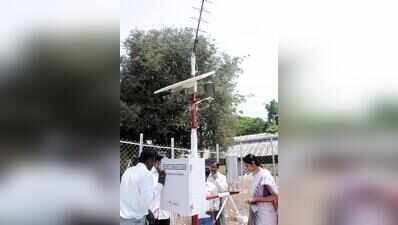
Chennai: Tamil Nadu plans to add 1,000 automatic rain gauges (ARGs) across the state to improve rainfall monitoring, forecast accuracy and disaster preparedness, said a senior official on Thursday.B Chandra Mohan, commissioner of revenue administration and disaster management, said the gauges would provide data every 15 minutes, with the eventual aim of having one in every village and panchayat. The state now has about 1,400 ARGs and more than 100 automatic weather stations.“This generates an enormous amount of data. The point is what we do with that data, how we use it to model our forecast, and how we use it to plan our responses for the disaster,” he said at the inauguration of the Northeast Monsoon Seasonal Outlook Forum 2026.Mohan said the state had identified about 1,030 locations with high or very high flood vulnerability and another 1,003 with medium vulnerability. Each location has been assessed for mitigation measures and response plans, including trigger points and evacuation arrangements.“The state is focusing not on a district, taluk or division. We are focusing on a location. Because location is reality. Location is where things happen,” he said.Mohan said the Integrated Flood Management Centre project, implemented by Tamil Nadu Disaster Risk Reduction Agency with the water resources department, currently focuses on the Chennai metropolitan region. The system uses rainfall, reservoir levels, inflows and planned outflows, along with past data, to generate street-level inundation forecasts up to three days ahead.“We are able to forecast which streets in Chennai, which areas could possibly get flooded in the following three days and what level of flooding is possible. Based on this, it gives agencies time to plan their rescue, relief and other measures, so that loss of life and property is minimised,” he said.Earlier, India Meteorological Department director general of meteorology Mrutyunjay Mohapatra said studies showed that during strong El Nino years, cyclone frequency, intensity and lifespan tend to be lower, with genesis shifting southward. “The track becomes subtle and the genesis area is towards the south which may impact south Andhra Pradesh, Tamil Nadu, Puducherry and Kerala,” he said.