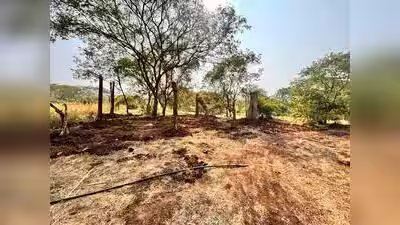









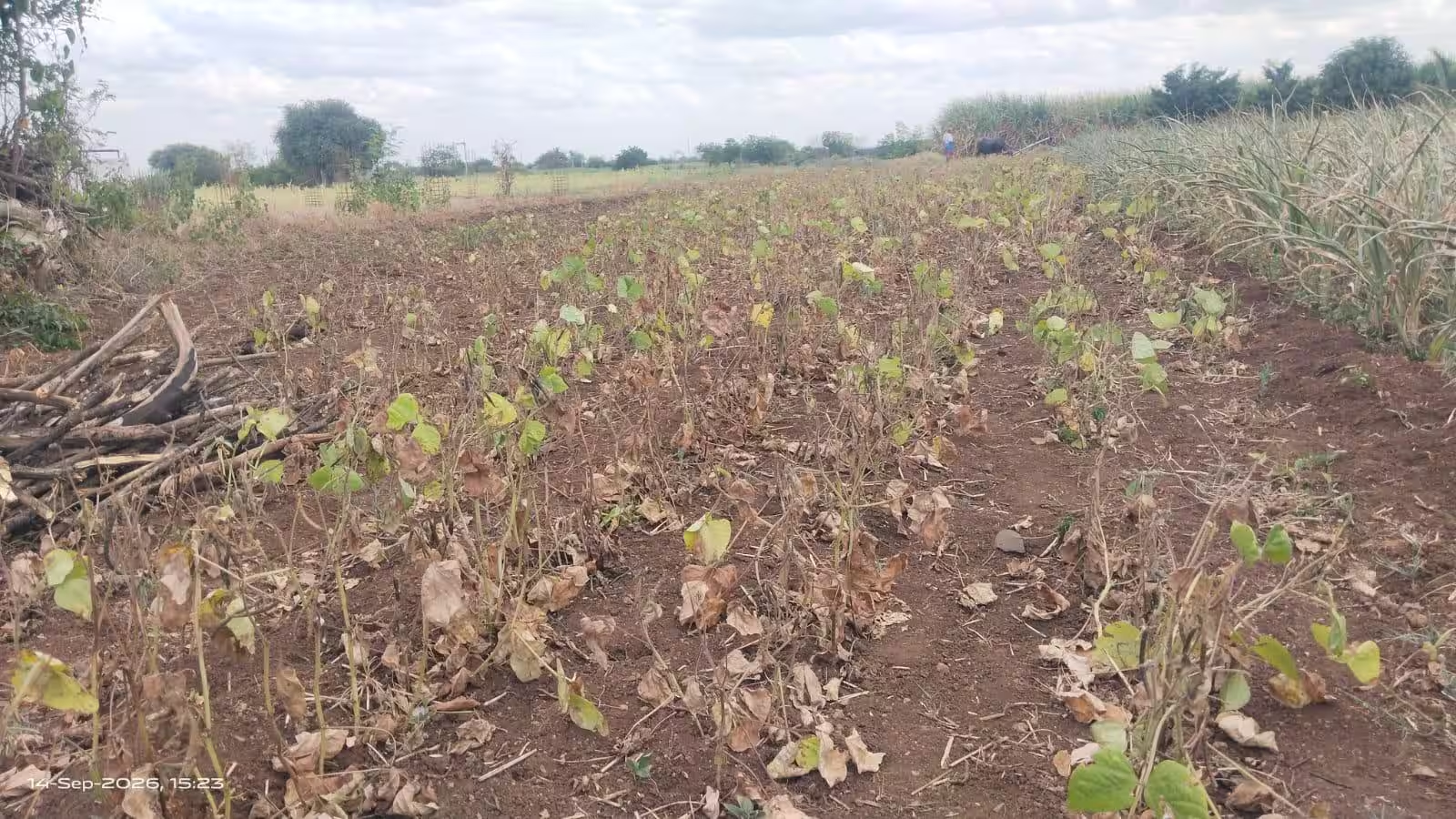
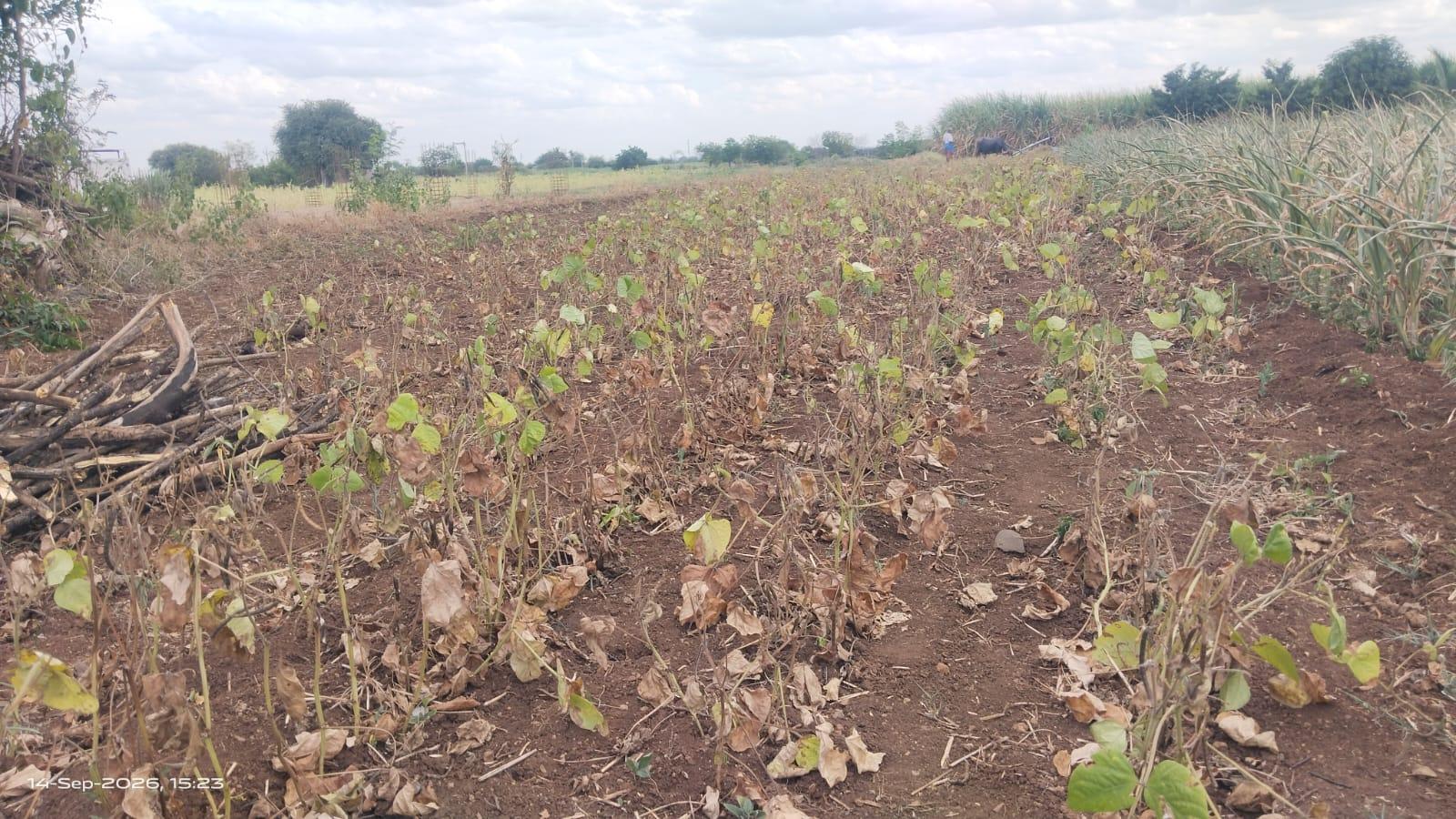
Kondi (Solapur): His two-acre sugar cane crop has stopped growing after 40 days without irrigation, farmer Sandeep Gaikwad of Kondi village in North Solapur has started giving it away as fodder to other farmers at throwaway prices.“The sugar factory will start in a month. Till then, my field will wither and I will not be able to get even 10 tonnes of harvest. Hence, I have turned it into fodder. At least, it will fetch me some money,” he said, standing by his 50metre deep well which has just about a metre of water.Gaikwad said farmers in Kondi were experiencing a different weather extreme this year. The village, one of the revenue circles of Solapur district, recorded 1,150mm of rainfall last year. This year, it has received only 105mm so far.“I also have two acres under lime plantation that have not produced fruit because they are water-stressed since the last 45 days. My well has no water. Sina river, which flooded last year, is dry now,” Gaikwad said.The crisis is not confined to sugar cane. Shri Kumbar, a farmer from Mandrup village in South Solapur tehsil, has given up on urad, tur and onion crops spread over 10 acres.“Last year, we had excess rainfall and I felt I could extensively sow urad, tur and onion after the June and July rainfall. But Aug was a dry month. Everything has wilted in my fields and I won’t get even 10% of the harvest,” he said.The borewells are dry, Bhima river is 10km away and only some farmers get water through pipelines. The rest are struggling, Kumbar added.Nearly 95% of Solapur district’s kharif crop area is facing severe moisture stress with several parts recording dry spells of 29 to 42 days during the crucial crop-growth period, a district drought situation report said.The report, prepared by the district administration, said rainfall this year in Solapur was highly erratic and uneven. Against the average of 481mm, only 197.9mm was recorded up to Sept 11, with a cumulative deficit of 46.4%.“The situation has been severe in Aug and Sept. The district received only 107.5mm of rain in Aug, about 40% of the normal for the month. Several revenue circles in Karmala, Madha, Malshiras and Mohol talukas experienced dry spells lasting 35 to 42 days,” district collector S Karthikeyan told TOI.The prolonged break came just as soybean, pulses and other kharif crops need the moisture for flowering, pod formation and grain filling, he said.The assessment, based on field inspections, said the impact was particularly serious on soybean and urad cultivated on light soils. In some fields, crops had completely dried up. Even crops on medium and heavy soils were affected, with flowering, pod formation and grain filling adversely affected.District agriculture officer Shukracharya Bhosale said, “The damage won’t be reversed even if it rains now because crops that have already suffered moisture stress and entered premature maturity can’t recover.”Water scarcity spreads across districtThe district administration has records of 43 water tankers operating in 57 villages and 225 hamlets across nine of Solapur’s 12 talukas, including Akkalkot, Barshi, Karmala, Madha, Mangalwedha, Malshiras, North Solapur, South Solapur and Sangola.The report also showed depleted water availability in several minor irrigation projects. Ujani, among the biggest reservoirs, had storage of about 117.17 TMC on Sept 9, nearly 99% of its capacity. But several smaller reservoirs and minor projects had significantly lower stocks.A struggle to stay afloatFor a predominantly agricultural district, the impact extends beyond crop production in Solapur. Reduced yields could affect farm incomes, demand for agricultural labour and the availability of fodder and water for the rest of the year. “As per our assessment, the fodder in the district can last for a month. We will give farmers seeds of grass varieties that can sustain in less water. Fodder camps too will come up,” the collector said.Soybean, pulses take the hitSoybean is the largest kharif crop affected by the prolonged dry spell.Around 1.30 lakh hectares are under cultivation in Solapur. About 81,888 hectares are under maize, 74,173 hectares under tur, 39,965 hectares under urad and 17,064 hectares under bajra.The district report said soybean and maize crops had stunted growth and drying of plants, pests and diseases had increased, raising the possibility of a substantial decline in yields.Urad and moong crops, in the harvesting or maturity stages, were also affected since rainfall was inadequate during flowering and pod-filling stages. Tur crops are stunted, while bajra has started drying.A field inspection ordered by the district administration on Sept 2 brought together scientists from an agricultural university, tehsildars, taluka agriculture officers, IIT Bombay representatives and progressive farmersTeams were told to inspect at least two villages in each revenue circle and assess the crop situation. Reports received from all eight talukas indicated widespread crop stress.Onion acreage falls sharplyThe historical average onion cultivation area in Solapur is around 28,519 hectares. After hitting 40,420 hectares in 2025-26, the area under onion this season has fallen to 18,858 hectares. South Solapur has the highest onion acreage at 6,504 hectares.The area has fallen sharply in North Solapur where only 155 hectares were planted. In Mohol and Barshi, onion acreage stands at 332 hectares and 804 hectares, respectively. The decline comes amid concerns over water availability and kharif crop uncertainty.IIT Bombay flags deficient rainfallAn assessment based on Mahalanobis National Crop Forecast Centre observations and analysed by IIT Bombay highlighted the severity of a poor monsoon.The district report said rainfall in Solapur between June 1 and Aug 21 was deficient with a 20% to 60% shortfall. Between Aug 6-21, it was scanty, an even more severe deficiency.The moisture adequacy index of the centre cited in the report also indicated unfavourable soil-moisture conditions across talukas.Sowing exceeds normal, but output under threatKharif sowing was 105% of the normal 3,37,968 hectares. Pandharpur recorded 165% sowing, followed by North Solapur at 149%, Karmala at 136% and Mohol at 129% Madha recorded 59.3% of its normal sowing area. The high-sowing figures, officials said, won’t translate into a good harvest because the crops experienced prolonged moisture stress.