









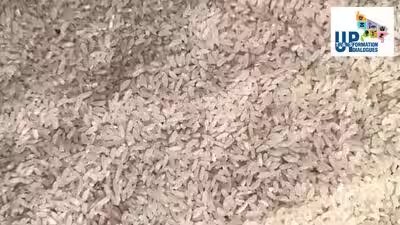
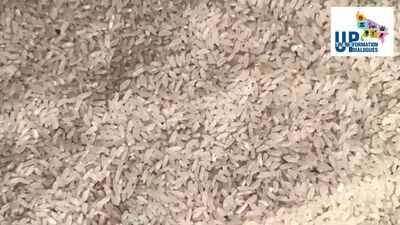
In the fertile Terai plains of eastern Uttar Pradesh, Siddharthnagar district is scripting a compelling story of revival and growth. Once known primarily for its historical ties to Lord Buddha and as an aspirational district facing developmental challenges, Siddharthnagar is now emerging as a vibrant hub of agricultural innovation, infrastructure development, and international trade. At the heart of this transformation lies Kalanamak rice — the aromatic, black-husked “Buddha’s Rice” or “Buddha’s Blessing” — whose resurgence under the One District One Product (ODOP) initiative has fueled economic upliftment, boosted farmer incomes, and positioned the district on the global map. Thanks to chief minister Yogi Adityanath who left no stone unturned to ensure this Eastern Uttar Pradesh districts stands out in utilizing its natural resources and make a niche for itself. Siddharthnagar, carved out in 1997 from parts of Basti district, borders Nepal and lies in the culturally rich region associated with Kapilvastu. For decades, the district grappled with issues typical of many rural eastern UP areas: limited infrastructure, fragmented landholdings, and reliance on traditional subsistence farming. However, concerted government efforts in recent years — through schemes like ODOP, infrastructure push under Uttar Pradesh’s development vision, and targeted agricultural interventions — have catalyzed change. Official data highlights impressive strides. Under ODOP, Kalanamak rice cultivation has expanded dramatically. In 2018, it covered just 2,715 hectares involving around 2,915 farmers. By 2024, this had surged to 18,000 hectares with over 23,000 farmers engaged. Production has followed suit, rising from approximately 59,730 quintals in 2018 to 360,000 quintals in 2024. This growth is not merely quantitative. Improved varieties, including semi-dwarf strains like Bauna Kalanamak, have enhanced yields while maintaining the grain’s unique qualities. Farmers report better resilience, lower input costs in organic systems, and healthier soils. The price realization for farmers has also multiplied — from around Rs 40/kg in 2018 to over Rs 135/kg in subsequent years, with premium organic or export-grade fetches even higher, up to Rs 250-300/kg domestically.
Kalanamak Rice: The Aromatic Jewel
Kalanamak rice, granted a Geographical Indication (GI) tag for 11 districts in eastern UP with Siddharthnagar as a core area, is no ordinary grain. Cultivated since at least 600 BC, legend has it that Lord Buddha gifted this rice to the people of the region. Known for its distinctive aroma, black husk (which turns lighter upon milling), slender grains, and high nutritional profile — including antioxidants, zinc, and better protein content compared to many conventional varieties — it stands out in a market dominated by high-yielding but less flavorful hybrids. Its revival from near-extinction (acreage had plummeted to under 0.5% of total rice area in the district by early 2000s) is a testament to persistent efforts by the district administration, agriculture department, NGOs, and research institutions. Demonstrations, Kisan Melas, seed distribution, and scientific dialogues have played a pivotal role. The establishment of a dedicated Kalanamak Rice Research Centre in Siddharthnagar in collaboration with the International Rice Research Institute (IRRI) is set to further accelerate progress, focusing on pest-resistant varieties, seed quality, and yield optimization. The UP government has emphasized the Centre’s role in expanding cultivation to 1,00,000 hectares across the state in the coming seasons. Production statewide for Kalanamak and related varieties has already reached impressive levels, with average yields touching 4 tonnes per hectare.
Export Spurt
The real game-changer has been the thrust on exports and value addition. Under ODOP, Siddharthnagar pioneered shipments of Kalanamak rice. Early consignments went to Singapore, followed by Nepal. Uttar Pradesh exported around 500 tonnes last year to these markets, with growing inquiries from Thailand, Vietnam, Sri Lanka, Japan, and beyond. The grain’s cultural link to Buddha provides a unique marketing edge in Buddhist-majority or culturally attuned nations. The central government has supported this by allowing special export quotas (up to 1,000 tonnes in certain periods) even amid broader rice export restrictions. Buyer-Seller Meets, such as the one planned for November 2025 in the district, are facilitating direct linkages between farmers, processors, and international buyers. E-marketplaces and ODOP platforms have further broadened reach. This export momentum is spawning a mini-ecosystem of businesses. Local entrepreneurs are venturing into processing, packaging, branding, and organic certification. Stories abound of small food businesses achieving 5x profits by dealing in Kalanamak. Farmer Producer Organizations (FPOs) and community-based organizations are handling seed production and collective marketing, enhancing bargaining power and resilience. The economic multiplier effect is evident. Increased farmer incomes are stimulating local demand for goods and services, while the district’s recognition — including the National ODOP Award for Kalanamak promotion — is attracting investments in allied sectors like food processing, logistics, and agri-tourism.
Broader Infrastructure and Holistic Development
Kalanamak’s success is intertwined with the district’s overall growth. Improved road connectivity, including benefits from Purvanchal Expressway linkages, better power supply, digital initiatives, and health/education infrastructure, are supporting this agri-led model. As an aspirational district, Siddharthnagar has leveraged central and state schemes to upgrade basic amenities, which in turn bolster agricultural productivity and market access. The trajectory is positive. The upcoming Kalanamak Rice (Buddha Rice) Festival is expected to showcase the heritage, boost tourism, and attract more stakeholders.
A Model for Rural India
Siddharthnagar’s journey offers valuable lessons for other regions: leveraging traditional strengths through modern interventions, GI branding for premium markets, public-private-community partnerships, and integrating cultural heritage with commerce. As India aims for ambitious agri-export targets and sustainable rural development, districts like Siddharthnagar demonstrate how a single high-value crop can drive inclusive growth. With the IRRI collaboration, expanding cultivation, and rising global demand for nutritious, aromatic specialty rices, Kalanamak is poised to become a flagship for “Brand India” in the premium segment. For the farmers of Siddharthnagar — many of whom have seen their fortunes transform — Buddha’s blessing continues to yield rich dividends. As one local farmer noted in studies, the shift to improved yet traditional varieties has not only boosted yields but preserved soil health and cultural pride. In an era of climate-conscious consumers seeking authentic, nutrient-dense foods, Siddharthnagar’s Kalanamak rice is more than a commodity — it’s a symbol of revival. The district’s growth story is far from over. With sustained policy support, research backing, and entrepreneurial energy, Siddharthnagar is well on its way to becoming a beacon of sustainable agricultural prosperity in Uttar Pradesh and beyond. (District Transformation)