









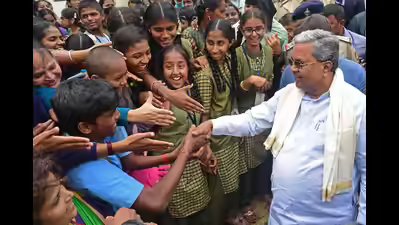
Bengaluru: Should Siddaramaiah resign as chief minister as widely expected, his departure will bring the curtains down on one of the most influential and enduring political careers in Karnataka Congress history.Siddaramaiah, 78, leaves a legacy built on welfare politics, backward class mobilisation and legislative dominance that shaped Karnataka Congress’ trajectory for nearly two decades. Currently, he remains the only OBC member heading a Congress govt in the country and a veteran who presented a record 17 state budgets, including the one in Feb this year.Just prior to that feat, on Jan 7, he became Karnataka’s longest-serving CM, overtaking his political mentor D Devaraj Urs. Siddaramaiah has so far completed eight years and 12 days as CM across two terms and like Urs, Siddaramaiah, who hails from Mysuru and belongs to a backward community, built his politics around welfare measures and social justice initiatives targeting marginalised groups.Since joining Congress in 2006, Siddaramaiah remained the party’s central legislative figure for nearly 17 years, serving continuously either as CM or opposition leader. He emerged as Congress’ undisputed mass leader in the state and retained strong control over the legislature party through changing political phases. He served as leader of opposition between 2009 and 2013 before leading Congress to a decisive assembly election victory in 2013. He then completed a full five-year term as chief minister between 2013 and 2018.Even after Congress failed to secure a majority in 2018, Siddaramaiah continued as Congress Legislature Party leader. Following the collapse of the Congress-JD(S) coalition govt, he again became leader of opposition from 2019 to 2023. When Congress returned to the helm in 2023, he again won the leadership contest despite stiff competition from DK Shivakumar.One of the defining moments of his political rise was the 320km padayatra from Bengaluru to Ballari against alleged illegal mining by the Reddy brothers and their associates. The campaign significantly boosted Congress ahead of its 2013 victory and boosted his image and prospects.Political analyst Prof Ravindra Reshme said: “Siddaramaiah’s stature within the legislature party has often gone beyond the formal post, with most Congress MLAs traditionally identifying with his leadership. Even during opposition years, he remained the principal face of the party in the assembly and continued to dominate legislative strategy.”During his first tenure, Siddaramaiah emerged as a key architect of the Ahinda social coalition representing minorities, backward classes and Dalits. His govt introduced the Karnataka Scheduled Castes Sub-Plan and Tribal Sub-Plan Act and commissioned the state’s first caste survey, though it was never implemented due to political opposition.Born into a modest Kuruba family, Siddaramaiah began his career as a lawyer before entering the assembly from Chamundeshwari in Mysuru in 1983. Re-elected in 1985, he became minister for animal husbandry and veterinary services in the Ramakrishna Hegde govt. He later held several senior positions in Janata Dal govts, including deputy chief minister in the JH Patel govt in 1996 and leader of opposition during the BJP regime.His political fallout with JD(S) patriarch HD Deve Gowda over the chief minister’s post in 2004 altered the course of his career. After serving briefly as deputy CM in the Congress-JD(S) coalition govt between 2004 and 2005, Siddaramaiah was expelled from JD(S) in 2005. He joined Congress the following year.During his second term as CM, Siddaramaiah implemented internal reservation, though the move is currently facing legal scrutiny. A second caste survey conducted during his tenure is also awaiting implementation.However, his career was not without a blot. The controversy surrounding the Hublot watch issue during his first tenure as CM and the Mysuru Urban Development Authority land allotment case involving his family members in the second dented his image, though he received a clean chit in both cases.