








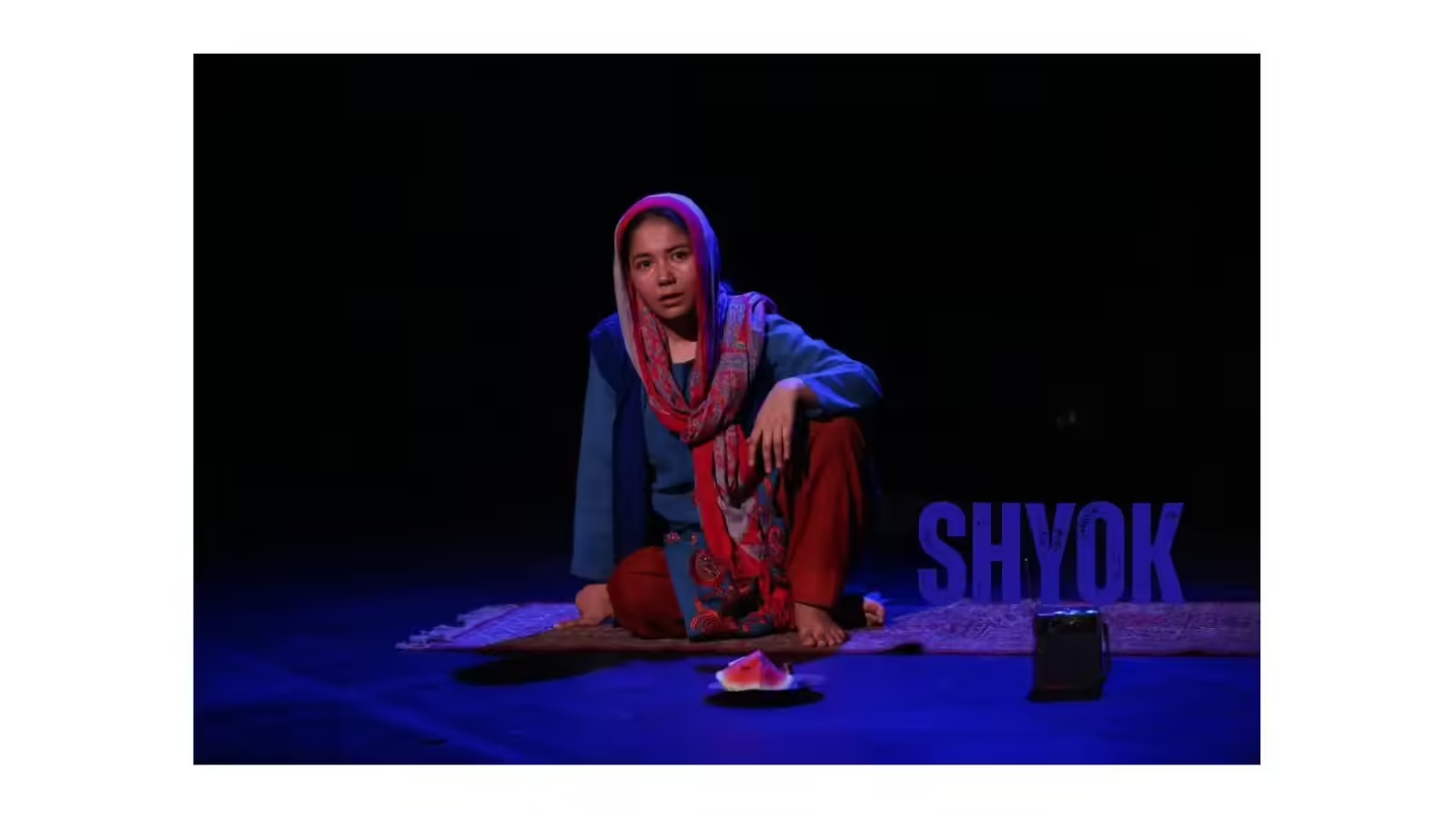
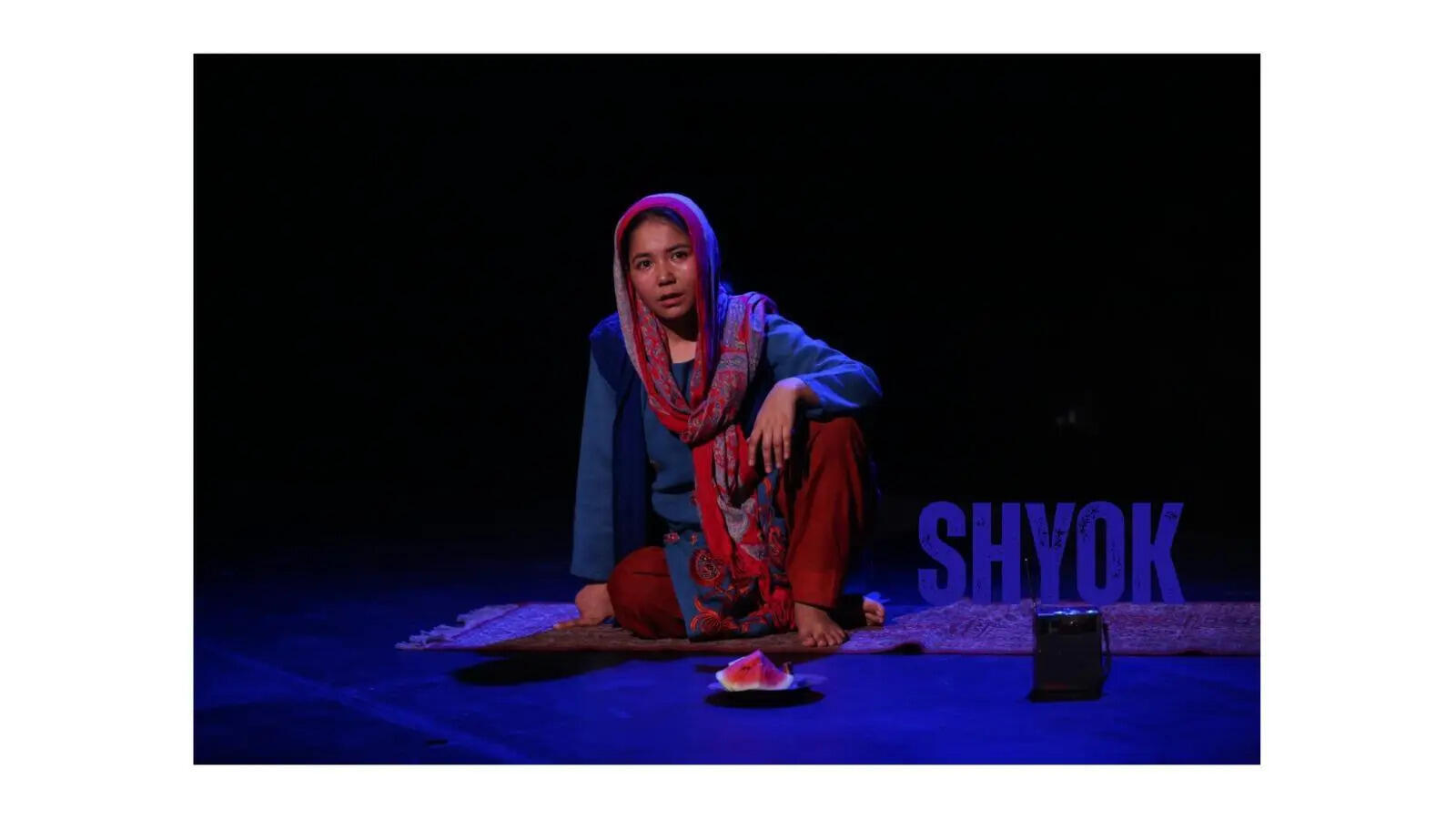
Pune: The mountains do not merely form a backdrop, but become witnesses in the play Shyok. The rivers remember what borders erase and radio songs travel farther than people ever can.The play will be staged as part of the Shreeram Lagoo National Theatre Festival on May 30 at 5pm at the Shreeram Lagoo Rang Avkash. It arrives in Pune after travelling through festivals, open mountain spaces in Ladakh and intimate theatre circuits across India. The production is directed by Mumbai-based Bhushan Patil, originally of Dhule, and has completed 15 shows over the last two years.Patil traced the play’s origins to a student trip during his time at the National School of Drama, from where he graduated in 2023. “One of my batchmates, Tsering Lhamo, who performs in the play, belongs to Ladakh where we had gone for an educational trip. We came across many stories from Turtuk, the last Indian village before the Line of Control with Pakistan. I stayed on for months, thereafter. It was a personal attraction towards the mountains, rivers, tribes and the people,” he said.The play follows Haseena, a woman separated from her husband after the 1971 Indo-Pakistan war redrew borders overnight — leaving one half of their world in India and the other in Pakistan. At the heart of the play is longing, despair and separation. A husband’s voice returning through an old radio signal. A river standing between two countries. Songs from films Aradhana and Kati Patang becoming reminders of a life that can no longer be lived together.Patil wrote the play himself, building it around oral histories and the geography of the Shyok river. “Shyok is the name of the river that flows from the glacier through Ladakh, Turtuk and then into Pakistan. After the war, half the river remained in India and half in Pakistan. No human beings are allowed there. The literal meaning of Shyok is ‘river of death’. It is deep, curvy and dangerous. Many people have died in it,” he added.The production keeps its staging simple and portable. “The set fits into a bag. One painting by a Ladakhi artist, sparse lighting and the actor’s body do most of the work. In theatre, no show is ever the same. The audience changes, the space changes. In India, no two spaces are identical, so we keep light and adapt,” Patil said, adding: “Heavy sets stop you from travelling. We wanted a minimalistic and imaginative theatre language.”Performed largely in Hindi with brief stretches of Ladakhi and Balti, the play uses the languages naturally to reflect how people from the region speak. “The Ladakhi and Balti sections are only for two or three minutes. Most of the play is in Hindi, but we kept the rhythm and texture of how people there speak,” he said.The 70-minute solo performance unfolds without an interval, focusing on memory, longing and the emotional damage left behind by war.