







Chief Minister Yogi Adityanath has described the district as shifting from “aspirational” to “inspirational”, aligning with the larger goal of a developed Uttar Pradesh by 2047. Continued focus on education quality, tourism management and private investment will determine how far this progress goes in the coming years.Shravasti is a district in eastern Uttar Pradesh. It is famous because Lord Buddha spent 24 rainy seasons here at Jetavana. For a long time, the district remained one of the most backward areas in India. It had poor roads, weak electricity, low literacy and little industry. In January 2018, NITI Aayog included Shravasti in the Aspirational Districts Programme.Since Yogi Adityanath became Chief Minister in March 2017, the district has seen steady progress in basic facilities, connectivity, education, health and local livelihoods. By 2026, its composite development score had risen by about 65%.
Stronger Infrastructure and Connectivity
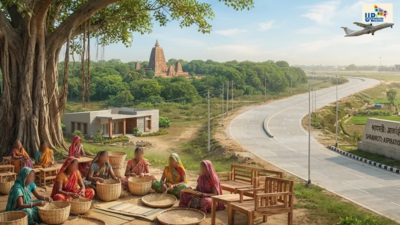
Electricity was a major problem earlier. Under schemes such as the Deen Dayal Upadhyaya Gram Jyoti Yojana and other state initiatives, almost all villages and households now have grid power. Substations and feeders have been upgraded, and smart meters are being installed. This has helped farmers run tube wells and small businesses operate without long power cuts.Road connectivity has improved through rural roads under the Pradhan Mantri Gram Sadak Yojana and larger highway projects. Four-lane corridors linking Shravasti towards Bahraich, Lucknow, Ayodhya and the Nepal border are under development or have been approved. These roads reduce travel time and help trade and tourism. A new railway line from Bahraich through Shravasti and Balrampur to Khalilabad has been approved. This will give the district its first proper rail link.The biggest connectivity milestone is the airport. Prime Minister Narendra Modi inaugurated Shravasti Airport in March 2024. It started with small 19-seater flights to Lucknow under the UDAN scheme. Expansion work is underway, with land acquisition and around Rs 350 crore approved so that larger aircraft can operate and more pilgrims can reach the Buddhist sites easily.In July 2026, Chief Minister Yogi Adityanath inaugurated projects and laid foundation stones for 83 projects worth more than Rs 396 crore in the district. These covered roads, civic works, health centres and other public facilities.
Progress under the Aspirational Districts Programme
NITI Aayog tracks progress in health, education, agriculture, financial inclusion, skill development and basic infrastructure. Shravasti’s overall score rose from 37.10 in June 2018 to 61.11 in March 2026 — a 65% improvement. One of its blocks, Jamunaha, even topped the national quarterly ranking of Aspirational Development Blocks in early 2024. These rankings reflect better delivery of schemes at the ground level.
Improvements in Health and Education
Health services have expanded through Ayushman Bharat and state schemes. By late 2025, more than 3.34 lakh Ayushman cards had been issued in the district, giving families free treatment cover. Nutrition and anaemia-control programmes have also shown good results, with the district ranking high in some state campaigns.Education was a weak area; Shravasti long had one of the lowest literacy rates in Uttar Pradesh. In 2022, Yogi Adityanath launched the School Chalo Abhiyan from Shravasti to bring every child into school. Later efforts included adult literacy drives for women and better foundational learning programmes.In national PARAKH surveys, government school students in Classes 3 and 6 from Shravasti performed among the best in the state. Under the Right to Education Act, the district topped Uttar Pradesh in enrolling children from economically weaker sections in private schools for the 2025-26 session.Plans for a medical college under the One District One Medical College vision are also being pursued.
Livelihoods, Agriculture and One District One Product
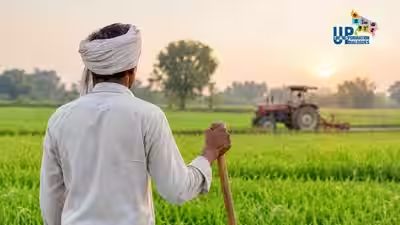
Agriculture remains the main occupation. Irrigation has improved, and schemes such as PM-Kisan and crop insurance have reached more farmers. Rural employment under MGNREGA continues, and women’s self-help groups have grown under the National Rural Livelihood Mission.The One District One Product (ODOP) scheme has focused on tribal crafts — baskets, mats, trays and decorative items made from bamboo, grass and other natural materials — along with wooden furniture. Artisans, many from tribal communities, have received training, toolkits, branding assistance and market linkages. This has raised incomes for small family units, reduced some migration and preserved traditional skills. Hundreds of beneficiaries have received toolkits in recent years.Pradhan Mantri Awas Yojana and toilets under the Swachh Bharat Mission have reached large numbers of poor families, improving dignity and living conditions.
Tourism and Heritage Focus
Shravasti’s main strength is its Buddhist heritage. The government is developing it as part of the Buddhist Circuit. An integrated tourism project worth about Rs 76.5 crore is underway (nearly 60% complete by mid-2026). It includes a landscaped walking path, an interpretation centre with multimedia and AR-VR displays, a large garden with meditation spaces, and better visitor facilities.Improved air and road links, along with the future rail connection, are expected to bring more pilgrims from Thailand, Sri Lanka, Japan and other countries, creating local jobs in hospitality and guiding.
Better Governance and Welfare Delivery
The district has frequently ranked high in the state’s Integrated Grievance Redressal System (IGRS), sometimes jointly topping the list. This shows quicker handling of public complaints and better monitoring of projects. Direct benefit transfers have made pensions, scholarships and other payments more transparent. Overall welfare coverage — free ration, housing, LPG connections and health cards — has expanded in line with statewide efforts.In nine years, Shravasti has moved from being counted among India’s most backward districts to showing measurable gains in infrastructure, human development indicators and local economic activity. The combination of the Aspirational Districts Programme, focused state projects, better connectivity (including the new airport and upcoming rail line), and livelihood schemes such as ODOP has created a clearer path forward. Challenges remain in literacy, sustained industrial investment and full utilisation of new facilities, but the direction of change is visible.