






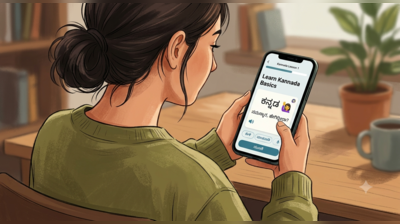
Bengaluru: As Karnataka celebrates 71st Rajyotsava, traditional Kannada names for daily essentials are gradually being replaced by Hindi and English terminologies in supermarkets, shopping malls and kitchens across Karnataka.Here’s an uncomfortable question: Are we slowly forgetting Kannada when naming everyday essentials such as cereals, pulses and vegetables?Where has our ‘akki’ gone? Why has ‘togaribele’ become ‘tur dal’? Where is the familiar ‘hittu’ that generations of Kannadigas grew up with? Why are ‘rave’ and ‘avalakki’ increasingly being labelled as ‘sooji’ and ‘poha’? What may appear to be a minor change could well hide a much larger problem — the gradual disappearance of Kannada from everyday commercial life in its own homeland.“Consumers in Karnataka are buying agricultural produce grown by the state’s farmers and sold by traders operating on Karnataka’s soil, yet the language belongs to an entirely different linguistic landscape. Perhaps traders are catering to a larger market where Kannadigas are treated as a minority. On the other hand, we have seen businesses readily embrace local traditions and festivals to market and advertise their products,” said Hari Prasad Nadig, an entrepreneur and tech consultant from Bengaluru.“Why should a Kannada-speaking consumer have to remember Hindi or English names to identify and buy groceries in Karnataka?” questioned Mahantesh M Patil, secretary and former national youth president of the All India Veerashaiva-Lingayat Mahasabha.Patil said his efforts to persuade govt departments and Kannada organisations to ensure Kannada is not forgotten have yielded little response. He clarified that this was not an argument against Hindi or English, but a demand that every language be given due respect.Several Kannadigas believe that the greatest threat to a language begins when familiar words disappear from household conversations. “Children and youngsters today may recognise tur dal but gradually become unfamiliar with our own togari bele. They even search for poha online without realising that their grandparents called it ‘avalakki’,” said Thejesh GN, an independent technologist and open-data enthusiast.Kannada Development Authority (KDA), whose mandate is to promote Kannada, has also acknowledged the growing trend in commercial establishments.Chairperson Purushothama Bilimale said, “If a Kannadiga visits a supermarket or a mall, he or she may not be able to buy anything due to these linguistic differences. However, this can be corrected with immediate effect through a govt order. The KDA will formally issue an order in a day or two to retain Kannada names of everyday essentials in all commercial establishments, e-shopping platforms and APMCs,” Bilimale said.