








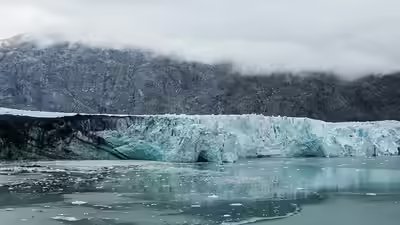
What scientists found beneath East Antarctica could change how we understand sea level rise? Image credit – Wikimedia
The enormous and stationary Totten Glacier, located in East Antarctica, seems uninteresting from the surface. However, according to various studies, the essential point lies far beneath its frozen surface. Studies using sonar measurements and radar images have shown that warm water could penetrate undersea valleys, accessing the cavity at the bottom of Totten’s ice-shelf.It means that an entirely new view on the structure of the Antarctic’s largest glacial complex emerged since Totten was discovered to be connected to the oceans via secret routes transferring warm waters towards the glacier.The significance of the mentioned hidden paths is associated with the fact that the glacier discharges water from a large region of East Antarctica called the Aurora Subglacial Basin. In addition, popular summaries of scientific data on the glacier emphasise the fact that it holds ice masses that, melted, would lead to a rise in the Earth’s sea levels by more than 3.5 meters.The critical processes take place beneath the ice layerThe surface of Totten Glacier provides no clue to its true dynamics. The researchers concluded that the critical processes happen underneath the ice shelf and on the deep continental shelf that lies in front of it.The study published in Nature Geoscience indicated that the warm seawater could reach the cavity under Totten Glacier via seafloor troughs. The scientists used ice-penetrating radar and bathymetry to uncover the secrets of the previously hidden underwater features. These results were crucial for the scientific community since East Antarctica was considered more stable and safer than some regions in West Antarctica.Totten Glacier proved that this was not always the case. The study revealed that the glacier lies below sea level, which means that the warm oceanic currents can easily reach the susceptible zones of the glacier through underwater channels.Warm water path to the glacierIn further studies, scientists managed to map these paths more accurately. According to several studies, the warm ocean waters flow into the cavity of the glacier via deep shelf depressions and troughs. It turned out that there is very important geometry hiding below the ocean surface. Rather than a flat sea floor impeding the flow of heat, there were channels running deep which assist in moving the warm water further inland.The researchers wrote in their paper that this research shows that the structure of the seabed is really important for controlling how ocean heat reaches the Antarctic glaciers. This is significant because not only does the glacier’s fate depend on how warm the air is or how much snow falls, but it also depends on how the seabed looks, kilometres below both the ice and ocean water.
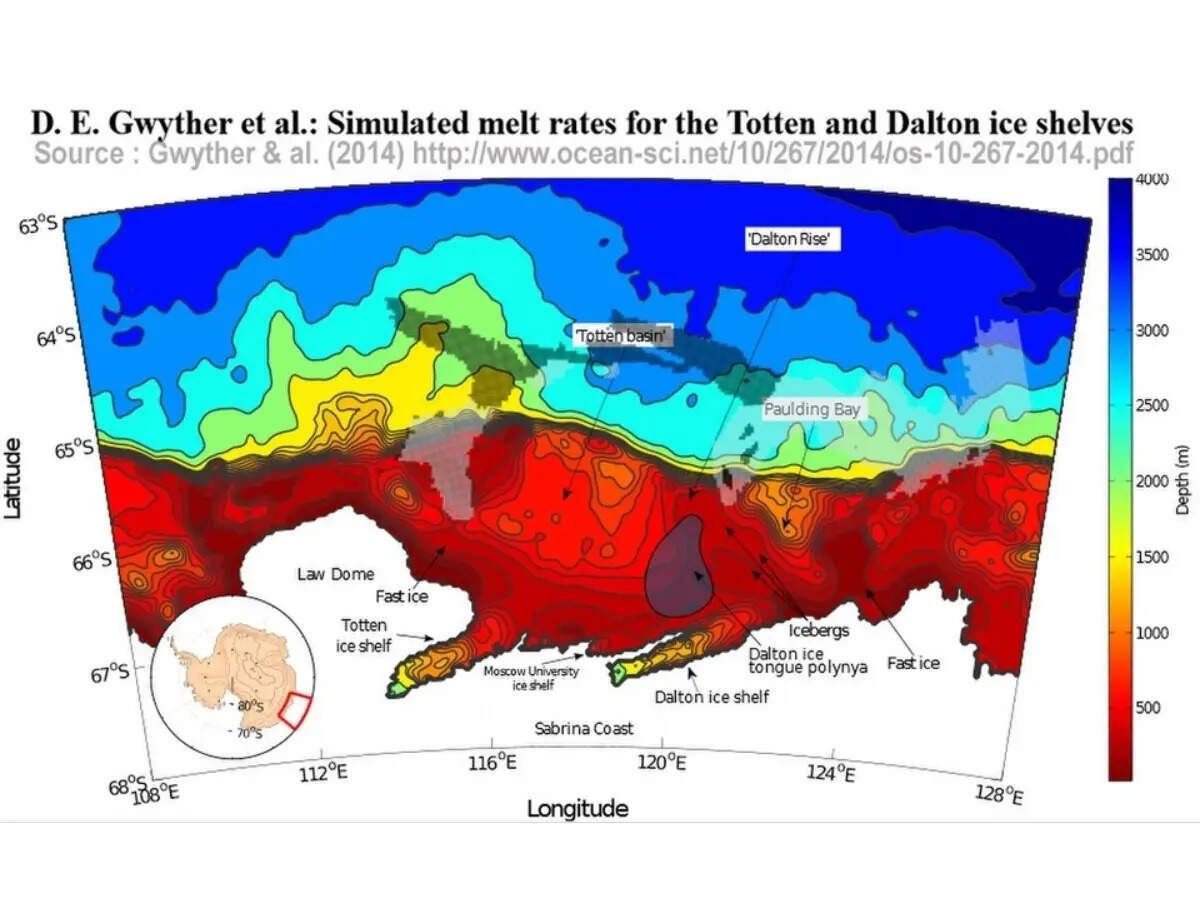
The hidden warm-water tunnels beneath Antarctica’s Totten Glacier surprised scientists. Image credit – Wikimedia
Significance of the cavity under the ice shelfThe under-ice cavity beneath Totten Glacier serves as a contact point between the ocean waters and the glacier itself. When warm water penetrates this cavity, the bottom side of the ice shelf melts. Ice shelves play an essential role in slowing down the speed at which ice from the grounded glaciers flows towards the sea. These shelves are often referred to as natural supports or buffers.Nature Geoscience also stated that Totten had become one of the most prominent examples of oceanic melting in Antarctica. It increased the significance of Totten Glacier beyond the continent itself since an invisible channel beneath the glacier became part of the bigger conversation about ice stability and future rising seas.Totten glacier’s size is the reason why scientists focus on itIt is the sheer size which explains why scientists pay so much attention to it. According to the Australian Antarctic Program and the National Snow and Ice Data Center, Totten Glacier drains one of the largest ice catchments in East Antarctica. Researchers point out that the mentioned 3.5 meters of potential rise in sea level refer to the larger ice basin connected to Totten Glacier rather than a prediction.But its size explains the interest in the way the ocean affects Totten. This is, after all, a tale of hidden geography. The most critical evidence, however, cannot be seen by satellites peering from above. It is found in the deep troughs and underwater channels that lie below and ahead of the glacier.Questions left for scientistsScientists are currently investigating just how much warm water gets into Totten and what changes might take place in the oceans in the future. Additionally, scientists are researching the effects of climate and oceanic circulation on the glacier.One important conclusion scientists have reached, though, is that Totten is not cut off from the ocean. Channels under the ice of East Antarctica allow warm currents to pass directly underneath the glacier.This insight changed scientists’ ideas about one of Earth’s most expansive ice formations and showed that what happens under the ice matters as much as what is on top of the ice.