








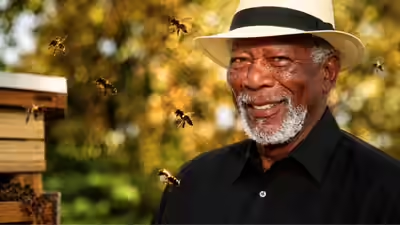
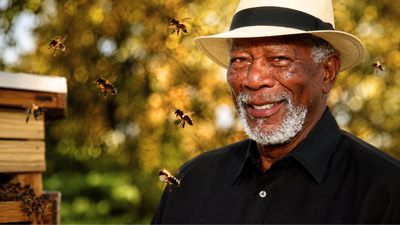
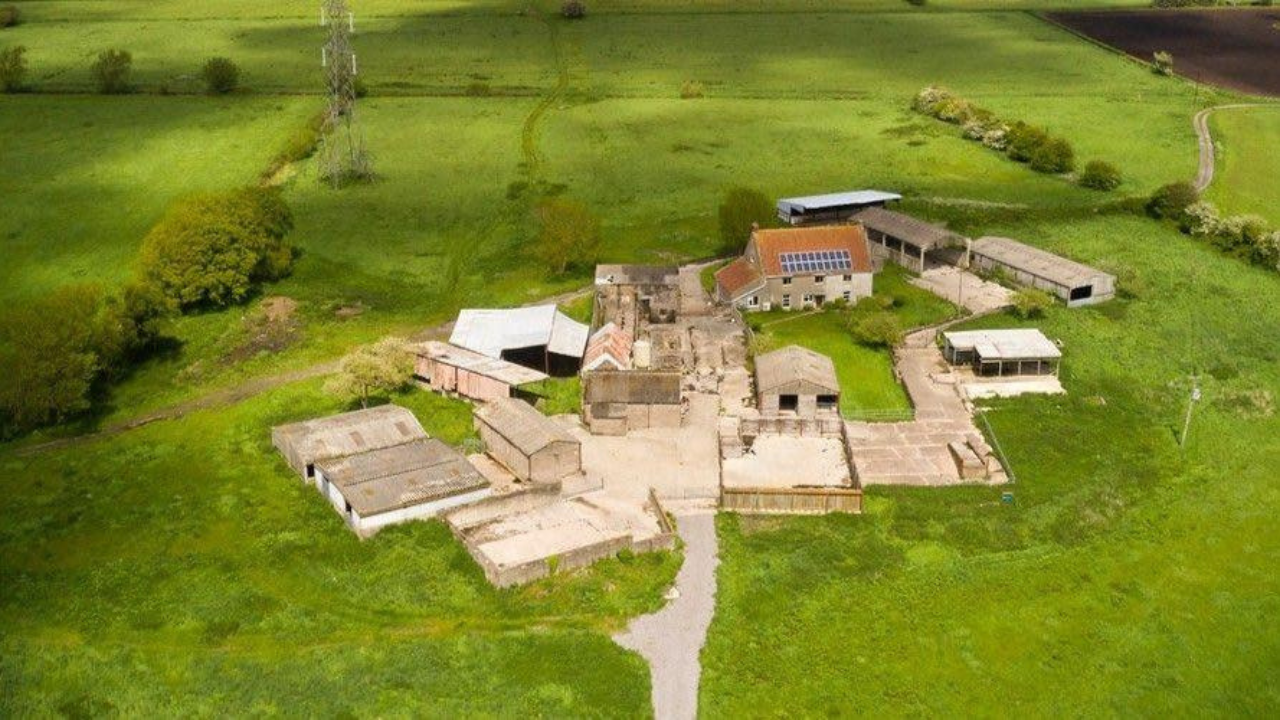
Long before celebrity environmental campaigns became common, Morgan Freeman quietly began transforming his 124-acre ranch in Mississippi into a safe haven for bees. Concerned about declining pollinator populations and the growing environmental threat posed by disappearing honeybees, Freeman imported 26 beehives from Arkansas in 2014 and began planting bee-friendly vegetation across his property, including lavender, clover, and magnolia trees. What started as a personal interest in beekeeping eventually turned into a broader conservation-focused effort aimed at supporting pollinators that play a critical role in ecosystems and global food production.
Why Morgan Freeman became concerned about bees
Freeman has spoken publicly about his concern over the rapid decline in bee populations worldwide. Scientists have linked bee losses to several major factors, including pesticide exposure, habitat destruction, disease, parasites such as Varroa mites, and climate-related environmental stress.The issue gained global attention through discussions surrounding Colony Collapse Disorder, a phenomenon in which large numbers of worker bees suddenly disappear from hives. Researchers warn that long-term pollinator decline could seriously affect biodiversity and agriculture.Freeman reportedly became interested in learning more about bees after recognising how essential pollinators are to natural ecosystems and food systems around the world.
Building a bee-friendly ranch
To support pollinators, Freeman introduced dozens of beehives to his ranch and planted flowering vegetation designed to provide bees with nectar and pollen throughout the year. Reports about the ranch describe large open areas filled with plants attractive to pollinators, helping create a stable environment for bee colonies.Freeman has also stated that he avoids harvesting honey from the hives because his primary focus is maintaining healthy bee populations rather than commercial production. In interviews, he has described feeding the bees sugar water and allowing them to settle naturally on the property.
Why bees matter to the planet
Pollinators such as bees are considered essential to global agriculture and ecosystems. Environmental organisations estimate that pollinators contribute to the reproduction of roughly 75% to 80% of flowering plants worldwide and help pollinate many crops consumed by humans, including fruits, nuts, vegetables, and seeds.Healthy bee colonies can collectively visit millions of flowers daily while gathering nectar and pollen. Scientists warn that continued pollinator decline could reduce crop yields, damage ecosystems, and disrupt food supplies in many regions.
A growing symbol of environmental awareness
Although some viral posts online describe Freeman’s ranch as a formal “bee sanctuary,” reports more accurately suggest that he transformed large sections of the property into pollinator-friendly habitat. Even so, the story has become widely shared because it connects celebrity influence with growing public concern about environmental conservation and biodiversity loss.Freeman’s efforts have also helped bring wider attention to the importance of pollinators and the role ordinary landowners can play in supporting local ecosystems.