









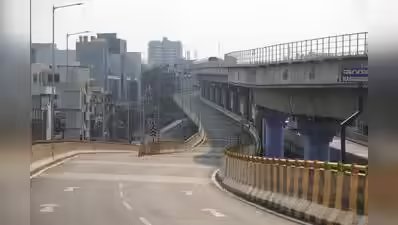
Bengaluru: Chief minister DK Shivakumar’s plan to construct a 37km double-decker flyover along the proposed Orange Line Metro corridor has run into its strongest pushback yet with engineering consultancy and transport infrastructure company RITES Ltd raising red flags on several grounds.Expressing fears that the flyover project would undercut the importance of Metro, RITES has, in a report, suggested building flyovers at major traffic bottlenecks instead of “an end-to-end double-decker structure”.RITES (Rail India Technical and Economic Service), a central public sector undertaking, has been roped in by Bangalore Metro Rail Corporation board to review the flyover proposal and examine its implications. A source claimed that the RITES report nearly endorses the observations made by an earlier IISc study on the project.Sources said RITES has cautioned that constructing a road flyover at Level-1 with the Metro viaduct at Level-2 for almost the entire corridor could dilute the core objective of a mass rapid transit system, which is to encourage commuters to shift from private vehicles to public transport.According to the consultancy, adding continuous road capacity alongside the Metro could induce additional private vehicle traffic, reducing the potential modal shift to Metro services.RITES has also observed that such a configuration could diminish the wider social and environmental benefits expected from the Metro project.It further noted that prioritising additional road infrastructure along the Metro corridor would be inconsistent with the objectives of the National Metro Rail Policy, which emphasises sustainable urban mobility and a shift towards public transport.A source said the RITES report noted that Economic Internal Rate of Return (EIRR) of the project with the double-decker flyover would be well below the accepted benchmark of 14%, whereas the Metro-only alignment would achieve an EIRR of 17%.Sources said the construction of the double-decker structure would also pose engineering and operational challenges. At many junctions, the elevated corridor would have to be built up to 35 metres above ground level to cross existing road flyovers and Metro corridors, posing significant construction and operational challenges.On the future of the project, the source said: “Karnataka govt will decide the future course of action based on RITES’ observations. BMRCL will submit its report to the Union ministry of housing and urban affairs. The final decision rests with the Union govt.”2-LEVEL FLYOVER, MULTI-LEVEL CHALLENGES* Sept 13, 2024: Centre approves BMRCL’s 44km, fully elevated Phase III Metro project* Later: Karnataka govt plans 37km double-decker structure at a cost of Rs 9,700 crore* May 13, 2025: BMRCL board approves double-decker flyover along Phase III corridor; state govt to bear additional cost* Jan 19, 2026: Board notes double-decker proposal would materially alter Phase III project; asks RITES to review DPRMOSTLY NOT RIGHT, SAYS REPORT* RITES report says continuous road capacity alongside Metro could induce private vehicle traffic, reduce potential modal shift to Metro services* This will cut social and environmental benefits* Plan runs contrary to National Metro Rail Policy