







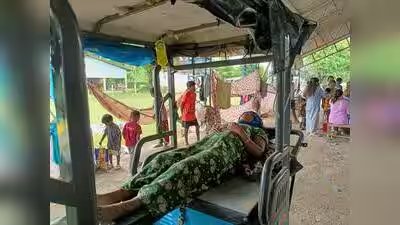
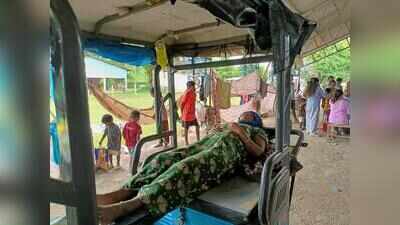
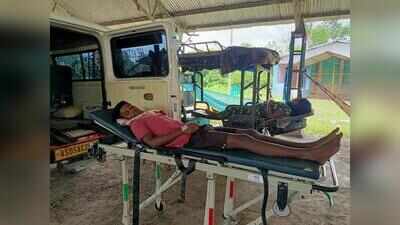
Guwahati: As floods crippled established medical facilities, a battery-operated rickshaw became an unconventional lifeline for critically ill patients at a relief camp in Sivasagar’s Bihubor.The vehicle was converted into an emergency treatment unit at a relief camp in Bihubor, where intravenous saline was administered before further care could be arranged.“We had to treat an elderly patient inside the vehicle after she arrived at our camp with a random blood sugar level of just 30 mg/dL, which is dangerously low and requires immediate medical attention. She was drowsy and had dysarthria (slurred speech). Another elderly man, suffering from severe diarrhoea and vomiting, was diagnosed with hypovolaemic shock, with his systolic blood pressure dropping to around 70 mmHg. He, too, was stabilised after receiving emergency treatment, made possible through the team’s quick thinking and innovative approach,” said Surajit Giri, a member of the medical team.An 11-year-old boy with a high fever and a heart rate of 166 beats per minute also went into severe shock. Giri said his condition improved significantly after the team initiated aggressive fluid resuscitation.“Due to the floods, most of the affected people are currently suffering from waterborne diseases, insect bites sustained while wading through floodwaters, which have led to pus-filled skin infections and swelling, along with a rise in blood sugar levels, alongside cases of fever and cough,” he added.The camps were organised station-wise, with medicines distributed according to patients’ needs. Stocks included medicines for diabetes and thyroid disorders, gentian violet for skin infections and ointments for insect bites.The turnout was so high that health workers used infrared temperature guns instead of conventional thermometers to screen patients quickly.“Several patients initially delayed or even hesitated to seek treatment, as they remained preoccupied with the condition of their submerged homes, damaged belongings and uncertain livelihoods,” he also added.What began as a routine medical outreach programme soon became a mini-hospital, providing medical consultations and relief support to 452 flood-affected people.