









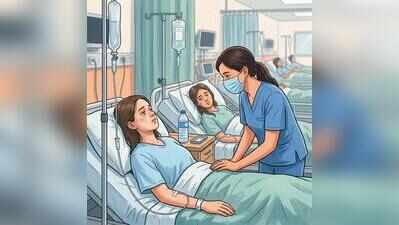
Chennai: More children with fever and cough are missing school, teachers report, while hospitals across Chennai say wards and intensive care units are full as respiratory infections bring in more young patients. Most recover without complications, but some infants are developing severe illness that requires intensive care.Several viruses are circulating among children. Symptoms start with a runny nose, an itchy throat, high-grade fever, and a cough. Senior paediatrician Dr Janani Shankar, the hospital’s medical director, said most outpatient cases involved viral respiratory infections and influenza. The hospital was also seeing dengue cases. Among children younger than one year, the most common infection is respiratory illness caused by respiratory syncytial virus, she said. “Many infants with severe infections are in the ward or ICUs.”Dr K Sudeep Kumar, a senior consultant in the hospital’s paediatric intensive care unit, reported a similar pattern. Infants with severe RSV infections were particularly vulnerable to complications, he added. Most school children in the ICU are testing positive for influenza A (H1N1) or influenza B. They can cause cold-like symptoms, but the illness can be more severe, particularly among older adults.Complications in infants are due to RSV. “Some of them get very sick,” he said. Like vaccine against flu for older children and adults, paediatricians are now recommending nirsevimab, a preventive injection against severe RSV illness. It supplies ready-made antibodies rather than prompting the body to make them, as a vaccine does. Given soon after birth or before a baby’s first RSV season, one dose offers protection for at least five months. The medicine costs ₹30,000–₹40,000 a dose. “We still recommend it because it is roughly the cost of one day in intensive care. Most babies with RSV stay here for three to four days,” he said. Most babies need no routine booster, though some high-risk children may need another dose before their second RSV season.The infections do not necessarily stop with children. Viruses picked up at school or in childcare can travel home, spreading to parents, grandparents and siblings. “We don’t test every patient who walks into the clinic. Most of them receive medicines, sometimes including antivirals,” said infectious diseases expert Dr V. Ramasubramanian, co-founder and director of medical services at The Capstone Clinic. “H1N1 is more common among adults now. But most viral infections are self-limiting. People recover within three or four days,” he said.Testing is largely reserved for severely ill patients requiring admission and those with underlying conditions such as uncontrolled diabetes or heart or kidney disease. “They experience more severe illness, longer admissions and intensive care stays. The symptoms are less severe in people who have been vaccinated against flu,” said Dr Subramanian Swaminathan, director and head of infectious diseases at Gleneagles Hospital, Chennai.