









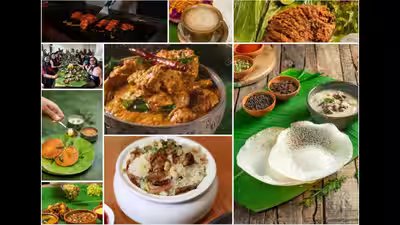
Steam curls off a banana leaf. Somewhere between the sharp hit of curry leaves crackling in coconut oil and the low, patient simmer of a rasam finding its pepper, Kolkata has quietly fallen for a cuisine it once only enjoyed at breakfast counters. For years, South Indian cuisines in the city meant a hurried plate of idli-dosa-vada and a stubborn myth that it was strictly vegetarian. Though love for filter kapi remains the same, that idea of the food has been dismantled, dish by dish – Chettinad crab cracked open at the table, Malabar biryani steaming under a lid, Tanjore thalis arriving in a procession of small steel bowls, Andhra chillies turning a curry the colour of embers. Kolkata was hungrier for this than anyone expected here’s why.The biryani testNothing measures a city’s appetite for a new cuisine like asking it to reconsider its own signature dish. Kolkata’s devotion to biryani is famously territorial. “Kolkata Biriyani is so popular in the state that accepting Hyderabadi Biryani was a challenge initially,” notes Gautam Purkayastha, owner of Tamarind. “But Thalassery Biryani has acceptance. We don’t serve fried chicken in biriyani the way you’d get in South India — Kolkata loves dum biriyani only.” At Uncle Tomz, owner Avantika Thomas’s kitchen serves a Thalassery biryani vouched for by Malayali regulars first, rice loosely packed and barely touched by masala, the meat left to speak for itself. “It’s easy to handle for the in-dining customer,” Thomas says, “but it becomes an issue for someone ordering online expecting a generic biryani.”
Kerala food isn’t performative – it shows up at every wedding, simple and clean. And Bengal already understands us: both our cultures are coastal, fish-loving people
Chef Arun Vijayan, who specialises in Kerala cuisine
Authenticity, negotiable or notAsk why the shift is happening now, and the answers diverge. Swaminathan Ramani of Ramanee is certain Kolkata’s palate has genuinely evolved: “Today, there is a clear appetite for authentic complexity — diners no longer shy away from the sharp tang of aged tamarind.” Thomas disagrees. “I don’t think their tolerance has changed significantly,” she says — it’s the same niche audience eating out more, even as her own kitchen quietly tones down chilli and sourness for first-timers. Purkayastha credits migration over appetite: more Kolkatans working in the south, bringing the cuisine home with them.That disagreement plays out in how kitchens define authenticity itself. Ammini, open since 2011, hasn’t touched a recipe. “We haven’t had to tweak anything to suit the local palate,” says owner Ramani Menon, whose restaurant is named for her mother’s nickname – “her greatest critic, any item that wouldn’t pass muster with her wouldn’t be on the menu.” Perima’s takes the opposite bet, plating Chettinad and Malabar staples with a contemporary, fine-dine hand, while Benne Co has staked its entire concept on one dish, the Bangalore-style benne dosa – proof that the market has matured enough to reward specificity over range, not just spice.
I don’t really change the food to make it ‘Kolkata South Indian.’ I keep the flavours as they should be, but I’m sensible with the chilli
Suman Manaksia
One region, not fiveSwaminathan Ramani built his brand around Thanjavur Tambram home cooking rather than a greatest-hits South Indian menu. “Every item retains its specific regional identity, temperings, and distinct fat mediums – coconut oil, sesame oil, ghee,” he says, deliberately leaving out other states’ cuisines and anything too bitter or fermented for a first encounter. The discipline paid off with the Adai – a dense, coarse-ground lentil pancake, crisp at the edges and thick enough to eat with a spoon of white butter, nothing like the thin dosas Kolkata expected from a South Indian tiffin plate.Supper club, home tableIf restaurants are formalising the cuisine, Tamarind Tales is doing the opposite. Suman Manaksia builds each evening as a narrative arc: “I’d start with Pongal – warm, comforting and gentle. Then Malabar paratha with korma. From there, I’d slowly turn up the heat with podi and Andhra flavours, and finish with rasam and payasam.” Unfamiliar dishes get a personal introduction rather than a menu description – sun-dried chillies fried in curd, offered with “try a little first” rather than a translation.
Kolkata isn’t just eating more South Indian food; it is actively seeking out regional authenticity, depth of flavour, and uncompromising heat profiles
Swaminathan Ramani
It’s rasam, more than anything else, that keeps surprising her table — dismissed by newcomers as a thin soup until a proper pepper version arrives and second helpings follow.The old palate, rediscoveredPurkayastha points out that coconut milk already lives quietly in Bengali cooking, in a good malaikari, even if it’s rarely acknowledged as a shared ingredient. Chef Arun Vijayan, who recently hosted a Kerala pop-up in the city, sees the same overlap from the other direction — both Bengal and Kerala are coastal, fish-loving food cultures, which makes the leap from macher jhol to meen curry shorter than it looks. Kolkata isn’t acquiring a new palate. It’s rediscovering one it already had.
What Kolkata is ordering, and why:
- Thalassery Biryani
- Karimeen Polichathu
- Adai
- Appam and Mutton Ishtu (stew)
- Idiappam and Potato-Onion Stew
- Rasam
- Chicken 65
- Dakshini Prawns
- Coorg-style fried chicken