






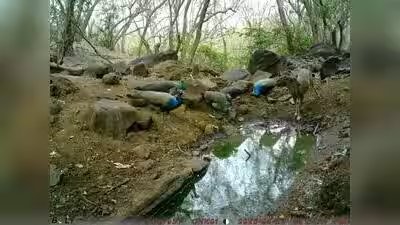
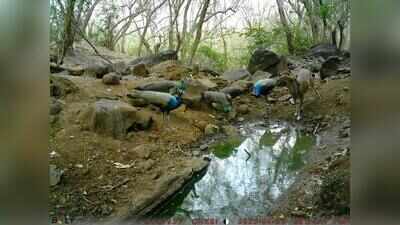
Pune: With several regions of the state reeling from drought and water shortages, forest officials in Maval said they now plan to start replenishing watering holes for animals from Feb onwards instead of waiting till April, when such interventions are usually carried out.Officials have already identified key watering spots to recharge, thanks to a trap-camera survey that photographed 51 species at natural water sources in the Vadgaon Maval forest range, part of Pune Forest Division. “The survey helped us identify spots most preferred by wildlife for water. Accordingly, we will plan measures to ensure the animals have sufficient water during the summer,” said Range Forest Officer Prakash Shinde.In total, the survey recorded 17 mammal and 34 bird species through 15,581 photographic records. Cameras were installed at eight sites and operated for 30 days at each location.The forest dept usually starts to replenish the watering holes by April or May, when they run dry. But Maval’s below-average rainfall this year has prompted officials to intervene early. The department has also developed nearly 450 artificial water sources for the region’s wildlife.The trap-camera survey documented several mammals of high conservation importance, including Indian leopards and striped hyenas, both listed under Schedule I of the Wildlife (Protection) Act. Other species recorded included the at-risk rusty-spotted cat, jungle cat, Asian palm civet, small Indian civet and greater false vampire bat. Sambar deer, Indian muntjac, wild boar, primates, mongooses and other small mammals were also documented.The 34 bird species included raptors such as the crested serpent-eagle and shikra, as well as the grey junglefowl and Indian peafowl.The forest around Chikhalse village emerged as the most biodiverse site, recording 28 species — 13 mammals and 15 birds. Other locations surveyed were Paravadi, Akurdi, Kusgaon, Ghorawadi, Aundholi, Apati and Morve villages.Camera data also revealed distinct patterns in the use of water sources. People and livestock mainly accessed them during the day, while wild carnivores and nocturnal mammals visited them at night. This difference in activity times allows different species to use the same water sources with minimal direct interactions.Forest officials said the findings will help prioritise water replenishment, wildlife monitoring and patrolling. Protecting natural water sources from degradation and maintaining habitat connectivity will be crucial to conserving Maval’s biodiversity as temperatures rise and water availability declines, range officer Shinde said.