









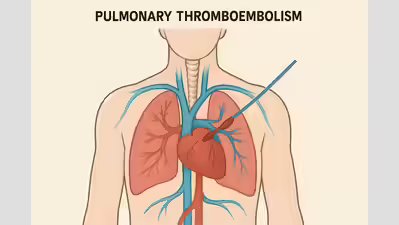
Bengaluru: Pulmonary thromboembolism affects one in 1,000 people, yet awareness of the condition—and pulmonary thromboendarterectomy (PTE), a life-saving surgery to treat it—remains low among patients and even some medical practitioners, according to Bengaluru-based surgeons.Pulmonary thromboembolism is a condition in which blood clots block the arteries in the lungs, usually after travelling from the deep veins of the legs, a condition known as deep vein thrombosis.Dr Devi Prasad Shetty, cardiac surgeon and founder-chairman of Narayana Health, said: “Around 25-50% of blood clots in the leg gradually go up and block the lung artery. Over 90% of pulmonary embolism dissolves by itself, but around 5-10% of it does not and it gradually puts a lot of strain on the right side of the heart, leading to shortness of breath.”Underscoring the need for anyone who develops deep vein thrombosis to also be investigated for issues in the lungs, Dr Shetty said this is a treatable condition, much like diabetes or hypertension. “The moment someone is diagnosed with pulmonary thromboembolism, there is a tendency to say that there is no cure and that the patient has to take blood thinners. But PTE is the surgery for this condition and the results are excellent,” he added.Dr Mukund Seshadri, senior consultant, cardiovascular & thoracic surgery, at Ramaiah Memorial Hospital, said chronic pulmonary thromboembolism is significantly underdiagnosed due to low awareness. “The best treatment for chronic pulmonary thromboembolism is PTE, which is a complex surgery. This procedure involves carefully removing chronic clots from the pulmonary arteries. It is a major operation lasting six to eight hours and requires cooling the patient significantly to reduce blood circulation while surgeons meticulously dissect and remove blockages from even the smaller branches of the pulmonary arteries. The procedure is highly specialised and technically demanding,” Dr Seshadri said.According to him, if the surgery is done hurriedly or by inexperienced surgeons, there is a risk of tearing the pulmonary artery, which can lead to severe bleeding and poor outcomes. “The results, however, can be dramatic. Pulmonary artery pressures that are severely elevated — often around 70 to 80 mmHg — can fall to near-normal levels of 25 to 30 mmHg within days or weeks after surgery,” he said.Doctors said only a handful of centres in the country currently perform PTE and that the number of surgeons who have performed more than 10–20 procedures is even fewer.Dr Ganesh Pratap, consultant pulmonologist, allergy & asthma specialist at SPARSH Hospital, Yeshwanthpur, said because of the serious risks associated with the surgery, it is recommended only for select patients who develop chronic thromboembolic pulmonary hypertension, where old clots remain in the arteries of the lungs and cause persistent high pressure.“The decision usually depends on factors such as location of clot, surgical fitness, lung pressure and medical evaluation by a well-specialised multidisciplinary team. In order to improve safety and recovery, factors such as proper pre-surgical evaluation, imaging, cardiac assessment and post-operative monitoring are also essential,” Dr Pratap said.Doctors stressed that increasing awareness about chronic pulmonary thromboembolism is essential. “Awareness is very significant since many patients continue to experience breathlessness and reduced capacity for physical exercise after a pulmonary embolism and may not realise that chronic thromboembolic pulmonary hypertension is a possible cause. All medical practitioners should consider timely screening and referrals when symptoms persist despite medical treatment. Pulmonary endarterectomy can improve symptoms and quality of life in eligible patients,” Dr Pratap added.