





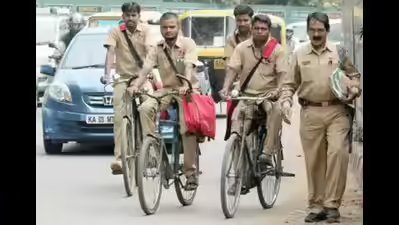
Ludhiana: The postal department has decided to phase out the use of bicycles by postmen in the city and provide them with fuel compensation as they transition to motor vehicles. The move comes in response to the consolidation of delivery centres, which has increased travel distances for postal staff and made bicycle-based delivery impractical.Earlier, delivery centres were functional in 14 post offices across the city. However, these were reduced to just three centralised locations including the Head Post Office, the Central Post Office and the Post Office at Miller Ganj about three years ago. Since then, postmen have been operating from these three centres, travelling to various parts of the city to complete deliveries.With this restructuring, postmen are required to cover longer distances daily, travelling from these hubs to their respective beats. Officials said that the longer stretches could no longer be efficiently managed on bicycles, leading to delays in mail and parcel distribution.Senior Superintendent of Post Offices (SSPO), City Division, Balbir Singh said, “Postmen will now be given fuel compensation instead of using bicycles. The decision has been taken to ensure timely delivery and improve efficiency,” he added.Balbir Singh further added that a proposal has also been submitted to strengthen the department’s fleet with electric vehicles. “A proposal has been made for adding electric vehicles to the fleet, including four-wheelers for specific beats where distances are longer and parcel volume is high,” he said. The induction of e-vehicles is aimed at modernising the postal network while also promoting environmentally sustainable transport solutions.Postal department staff said that the consolidation of delivery centres was part of an administrative rationalisation exercise. However, it resulted in increased logistical challenges on the ground. The parcel centre has now been centralised at the Head Post Office, from where all city parcels are dispatched. This has further added to the travel requirements of postal staff, particularly those handling parcel deliveries.Travelling longer distances on bicycles became impractical due to physical strain and to ensure timely deliveries. Fuel compensation became a necessity. As per information, postmen get about Rs 3.5 per km which is calculated to include vehicles maintenance cost and fuel cost, and is revised periodically, according to factors such as inflation, etc.