









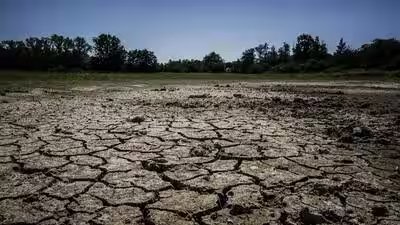
NEW DELHI: With the nationwide cumulative monsoon rainfall deficit hovering at more than 15% despite good rains in certain parts, Prime Minister Narendra Modi, in his monthly radio programme ‘Man Ki Baat ‘ on Sunday, flagged the importance of water conservation measures through the ‘catch the rain’ campaign and appealed to people to take responsibility for a pond, well or step-well in their vicinity and save every drop of water.Aim of the ‘catch the rain’ campaign, that has been underway since July 4, is to conserve the water right where and when the rain falls.“Under this initiative, fresh momentum is being given to rainwater harvesting, groundwater recharge, the rejuvenation of old water bodies and tree plantation. I am delighted to see overwhelming participation from people everywhere – be it villages or cities, panchayats or social organisations,” said Modi while citing certain examples of successful practices in different states.
CJP Jantar Mantar Protest Updates
“Every drop saved today serves as the greatest asset for the future of coming generations,” said the Prime Minister.Though he did not refer to the monsoon deficit in this context, his remarks assume significance in a current situation when the country is already under the depressed phase of rain deficit – a kind of reminder as to how it is important to make the country drought-proof by making available adequate water for irrigation, drinking and other needs.The rainfall situation is, however, likely to slightly improve with good rains next week in northwest India, including Punjab, Haryana and Delhi-NCR, due to positive monsoon activity, and in West Bengal and Odisha due to depression over the Bay of Bengal. Nevertheless, July is still expected to end with more than 10% of the overall countrywide deficit in cumulative (June-July) rainfall.
Monsoon rainfall deficit
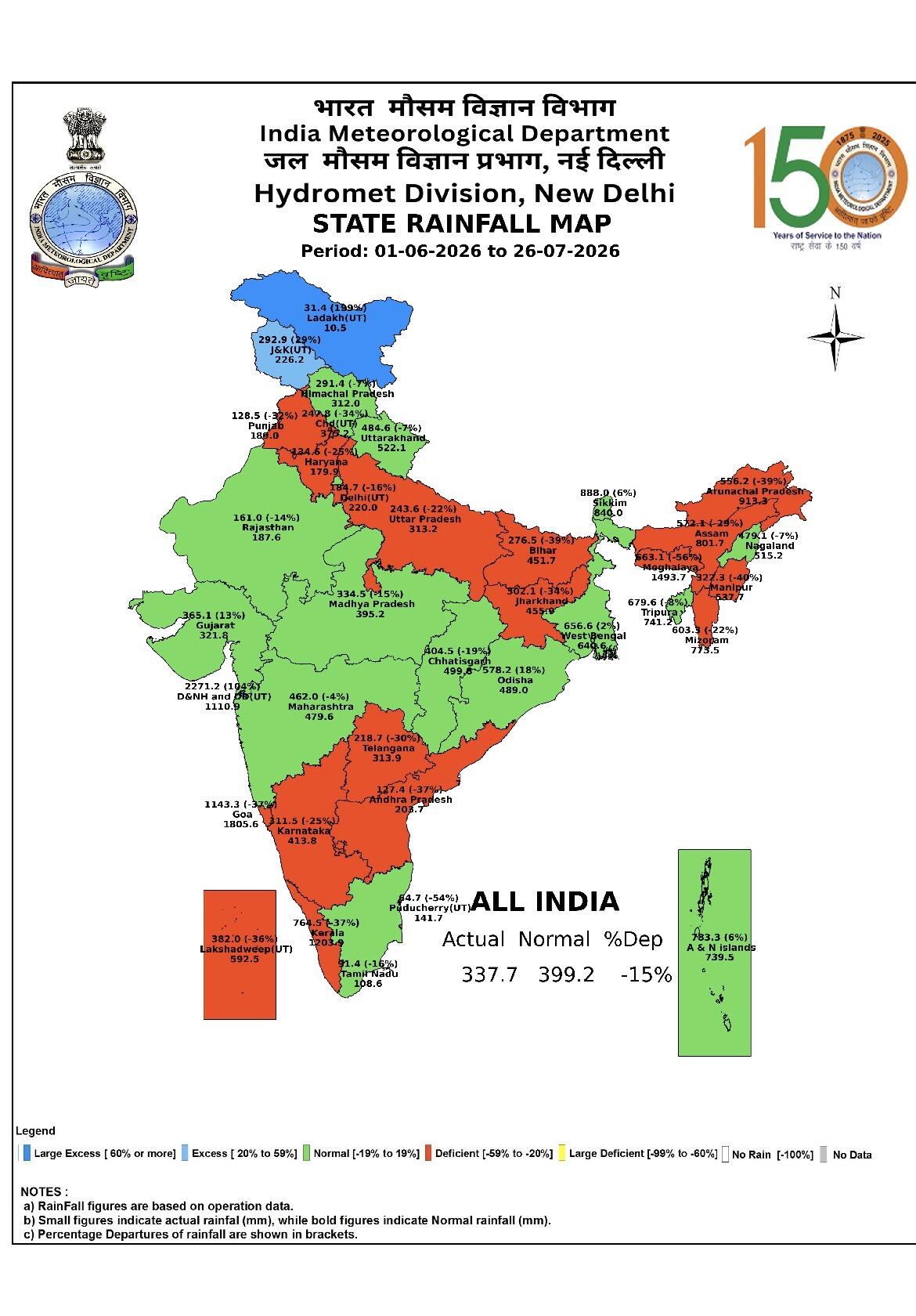
“Weak monsoon conditions are likely to continue over Punjab, Haryana and Chandigarh until the night of July 27. Thereafter, rainfall activity is very likely to increase over the region from July 28 to July 30, with widespread rainfall over Haryana and Chandigarh and fairly widespread rainfall over Punjab. Heavy to very heavy rainfall (exceeding 12 cm) is likely at isolated places over the northern and eastern parts of Punjab and Haryana during this period,” said the IMD on Sunday.In view of the upcoming monsoon spell in the region, the IMD also advised local civic authorities and people in general to take adequate precautionary and safety measures.Keeping in view the depression over northwest Bay of Bengal and adjoining eastern coasts, the Met department predicted isolated heavy to very heavy rainfall with extremely heavy falls over Odisha and Chhattisgarh; and isolated very heavy rainfall over Gangetic West Bengal on Monday.Region-wise, cumulative (June 1-July 26) monsoon rainfall deficit in central and northwest India reduced to 3% and 8%, respectively. But it continues to be as high as 29% each in east & northeast India, and south peninsular India.