










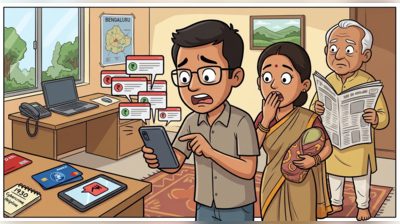
Bengaluru: A 31-year-old software engineer lost Rs 5.5 lakh in a credit card fraud involving his AMEX and RBL Bank cards on Nov 11, after cybercriminals allegedly carried out multiple unauthorised transactions within just an hour.According to the complaint filed by Siddarth (name changed), a resident of Indiranagar, fraudulent transactions worth Rs 4,02,722 were made on his AMEX credit card, while Rs 1,44,558 was debited from his RBL Bank card. The transactions took place between 12.56 pm and 2 pm, taking the total loss to Rs 5,47,280.Siddarth told police that neither he nor his family members had shared their card details, OTPs, PINs or other confidential banking information with anyone. He also denied downloading any APK files or authorising transactions.The family became aware of the fraud after receiving notifications about the suspicious transactions. Siddarth immediately contacted both banks, got the cards blocked to prevent further losses and reported the incident to the national cybercrime helpline 1930 before approaching police.A case has been registered at the East Cyber Crime police station under the Information Technology Act and Section 318 (cheating) of the Bharatiya Nyaya Sanhita (BNS).Why do such frauds happen?Credit card frauds involving unauthorised transactions can occur even when victims insist they have not shared their OTPs, PINs or card details. In many cases, fraudsters exploit weaknesses in digital payment systems, steal card information through sophisticated methods or misuse compromised credentials, the officer said.However, in this case, investigation will have to establish how the card details were accessed and how the payments were authorised, he added.Another senior officer said the possibilities of siphoning off money from credit cards include card data theft: Fraudsters may obtain card numbers, expiry dates and CVV details through compromised websites, data breaches, phishing links or fake payment gateways. Compromised online platforms: If an online shopping website, payment gateway or merchant account is compromised, stored card information may be exposed.Similar Crime:One minute, three transactions: Man loses Rs 3.4LThree back-to-back transactions within a minute cost a 30-year-old private firm employee Rs 3.4 lakh after fraudsters misused his credit card, which he claimed he had not used for the last five months. He received alerts for all three transactions together while he was on a phone call on Nov 6. He immediately contacted the card support team and reported the fraud.Rehman (name changed) from Lingarajapura said the transactions included Rs 1,36,996 at Innovative Retail Concept (BigBasket), Rs 39,200 at Php Indus Appstore Private and Rs 1,64,852 at Blinkit.He said he had neither made nor approved the payments; he had not received or shared any OTP.How to stay safe*Disable international transactions: Keep international usage switched off unless required. Enable it only when making overseas payments.*Set transaction limits: Set lower spending limits for online, contactless and international transactions. Increase them temporarily when necessary.*Never share card details: Do not disclose your card number, CVV, expiry date, PIN or OTP to anyone, including people claiming to represent banks.*Avoid suspicious links: Do not click on links received through SMS, WhatsApp, emails or social media that promise rewards, refunds, credit card upgrades or fee waivers.*Do not install unknown APK files: Avoid downloading applications from unverified websites or links. Never grant unnecessary permissions to applications.*Avoid public Wi-Fi for payments: Do not access banking applications or make financial transactions through unsecured public Wi-Fi networks.