









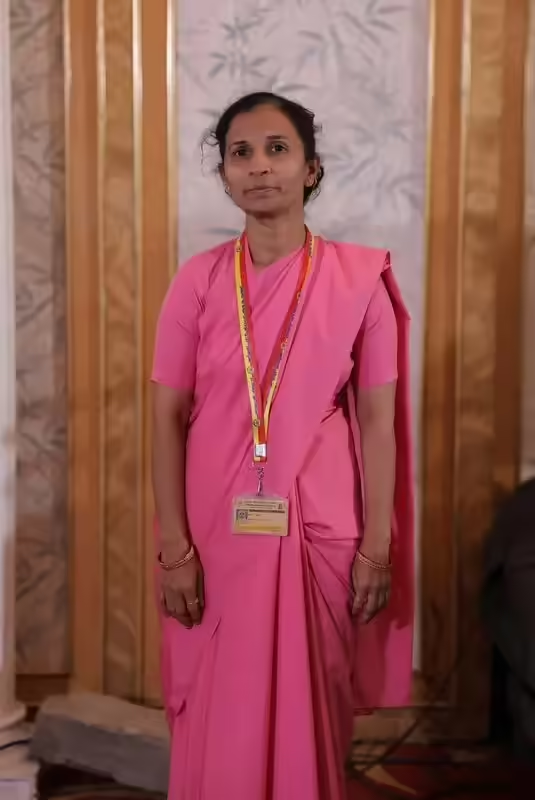
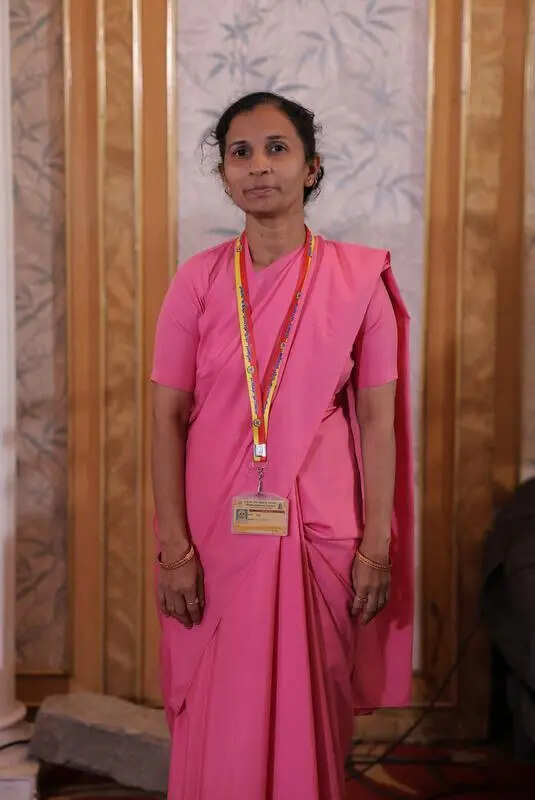
Bengaluru: As the scorching sun tightens its grip on the city, many residents seek refuge indoors. But for those at the bottom of the urban workforce, there is no escape. Delivery agents, Accredited Social Health Activists, and waste collectors continue their daily routines under punishing heat, navigating long hours without access to drinking water, toilets or rest. Their labour sustains the city’s rhythm, even as extreme conditions expose the fragile realities of their working lives, where survival often takes precedence over safety. On the sidelines of a workshop on ‘Extreme heat and its impact on Bengaluru,’ organised Tuesday by Karnataka Media Academy and Asar Social Impact Advisors, these workers share their gruelling work conditions under the sweltering heat of Bengaluru.K Lingaraju, delivery executive in Electronics CityA typical day at work begins at the collection point, but once I leave, there is no stopping. I cover 130km to 150km every day, racing through traffic and heat to deliver essentials on time. Every movement is tracked. If I take a pause, I risk penalties. So I keep going, through the glare, the heat rising from the asphalt, the sweat soaking into my clothes.I carry a bottle of water on my bike, but finding a place to refill it is another challenge. Clean water is not easy to come by. Sometimes, a kind customer offers to fill it; that small gesture can feel like relief in the middle of a punishing day. There are no toilets, no proper breaks. If I need to eat or use a washroom, I switch to offline mode and grab 10-15 minutes, hoping it doesn’t affect my ratings.Even my phone, my lifeline for navigation, gives up in this heat. It overheats and shuts down, forcing me to wait in whatever shade I can find. We are not given jackets, sunscreen, or even basic protection. By the end of the day, I’m burnt, dehydrated and exhausted. But the system does not slow down, so neither can I.Farhana, ASHA worker at RajajinagarBy the time I step out to begin my rounds, the sun is already overhead, pressing down on the narrow lanes of the slum I cover. I’m responsible for nearly 3,000 people, 500 to 600 households, and most days, that means climbing three or four floors in buildings that trap the heat like ovens. Most of the time, we cover 8-10km by walking under the sweltering heat, carrying a bag filled with supplies and record books in one hand and a weighing scale in the other; there’s no space left to hold a water bottle. It is inadvisable to drink water outside, for fear of falling sick from unsafe water. Even if you drink water, often there is no access to restrooms.If I’m lucky, I find a paid one. My uniform silk crepe sari, one of the two we receive for the entire year, clings to my skin, soaked in sweat, leaving me with itches and discomfort through the day. Summers bring more surveys, more work, more walking. Our salaries arrive only a few times a year, and even a tender coconut feels like a luxury. Hydration becomes a daily gamble. Sometimes I wonder how long my body can keep up with the expectations placed on it. Mansoor, dry waste collection worker in JayanagarI start at 7 in the morning, when the air is still bearable. But by noon, the heat becomes suffocating. Wearing a mask and gloves under the blazing sun, I feel like I cannot breathe. I can’t work for more than half an hour at a stretch without feeling dizzy, but the work doesn’t stop.There is no access to drinking water while collecting waste, so I spend money to fill four or five bottles at RO plants. Many of us, especially women, avoid drinking water altogether because there are no toilets during the collection drive. During menstruation, it becomes even harder, something words cannot fully explain.When we return to the segregation centre, we eat in the same cramped 40x25ft space where we work with loads of garbage. There is no toilet, no clean water, no proper ventilation. Most roofs are just sheets, trapping the heat inside. Fans are not provided, and the solar fans once given by NGOs no longer work.Our bodies bear the brunt of it all; constant sweating, exposure to garbage, and heat leave us with allergies and skin infections. Still, we show up every day, because this is our livelihood.