








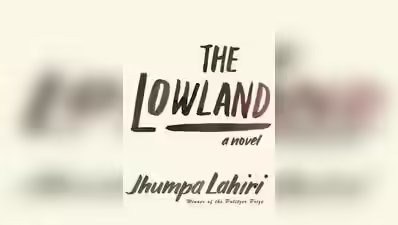
Kolkata: The police “encounter” killing of a prime accused in the Baruipur rape-and-murder case has brought the reality of extrajudicial justice to the fore, reigniting a discourse of Bengal for long turning to literature and cinema for critical commentary.Both the cinema and literature have often treated encounter killings as a manifestation of state terror, particularly those committed during the Naxal movement of the 1960s and 70s. For audiences in Bengal, exposed to a diverse diet of regional, Bollywood and Hollywood films, the portrayal of police encounter killings has evolved from glorifying encounter specialists as mythic vigilantes to exposing such killings as brutal instruments of state power.Mainstream cinema is known for fetishising encounter specialists, transforming the cold-blooded “thok de” mentality into a means for delivering “necessary” justice. Films, such as Shimit Amin’s ‘Ab Tak Chhappan’, framed extrajudicial murder as a heroic necessity, while some others, such as, ‘Shootout at Lokhandwala’ and ‘Shootout at Wadala’ leant into the premise that when the legal system falters, police must become the judge, jury and executioner.But a contemporary shift is challenging this romanticization. Director Suman Mukhopadhyay, who has one such scene in his film, ‘Herbert’ — an adaptation from Nabarun Bhattacharya’s work — points to a growing cinematic pushback. “Recently, I watched Diljit Doshanj’s ‘Satluj’, which critiques such glorification attempts,” he said.In a scene, the protagonist warns a threatening cop: “If I die a martyr, then one day you’ll have to commit suicide.” The moment serves as a haunting comment on the inevitable fallout of state-sanctioned violence, highlighting the erosion of legal accountability and forcing the audience to confront the moral decay inherent in such vigilantism.This critical lens has deep roots in Indian literature and cinema, which have long provided an antithesis to the encounter myth. Much before recent mainstream critiques, Mahasweta Devi’s ‘Hajar Churashir Maa’ offered a harrowing exploration of the human cost. “The plot point is of an encounter killing,” said director Q. “The story is about a mother whose son—corpse number 1084—lies in the morgue, killed by the state, and how she tries to unearth what happened.”Literature, according to Mukhopadhyay, has questioned how the state has always used encounters as a means to perpetuate its own needs. “There is a huge chapter on encounter killings in Debesh Roy’s novel, ‘Samay Asamayer Brittanto’,” Mukhopadhyay said.Jhumpa Lahiri’s ‘The Lowland’ depicted an encounter killing through the lens of domestic intimacy, emphasising the irreparable rupture of generational trauma, while Nabarun Bhattacharya confronted it with radical aesthetic fury. Author Prabal Kumar Basu said, “Nabarun-da’s poem, ‘Police Kore Manush Shikar,’ attacked this trend. For him, most of these were state-organized killings, and he minced no words.”Even in Tollywood, the narrative has shifted from the “heroic” cop. Srijit Mukherji’s ‘Baishe Srabon’ and ‘Dawshom Awbotaar’ portrayed a character encounter specialist, Prabir Roy Chowdhury whose reliance on extrajudicial killings led to his moral and professional decay. By highlighting the destructive consequences of encounter killings, the films critiqued the glorification of such vigilantism rather than celebrating the officer’s lethal tactics. For many, this shift in contemporary cinema was important since it exposed the brutality of a system that treated human lives as mere statistics.