









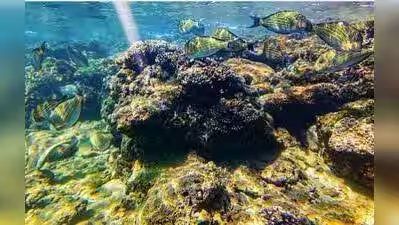
Panaji: CSIR-National Institute of Oceanography (CSIR-NIO), Goa, has brought together 23 institutions from across the country to coordinate monitoring of coral bleaching and assess the impact of El Niño and marine heatwaves on India’s coral reef ecosystems.National Coordination Mission on Monitoring and Assessing El Niño Impacts on Indian Coral Reefs aims to identify reefs most vulnerable to bleaching as well as those showing resilience, helping authorities prioritise conservation efforts.“Coral reefs are Earth’s timekeepers and there is a need to protect them through coordinated efforts,” said CSIR-NIO director Sunil Kumar Singh.The initiative brought together scientists, conservationists and research scholars from 23 institutions, including Zoological Survey of India (ZSI), Indian National Centre for Ocean Information Services (INCOIS) and Kerala University of Fisheries and Ocean Studies (KUFOS), along with other research and academic organisations.Participants discussed the effects of El Niño–Southern Oscillation (ENSO) and its interaction with marine heatwaves in Indian Ocean, as well as emerging technologies and operational approaches for monitoring coral bleaching.NIO scientist Pramod Maurya presented robotics-based technologies for monitoring coral bleaching, while PC Mohanty of INCOIS, Hyderabad, highlighted the organisation’s bleaching alert services. The Samudra Scientific Diving team from the Andaman Islands demonstrated the use of underwater photogrammetry to monitor coral reefs and document changes in their condition.The participants also assessed the monitoring capabilities of different institutions and discussed study designs, methodologies and standardised protocols to ensure comparable data collection across reef systems exposed to varying environmental conditions.The discussions culminated in a commitment to coordinate the monitoring of coral bleaching and subsequent recovery across India’s coral reef regions through the sharing of resources and scientific expertise.“Data generated through the proposed national network could provide a valuable scientific resource for validating climate and ecological model predictions, improving understanding of how coral reefs respond to thermal stress, and supporting the development of timely advisories to govt on conservation efforts,” NIO stated.The coordinated assessment is also expected to help explain geographical differences in bleaching severity by examining the environmental factors that make some reefs more vulnerable than others.“Such information would be important for guiding govt agencies and conservation practitioners in prioritising reefs for conservation interventions and directing resources towards areas where they are most needed,” the institute said.