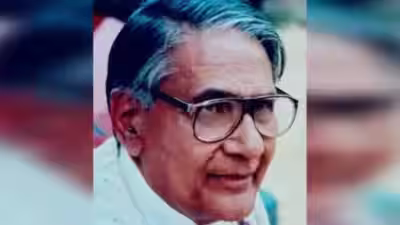







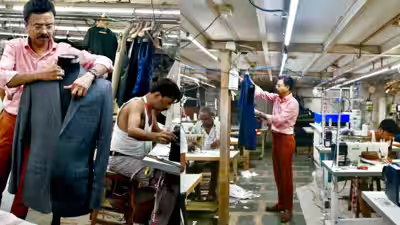
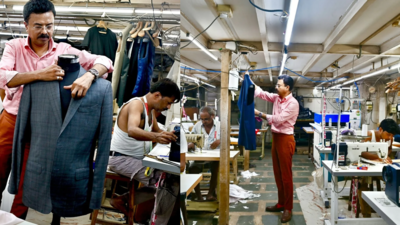
MUMBAI: Way back in the 1960s, before actor AK Hangal became famous for his role as Rahim Chacha in ‘Sholay’, he was a master tailor in British cutting. Among the youngsters whom he mentored was one MN Rao, an enterprising migrant from Karnataka, who went on to launch his own tailoring store in Vile Parle in 1965.Years passed and Rao became a name to reckon with as far as hand-crafted bespoke menswear goes. From jackets, shirts, suits to sherwanis, Rao aced each style.Leading businessmen from Malabar Hill as well as politicians like Sushilkumar Shinde, CK Jaffer Sharief, Sharad Pawar and Ajit Panja sought customised outfits for special occasions.Now a new documentary ‘MN Rao – Story of An Indian Tailor’ by Shravan Ajay sheds light on the success of his 60-year-old tailoring house whose seamsters have worked here since 35-40 years. Each task is laboriously undertaken by hand — from cutting and sewing to crafting buttonholes, pockets, seams, over days and weeks in an era when machinery can accomplish this in minutes.Subba Rao, Parvez Khan, Sugriv Kanojiya who hails from a village of istriwallahs in UP, Mohammed Idris Ansari and Mohd Naseem Siddiqui have spent decades over tables in this factory, cutting, sewing and ironing new outfits. Yet it is this very backbreaking meticulousness that deters the young generation from following in their footsteps.MN Rao passed away at age 52 in 1993. His two sons Vinayak and Madhusudan Rao continue his legacy. Madhusudan showed TOI around their Jogeshwari workshop where 40-odd karigars are paid handsomely, provided free WiFi and a fully AC environment, partly to avoid attrition.He said bespoke suits go a step beyond mere customised. “A bespoke garment is stitched for you and you alone using best, world class fabric and thread. We have a couple of meetings with the client, first for measurement, then fitting after cutting, and then we stitch it,” Rao said.Many karigars specialize in whole garments like shirts, suits or jackets, some have honed one skill, either cutting, stitching or ‘kaaj button’ (buttonholes and buttons). One of the oldest employees of 35 years, Subba Rao narrated his journey as an apprentice who stitched buttons to now specialist.Chand Master, master cutter, trained in England with big international tailors in 1999. He said, “I returned to India because this is my home. I worked with major brands for over 30 years, and am here since 10 years.”The cost of handmade garments runs into lakhs of rupees but high-end brands that use machines also charge similar amounts. Chand Master said, “Lekin haath toh haath hai. See Yusufbhai’s fingers here. Real tailors’ fingers become worn by carving buttonholes, and by sewing canvas on collars. The result is that your shirt may tear but the collar will not.”Documentary maker Shravan Ajay said, “Chand Master was the life of my film. He would call, ‘Cut! Cut!’ I had to tell him, Chandbhai, your cut and my cut is different!”In a world where online retailers despatch mass-produced Ls and XLs in a day or two, the world of individual hand-crafted suits remains a timeless luxury.