











India’s railway network connects thousands of stations across the country, from busy metropolitan centres to remote towns and villages.Yet, Sikkim, nestled in the eastern Himalayas, remains the only Indian state without operational railway connectivity. While road and air travel are the primary ways to reach the state, a railway project that has been in the works for nearly two decades is expected to change this.The 44.96-km Sevoke–Rangpo railway line, connecting Sevoke in West Bengal to Rangpo in Sikkim, is under construction and targeted for completion by December 2027. Once operational, it will provide Sikkim with its first direct railway connection to the national network.But the project has taken years to progress from planning to construction. Difficult Himalayan terrain, fragile geological conditions, environmental clearances, land acquisition and the scale of underground construction have all contributed to the delays.
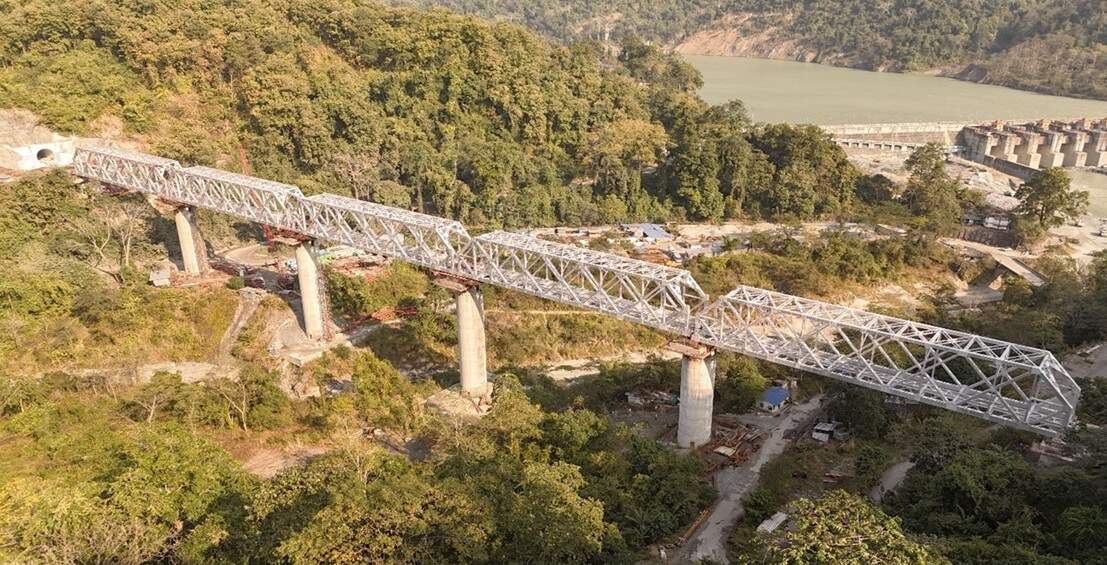
The project was sanctioned in 2008-09, but work did not make substantial progress for several years because of issues including land acquisition and forest clearances.
Why does Sikkim have no railway station?
Sikkim’s mountainous geography is a major reason it has remained outside India’s operational railway network. The state is characterised by steep slopes, deep valleys and the difficult terrain of the young Himalayas, making the construction of conventional surface railway lines particularly challenging.Unlike routes across plains, a railway line through this landscape requires extensive tunnelling, bridges and specialised engineering. The ground can be fragile, and construction has to account for difficult rock conditions, slope stability and the risks posed by heavy rainfall.
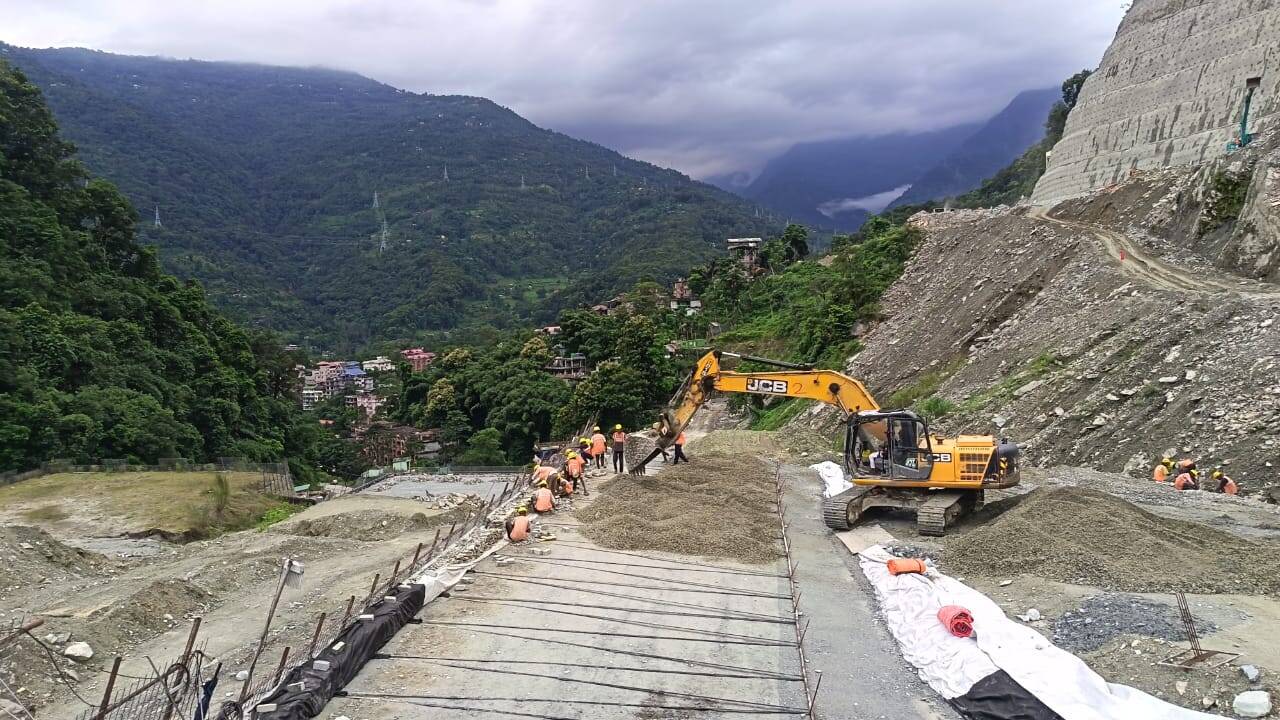
The project includes 14 tunnels, major and minor bridges, and five planned stations: Sevoke, Riyang, Teesta Bazar, Melli and Rangpo.
Environmental considerations have also affected the project. The proposed route passes through ecologically sensitive areas, including the Mahananda Wildlife Sanctuary region, and required clearances before construction could progress.The project was sanctioned in 2008-09, but work did not make substantial progress for several years because of issues including land acquisition and forest clearances. Construction gathered pace later, with work beginning in earnest in 2018.The absence of a railway line has meant that Sikkim’s connectivity with the rest of India depends heavily on road links through neighbouring West Bengal, particularly the route from Siliguri towards Rangpo and Gangtok.
A 45-km railway line, with most of the route underground
The Sevoke–Rangpo railway line is a relatively short project by distance, but its engineering requirements make it particularly complex.The line stretches approximately 44.96 km, of which about 41.55 km lies in West Bengal and around 3.41 km in Sikkim. Approximately 38.6 km of the alignment — about 86% of the route — passes through tunnels.The project includes 14 tunnels, major and minor bridges, and five planned stations: Sevoke, Riyang, Teesta Bazar, Melli and Rangpo. Teesta Bazar is designed as an underground station, making it a notable feature of the project.
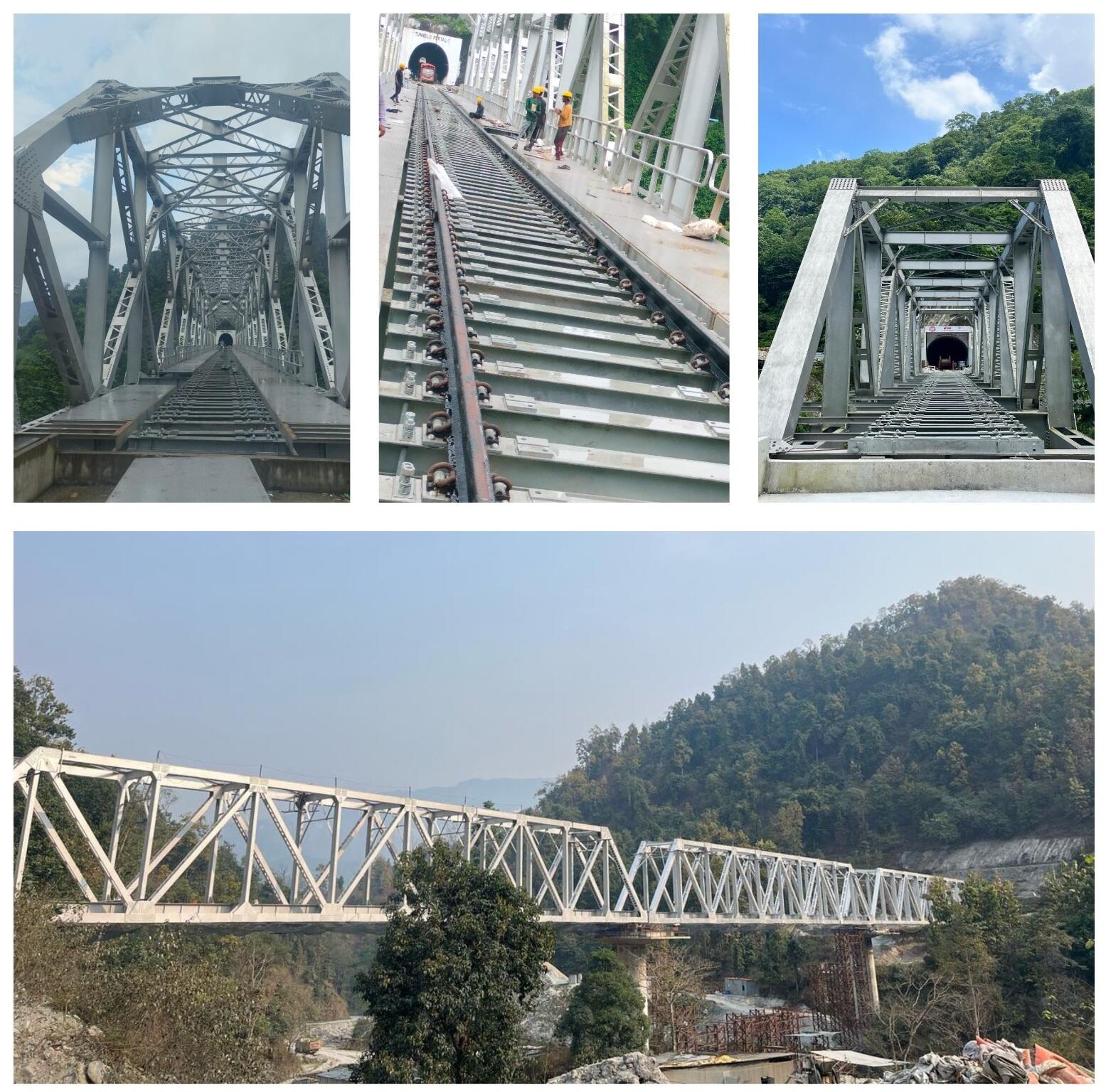
The line stretches approximately 44.96 km, of which about 41.55 km lies in West Bengal and around 3.41 km in Sikkim
The tunnels vary considerably in length, with the longest measuring around 5.3 km. The route also includes substantial bridge construction to negotiate the region’s valleys and uneven terrain.Engineers have adopted the New Austrian Tunnelling Method (NATM) for the tunnelling work. The method involves adapting support measures to the ground conditions encountered during excavation — an important consideration when working through variable and potentially unstable rock.A substantial portion of the railway line is underground partly to reduce surface disturbance across the mountainous landscape. However, tunnelling itself brings technical challenges, including difficult rock conditions and the need to maintain safety and stability during excavation.The route passes through the geologically and seismically challenging terrain of the young Himalayas. That makes the work more complicated than simply excavating a passage through solid rock: engineers must contend with the characteristics of the ground and the conditions surrounding each tunnel.
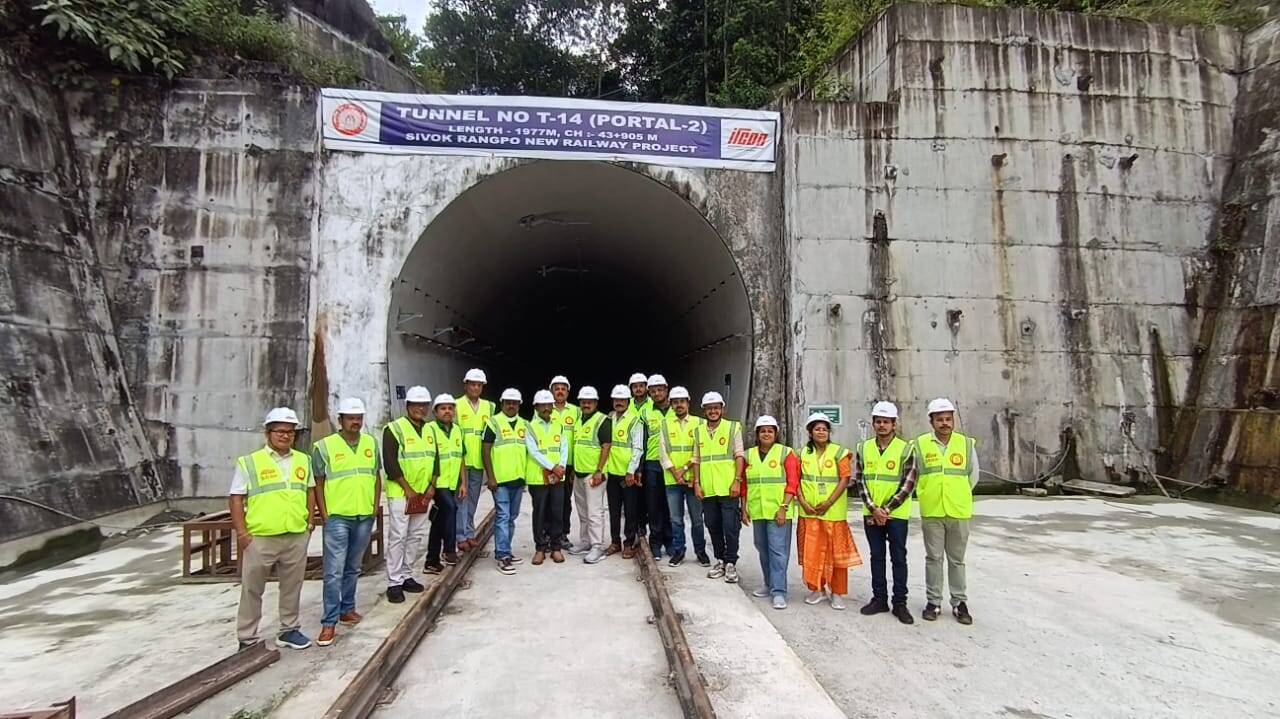
As of September 2026, overall work is approximately 80% complete.
The Himalayan safety challenge: Landslides, rainfall and fragile slopes
The difficulty of building infrastructure in the Himalayas extends beyond railway tunnels. Steep slopes, heavy rainfall and landslides can disrupt construction and transport links, particularly during the monsoon.The wider region has repeatedly experienced road blockages and landslides that affect movement along NH-10, a critical route connecting the Siliguri area with Sikkim. Traffic congestion and road closures can disrupt the movement of people and essential supplies.The railway project is intended to provide an additional transport link, reducing the state’s dependence on a road corridor that is vulnerable to monsoon disruptions. But building the line has also required construction teams to work carefully in the same challenging environment.
What happened near Tunnel No. 7 in August 2025?
The risks became visible again in August 2025, when heavy rainfall triggered a landslide near Tunnel No. 7 at Rabijhora along the under-construction Sevoke–Rangpo railway route.The incident damaged a section of the protective structure at the tunnel approach. Northeast Frontier Railway said the slope failure occurred about 30 metres from the tunnel and that the tunnel itself was not in danger.No casualties or injuries were reported, and officials said there was no loss of railway machinery or assets. Workers and equipment had been moved away from the area as a precaution because of the heavy rainfall. Debris removal and protective work were initiated after the incident.The incident highlighted the challenges of working on a railway project in landslide-prone Himalayan terrain. It also drew attention to concerns about slope stability along the route, although the incident alone does not establish that railway construction caused the landslide.Such conditions help explain why construction in the region requires careful planning, site-specific engineering and safety measures, and why progress can be affected by weather and ground conditions.
Why has the project taken so long?
The railway connection to Sikkim has been discussed for years, but the gap between sanctioning a project and beginning large-scale construction has been significant.The Sevoke–Rangpo line was sanctioned in 2008-09. Environmental issues, land acquisition and forest clearances delayed progress, while construction began in earnest only in 2018.The Covid-19 pandemic affected work between 2020 and 2022, adding to the delays. The physical challenges of tunnelling and bridge construction in the hills have also made the project more demanding than a railway line across relatively level terrain.Earlier completion deadlines were revised as the project encountered these difficulties. The latest completion target in December 2027.As of September 2026, overall work is approximately 80% complete. The Teesta Bazar underground station was also reported to be nearing completion.
Why is railway connectivity important for Sikkim?
Rail connectivity is expected to give Sikkim another route for passenger travel and the movement of goods. At present, people travelling by train generally have to reach a railway station in neighbouring West Bengal and continue by road.New Jalpaiguri is a key railhead for travellers heading to Sikkim. From the Siliguri area, passengers typically continue by taxi, shared jeep or bus towards Gangtok and other destinations.This arrangement leaves road travel as a critical part of the journey. When landslides, heavy rainfall or congestion disrupt NH-10, travel can become difficult and the movement of essential goods can be affected.The new railway link is expected to provide an alternative for transporting passengers and freight. It could make journeys easier to plan, improve the movement of supplies and support tourism and economic activity.The line also has strategic significance because Sikkim shares a border with China. Railway connectivity could improve the movement of goods and supplies into the region and strengthen transport links to a strategically important part of the country.The extent of any operational or defence benefit would depend on how the network is used once it becomes functional.
Will trains eventually reach Gangtok?
The Sevoke–Rangpo line is only the first stage of the broader plan to extend railway connectivity into Sikkim.A proposed railway line between Rangpo and Gangtok, approximately 34 km long, is being assessed as an extension of the Sevoke–Rangpo project.The proposal has been taken up for evaluation under the multimodal planning process associated with the PM GatiShakti National Master Plan.The 44.5-km Sivok-Rangpo railway line is being constructed at an estimated cost of Rs 17,124 crore.
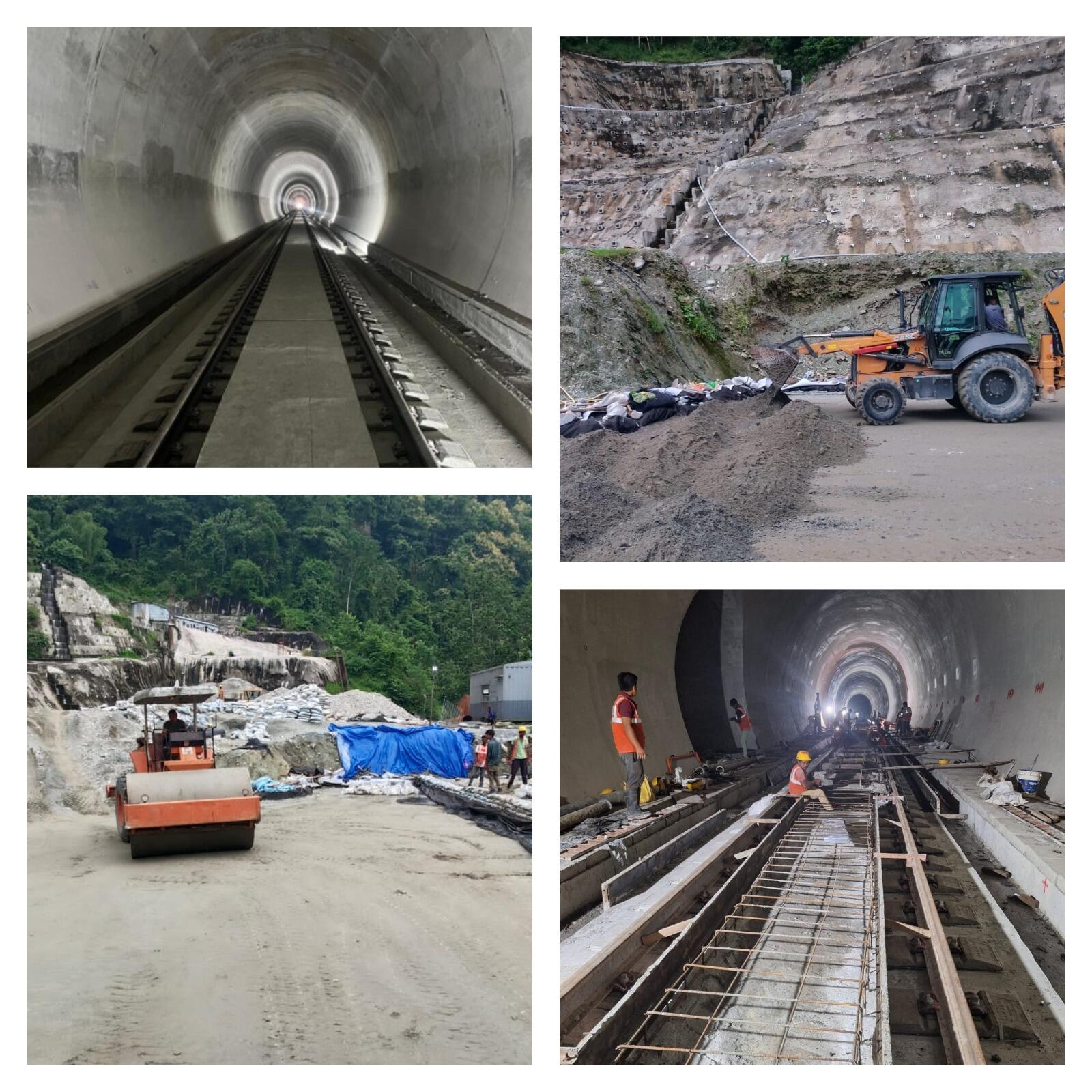
The 44.5-km Sivok-Rangpo railway line is being constructed at an estimated cost of Rs 17,124 crore.
A separate final location survey has also been approved for a proposed railway route connecting Melli to Dentam through Jorethang and Legship.The proposed line, around 75 km long, could improve access to southern and western Sikkim. A survey approval, however, should not be confused with final approval for construction.The longer-term vision has included extending railway connectivity from Rangpo towards Gangtok and potentially further towards Nathula. These are separate stages of planning and development, and they should not be presented as completed or operational links.For now, the immediate milestone is the Sevoke–Rangpo line. Its completion would bring Sikkim onto India’s railway network for the first time, while the proposed extensions would determine how far the railway reaches within the state.
How do people currently reach Sikkim?
Until the railway line becomes operational, most visitors reach Sikkim by combining rail or air travel with a road journey.By train and road: New Jalpaiguri, near Siliguri in West Bengal, is a major railway station used by travellers heading to Sikkim. From there, taxis, shared vehicles and buses connect passengers to Gangtok, with the road journey commonly taking around four to five hours, depending on traffic and conditions.By air and road: Pakyong Airport is located near Gangtok and offers another option when flights are operating. Flight availability and weather conditions can affect this route, so travellers may still need to use airports in neighbouring areas and continue by road.By road: NH-10 is a key route for reaching Sikkim from the Siliguri region. It is also vulnerable to landslides, road closures and congestion, particularly during the monsoon.The lack of railway connectivity therefore affects more than the availability of a train journey. It means the state relies heavily on a limited set of road and air links, each of which can be affected by weather and operating conditions.
The road ahead
Sikkim’s absence from India’s railway network reflects a combination of difficult geography, environmental constraints and the engineering challenges of building infrastructure in the young Himalayas.The Sevoke–Rangpo project has required extensive tunnelling and bridge construction across a terrain where rock conditions, steep slopes and monsoon rainfall complicate the work. Delays linked to clearances, land acquisition and the pandemic have added to the challenge.With the Sevoke–Rangpo line targeted for completion by December 2027, Sikkim is moving closer to its first railway connection.