








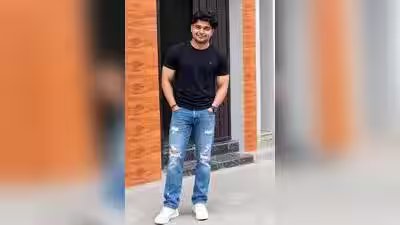
Ghaziabad: The father of a 24-year-old man who died at Safdarjung hospital in Delhi on Sept 19 after failing to get the treatment he needed at two private hospitals in Ghaziabad told TOI he had to mortgage a part of his land to a moneylender to pay a bill of Rs 48,000 that Yashoda Medicity allegedly insisted on to release his son.Tushar Kumar, a resident of Prahaladgarhi in Vasundhara, was hit by a vehicle on Link Road, about 100 metres from Sahibabad rapid rail station around 2.30 am on Sept 19 while he was on his way home on a bike from a hotel where he worked as a waiter. After cops were alerted by passersby on Dial 112, Tushar was taken to Atlanta Hospital in Vasundhara, about 2km from the hit-and-run site. With no on-duty vascular surgeon, the hospital referred him to a bigger facility. Tushar was subsequently taken to Yashoda Medicity in Indirapuram.Tushar’s father Shiv alleged his son lost vital time because of the delay in discharge from Medicity and his son’s injuries turned fatal. Tushar passed away during treatment at Safdarjung hospital.“When I reached Yashoda Medicity, the hospital management immediately made it clear that initial treatment would need more than Rs 1 lakh,” Shiv said on Thursday. “I asked them to discharge my son and decided to take him to Safdarjung hospital in Delhi. He was there only for a few hours, and no major treatment was provided to him, but the hospital management asked me to clear a bill of Rs 47,800. They refused to discharge him till I paid. How would I pay such a large amount in such a short time?” he said.Shiv said a local moneylender agreed to loan him Rs 70,000 cash in exchange for part of his 18 gaj land in Prahladgarhi on which stands their one-room house. “The estimated valuation of my house with land is around 12-15 lakh. Since I did not take the entire amount, he did not ask for any paper,” he said.“Initially, I thought I would sell my house to save my son. But the hospital said they would only treat him once the money is submitted. So, I pleaded with them to discharge my son. It was almost five hours later, around 7.30 am, when they finally discharged him after I paid,” Shiv said.The hospital administration denied the allegations. A Yashoda Medicity spokesperson said Tushar was given immediate emergency treatment and kept under care to stabilise his condition. “The patient was brought to the hospital in a critical and unstable condition following multiple injuries, including to the head, neck, shoulder, and leg, along with significant blood loss. The patient was immediately taken up for emergency and trauma care, with necessary interventions, including blood transfusion and critical-care support, provided based on the clinical condition,” the spokesperson said.The hospital said that at no stage was there a delay in initiating the required medical assessment or treatment. “Following the initial emergency treatment and assessment, continued admission and further medical management were advised. However, the family communicated their decision not to continue the advised admission and chose to take the patient LAMA (Leave Against Medical Advice). The patient subsequently left the hospital in a stable condition. To ensure continuity of care during the subsequent transfer, a doctor from Yashoda Medicity accompanied the patient in the ambulance,” the hospital said.The health department, meanwhile, is yet to begin an inquiry. Chief medical officer in Ghaziabad Dr Sachin Vaishya said he had not received any complaint. “Once the department receives a complaint, we will initiate action,” he said.Incidentally, two other private hospitals in Ghaziabad drew Supreme Court’s fury earlier this year for not treating a four-year-old girl, who had been sexually assaulted and was seriously injured. Ordering the hospitals to pay the girl’s father compensation of Rs 12 lakh, the court had underlined that “preservation of life is the most important thing” and had said it would frame “must-treat” guidelines.“If immediate medical assistance was given to the child, she could have survived. The girl, who had suffered such a traumatic sexual assault, the barest thing the hospitals could have done was administer blood… SC rulings are there mandating every medical institution to provide treatment. But these are all ideals in the rarefied atmosphere of the court. What happens on the ground is a reality, which is far removed from ideals,” the court ruled on Aug 7.