








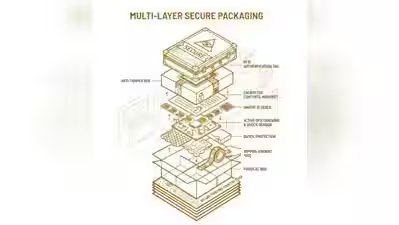
Once called the Common Entrance Test Cell (CET-Cell), the present Karnataka Examinations Authority (KEA) was established in 1994 to conduct entrance tests and determine the eligibility for admission to the govt share of seats in professional courses.KEA has evolved over time. Today, it is a recruiting agency for civil services with powers on a par with Karnataka Public Service Commission (KPSC). But what makes it stand apart is that it is bereft of any controversy. KEA holds 56 recruiting exams ranging from the police department to handlooms and textiles department, apart from the college/school admissions entrance tests. Last week, H Prasanna, executive director of KEA, made a presentation to the Centre’s High-Powered Task Force (HPTF) on exam reforms, headed by Nandan Nilekani, on how it conducts exams.How Question Bank is CreatedStage 1* The complete question paper will not be prepared by any single resource person or group of resource persons* Subject experts will be invited to prepare questions on a chapter-wise basis* Exam-related details will not be disclosed to resource persons* 50–60% of resource persons will be from Karnataka* Karnataka-based resource persons must prepare questions in both Kannada and English. Resource persons from outside Karnataka will prepare questions in English. Translation support will be provided separately* Questions will be organised subject-wise and chapter-wise* A sufficiently large question bank will be maintained, normally in the ratio of 1:10 to 1:20 against the required questionsStage 2* Senior subject experts will be invited for independent scrutiny of questions* Questions will undergo detailed review for: accuracy of translation, subject knowledge and technical correctness, correctness of answer key, quality of question framing, ambiguity, duplication and other errorsPreparation of Question Paper* Controller of examinations (CoE) will personally select the required questions from approved question bank* Normally, 100 questions will be selected for each question paper* Selected question scripts will be handed over directly to the authorised printing agency* The selection and handover process will generally take place 15–30 days before exam, depending on the number of candidates* The printing agency will only digitise the selected questions and undertake proof checking* Any clarification required by the printer will be obtained through a strictly confidential process* Questions will be digitised and categorised subject-wise and chapter-wise* Each question will be classified into three difficulty levels: easy, moderate, difficult* CoE will determine the total number of questions as well as chapter-wise, subject-wise, and difficulty-level distribution* The software will randomly select and arrange questions based on the predefined parameters. The final question paper will be generated automatically through the software* CoE will hand over the final soft copy through a secure pen drive to the authorised printer. Since proofreading is completed during digitisation and question selection is automated from the approved database, separate proofreading at the printing stage will not normally be requiredPrinting* Question papers are printed outside Karnataka at high-security printing presses* Strict confidentiality and security protocols are followed throughout the printing process and transportationTransportation* Printed question papers are packed using a minimum of five layers of tamper-proof security packaging* Packets are transported in one-time lockable security trunks, ensuring that any unauthorised access is detectableSecurity features* Facial recognition technology: scanner-integrated devices, real-time attendance, using diploma students as volunteers* Airport-style frisking* Police inspector / sub-inspector will be supervising frisking* Police constables or home guards are deployed* Live monitoring of all exam centres at deputy commissioner’s office and the exam centre* Live CCTV monitoring* Command room surveillance* 24 candidates per room* Installation of mobile signal jammers to prevent candidates or others from capturing and transmitting question papers through mobile phones during the exam* To prevent classroom copying: 12 different series of question papers used with randomised question order. Answer options will also be shuffled, making copying between candidates extremely difficult.* Two Invigilators per exam room* 5th circle shading: mandatory for unanswered questions. Prevents post-exam tampering. ¼ mark deduction if not shaded* KEA publishes the answered OMR sheets on its website on the same day as exam to prevent manipulation* Triple copies of OMR: one for candidate, one for KEA scanning and evaluation, one for secure custody with the DC/in KEA’s designated strongroomWhat Next?KEA can transition to Computer-Based Testing (CBT) in a phased manner. The technical education department may be involved in this initiative, as it has the required exam infrastructure and technical human resources to support the transition.Single exam for recruitment to various posts, including first division assistant, second division assistant and other equivalent posts across different departments that need similar educational qualifications.