








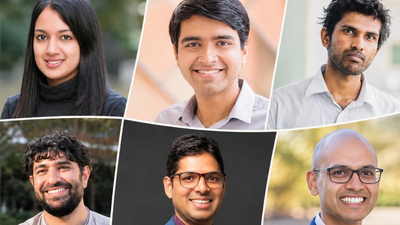
BENGALURU: Infosys Science Foundation (ISF) Thursday announced the winners of Infosys Prize 2026 across six categories — economics, engineering and computer science, humanities and social sciences, life sciences, mathematical sciences, and physical sciences.The winners include researchers working on climate change and technological innovation, wireless networks, constitutional law, oxygen biology, probability theory and quantum tech. Each category carries a gold medal, a citation and a prize purse of $100,000.The laureates were selected by an international panel of eminent scholars and experts.Instituted in 2009, Infosys Prize recognises outstanding researchers whose work advances knowledge and contributes to society.From 2024, the foundation shifted its focus to researchers below the age of 40, emphasising early recognition of scientific and scholarly talent.“Their work demonstrates how rigorous research and the pursuit of new knowledge can deepen our understanding of the world and help address some of humanity’s most complex challenges,” said Srinath Batni, president, Board of Trustees, Infosys Science Foundation.He said early recognition would encourage researchers to pursue bold questions, challenge established thinking and make lasting contributions.Over the years, several Infosys Prize laureates have gone on to receive international recognition, including the Nobel Prize (Abhijit Banerjee and Esther Duflo), Fields Medal (Manjul Bhargava and Akshay Venkatesh), Dan David Prize (Sanjay Subrahmanyam), MacArthur ‘Genius’ Grant and British Academy Book Prize (Sunil Amrith), Breakthrough Prize in Fundamental Physics (Ashoke Sen), and Marconi Prize (Hari Balakrishnan).Several laureates have also been elected Fellows of the Royal Society, including Gagandeep Kang, the first Indian woman to receive the distinction.
Meet the winners
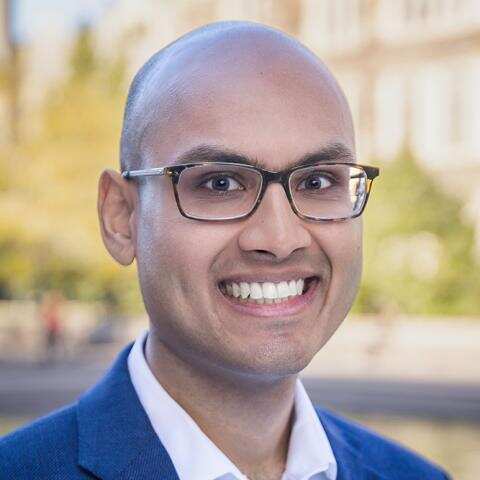
Karthik Sastry
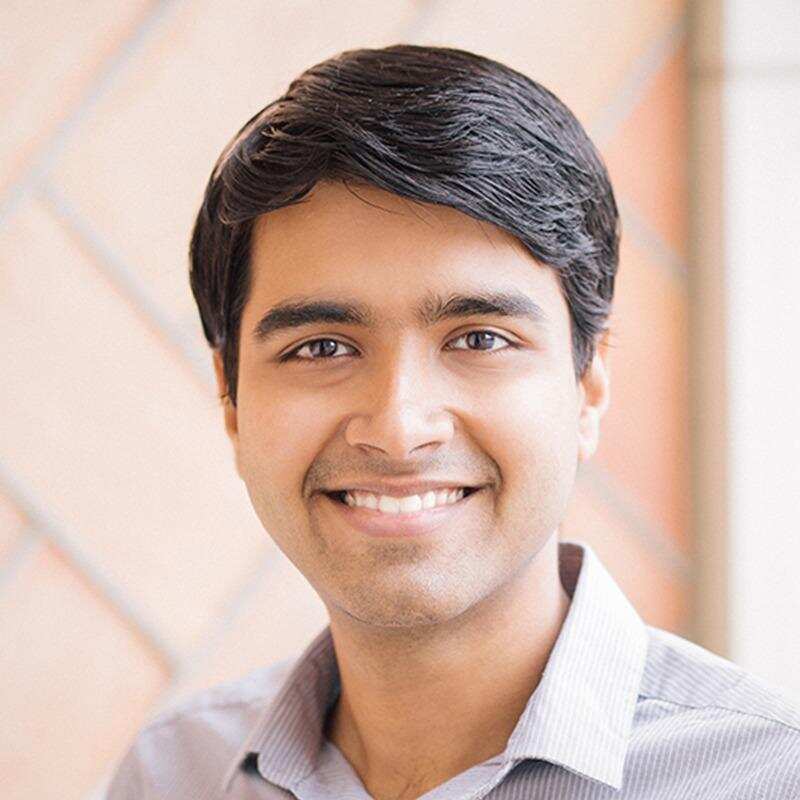
Karthik Sastry | EconomicsKarthik Sastry, associate professor of economics and public affairs at Princeton University, won the prize for his contributions to the study of climate change, technological innovation and business cycle fluctuations. His research examines how societies adapt to climate change through tech innovations, offering insights with potential policy implications.
Swarun Kumar
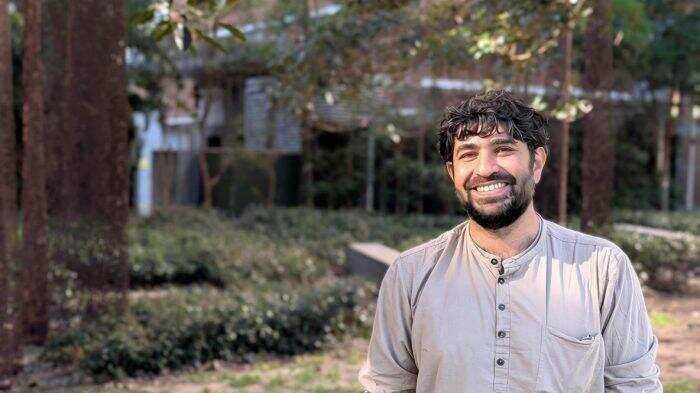
Swarun Kumar | Engineering & Computer ScienceSwarun Kumar, assistant professor of electrical and computer engineering at Carnegie Mellon University, was recognised for extending the capabilities of low-power wireless networks beyond information delivery to sensing and action in the physical world. By combining the physics of wireless technology with new architectures and algorithms, his work has advanced applications in connectivity, sensing, control and actuation.
Gautam Bhatia
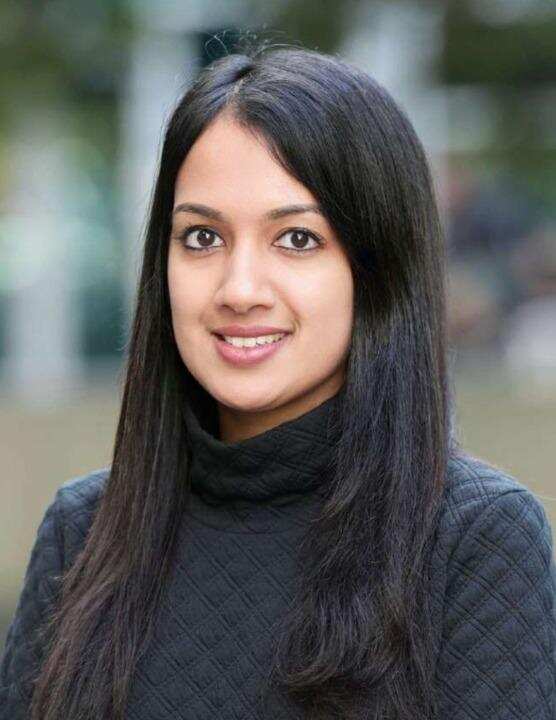
Gautam Bhatia | Humanities & Social SciencesGautam Bhatia, adjunct professor at Jindal Global Law School and Green Fellow at the University of New South Wales, Sydney, won the prize for his contributions to legal scholarship. His five books and academic papers explore how law can help build a fairer and more equal society. His work also draws on disciplines such as macroeconomics, sociology, political theory and moral philosophy.
Isha Jain
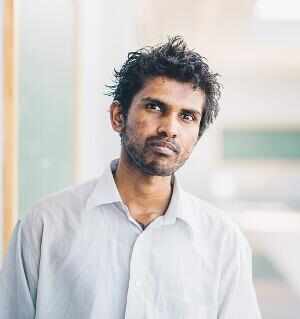
Isha Jain | Life SciencesIsha Jain, associate investigator at Gladstone Institutes and assistant professor of biochemistry at the University of California, San Francisco, was recognised for her discoveries in oxygen biology. Her research showed that tissue damage in some mitochondrial diseases results from excess oxygen rather than energy failure. She has also translated these findings into potential therapeutic approaches, including a small molecule to reduce oxygen levels and vitamin-based treatments for inherited metabolic disorders.
Riddhipratim Basu
Riddhipratim Basu | Mathematical SciencesRiddhipratim Basu, associate professor at the International Centre for Theoretical Sciences of TIFR, Bengaluru, won the prize for his contributions to probability theory and statistical physics. His work resolved the longstanding slow-bond problem, established new results in large deviations and settled conjectures on fluctuations in percolation models, including those that are not exactly solvable. He has also developed mathematical descriptions of Wilson loop expectations in lattice Yang-Mills theory.
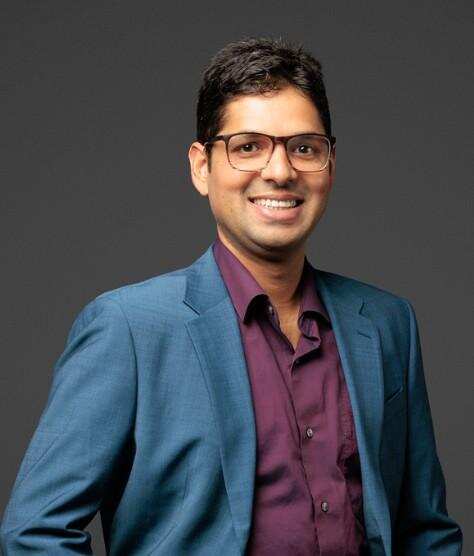
Manoj Kumar Joshi
Manoj Kumar Joshi | Physical SciencesManoj Kumar Joshi, assistant professor at Singapore University of Technology and Design, was recognised for his experimental work with trapped ions and programmable quantum machines. His research has helped turn quantum simulation into an experimental reality, allowing scientists to investigate the behaviour of complex quantum systems. Such work could enable discoveries beyond the reach of classical computers, with implications for understanding matter and developing new materials and chemical processes.