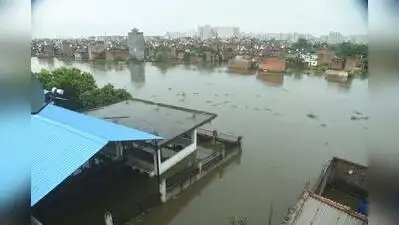









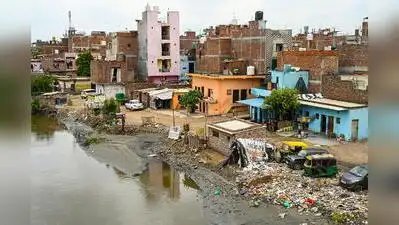
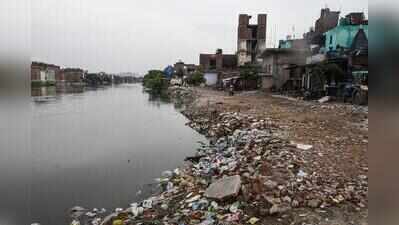
Noida: Three years after Hindon overflowed into villages and displaced hundreds of families, the floodplain is seeing a fresh wave of encroachments, suggesting the 2023 floods have done little to deter construction along the river. New houses, cowsheds, toilets, parking spaces and other structures have come up on the floodplain, while bricks and construction material at several locations indicate fresh illegal building activity.A visit to the floodplain on Tuesday found the river receding, with the water level dropping to 199.45 metres from 200.25 metres recorded on Monday, exposing more of the wetland, as the city received barely 2mm of rainfall in the last two days.
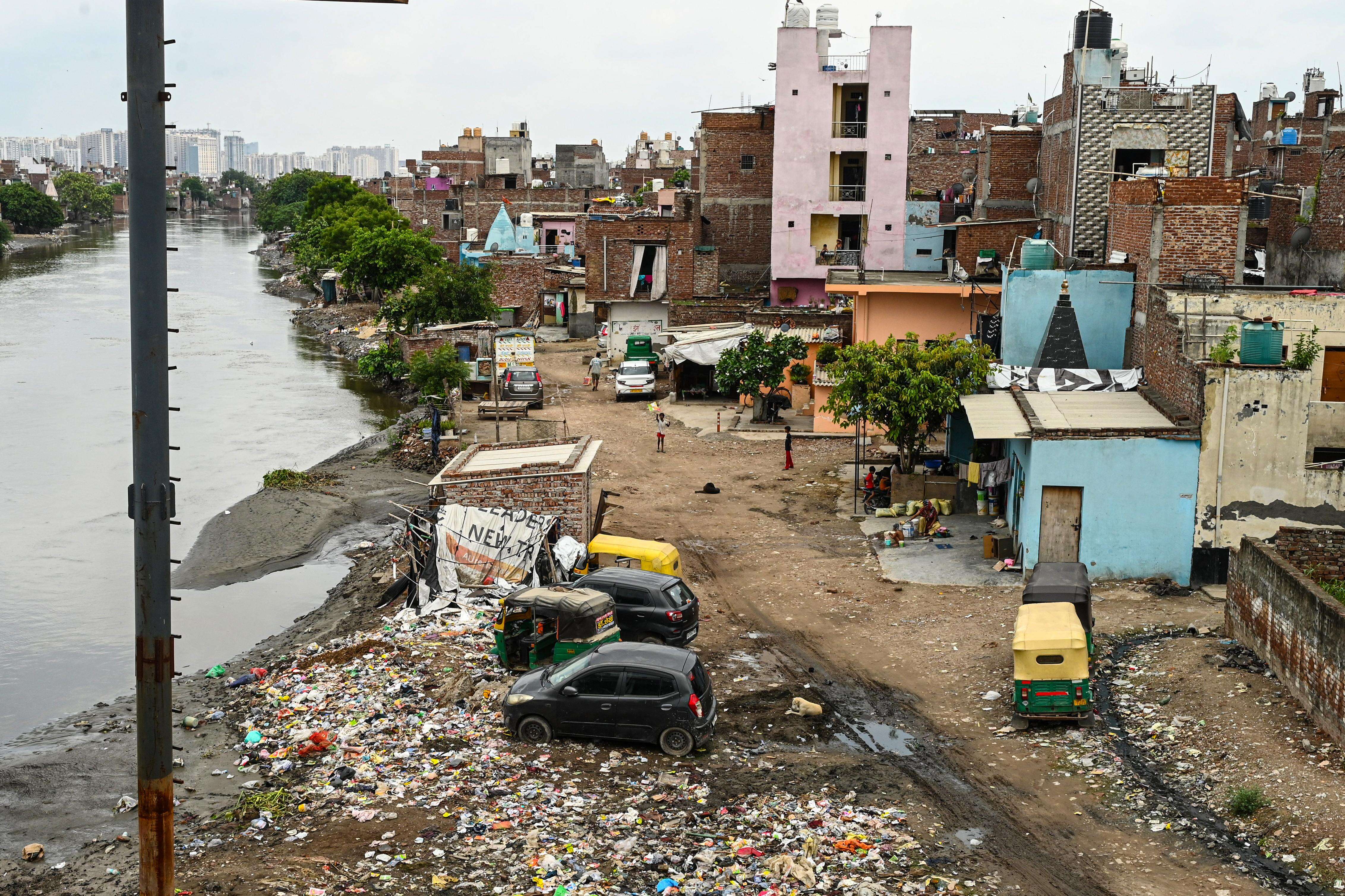
Among the worst-hit by floods in 2023, encroachments have continued to come up along the river’s course in Chhajarsi
In Chhajarsi, TOI found a newly built brick cowshed with a tiled roof on the river bank. Residents said it was constructed a few months ago by a neighbour. A few metres away stood a toilet and a few other sheds and cabins next to a temple, all of which have come up in the last two-three years along a mud track along the river channel. The nearest of them lies barely 2 metres from the black stream of water.Stacks of bricks and other construction material were found nearby. Reeta Devi, a resident of Chhajarsi, told TOI that the material was intended for building a second floor onto her house. Like Reeta, several families have also built new houses on the floodplain.Nearby, in Chotpur Colony, Meena Singh said she purchased a 40-square-metre plot last year and built a one-room house. Singh said a property dealer had first shown her family another plot but later steered them to the current one, telling them the Hindon was merely a drain and not a river. She said the family had spent nearly Rs 5 lakh, their life’s savings, on the house, and was now unwilling — and also unable — to leave despite the floodwater cutting off access to the main road.Harpal, another Chhajarsi resident, said he bought his plot about a decade ago and has lived there since, with a registered title and an electricity connection. “If this area was not authorised, the govt should have stopped construction at that time,” he said. He recalled that during the 2023 floods, he chose to stay back in his home when many of his neighbours left for camps. “The water receded after a few days, and the people too came back,” he said.Residents alleged that weak enforcement has allowed land sharks to dump debris into the river, narrow its course and carve out plots for sale to poorer families. Sonu Yadav, an environmental activist from Behlolpur, said around 42km of the river’s 45km length is embanked in the city, leaving the rest exposed to encroachment. “Truckloads of construction material arrived in a steady flow, and new structures appeared in the area every month, right under the administration’s nose,” he added.Noida Authority general manager AK Arora did not respond to a request for comment. Data shared by the Authority earlier showed it carried out nearly 20 anti-encroachment drives over the past year, clearing 30 acres of floodplain. Greater Noida Authority, meanwhile, cleared illegal settlements spread across nearly 6,000 square metres of the floodplain in Haibatpur in Jan.The July 2023 floods had inundated several houses and large stretches of agricultural land in Chhajarsi, Haibatpur, Yusufpur, Kulesra, Shahadra and other villages. The deluge displaced more than 3,400 people and submerged hundreds of vehicles parked in a Greater Noida yard. Following the floods, the National Green Tribunal directed the UP irrigation department to demarcate the floodplain in both Noida and Ghaziabad, a process that remains incomplete and is now being carried out by the Survey of India.Broadly, a floodplain in rural areas is defined as land within 2.5km of the river’s midstream on either bank, a limit that shrinks to 100m in urban areas. A second yardstick draws on the highest flood level recorded over the past 100 years. Taken together, these parameters place roughly 850 sq km across Ghaziabad and Gautam Budh Nagar under the floodplain zone, covering Chhajarsi, Chotpur, Haibatpur and Behlolpur in GB Nagar, and Karhera, Ator-Nagla, Kanawani, Suthari, Shamsher, Champat Nagar and Ferozepur in Ghaziabad.