








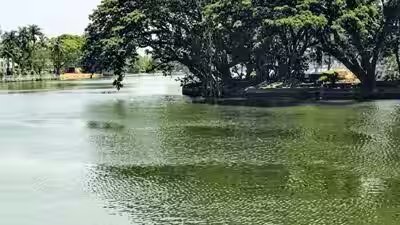
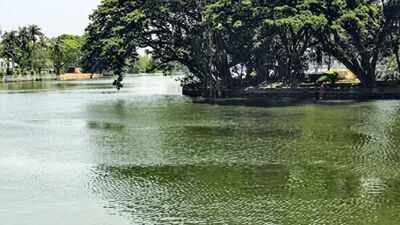
Long before Bengaluru became a sprawling technology hub, its landscape was shaped by hundreds of lakes and tanks that formed an interconnected water system. Until around 1960, the Bengaluru plateau had about 560 lakes, according to a Times of India account of the city’s history. These water bodies were connected in a way that helped sustain the city’s groundwater system. The lake network was part of a centuries-old approach to managing water in a city that did not have a major river flowing through it.Around 500 years ago, when the settlement that became Bengaluru was still a small fiefdom, about 80 water bodies were built around it.The city’s geography also helped this system work. Bengaluru sits on an elevated plateau, and its terrain allowed a series of tanks and lakes to be created along natural drainage routes. Water could move from one lake to another, while the network helped replenish groundwater. For generations, these water bodies were not merely scenic features. They were part of the city’s water infrastructure.
From lakes to long-distance water supply
The system began to come under pressure as Bengaluru expanded. The city grew substantially after the British established their garrison in the early 19th century, creating what eventually became a city with two distinct parts — the older Pete and the Cantonment. But the biggest transformation came in the 20th century as population and the built-up area expanded. Bengaluru’s population reached one million in 1970 and doubled to two million during the following decade. The rapid growth put increasing pressure on the city’s traditional water systems. As late as the 1970s, Bengaluru still had a relatively strong water-supply system. TOI reported that the city then had 24-hour water supply, supported by its lakes and tanks as well as the Arkavathi and Kumudvati river systems.The city’s dependence on its traditional water bodies, however, gradually declined as long-distance water supply became increasingly important. The Cauvery water supply scheme changed the equation. As Bengaluru’s population grew and its urban footprint expanded, the city increasingly depended on water brought from outside rather than relying primarily on its traditional network of tanks and lakes.
The city grew, but the lakes did not
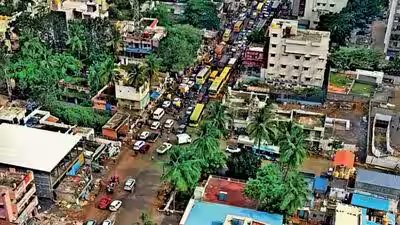
The change in Bengaluru’s physical size was dramatic. The city occupied about 150 sq km when its population was around two million. By 2011, the population had grown to about 8.5 million and the city’s area had expanded to around 700 sq km. The growth transformed the relationship between the city and its water bodies. As open land was replaced by buildings, roads and other infrastructure, the interconnected system of lakes and natural drainage channels became increasingly fragmented. The old network had depended on water being able to move through the city’s valleys and tanks. Urban expansion altered those natural pathways.The result was a city that had once used hundreds of connected water bodies as part of its water infrastructure but increasingly relied on water transported over long distances. The loss was not limited to the disappearance of individual lakes. The breaking of connections between water bodies also weakened the system that had helped maintain groundwater.
From ‘city of lakes’ to a water-stressed metropolis
Bengaluru’s transformation from a city sustained by interconnected lakes to a rapidly expanding metropolis is one of the clearest examples of how urban growth changed its relationship with water.The lakes that once formed a network across the plateau were designed around the city’s natural terrain. As the city expanded, that relationship became harder to maintain. Multiple reports noted that Bengaluru of the earlier decades had an elegance in its urban planning, with its lakes, tanks and natural water systems forming part of the city’s infrastructure.By the 21st century, however, Bengaluru had become a much larger and denser city, spread across hundreds of square kilometres and home to millions more people. The story of the city’s 560 lakes is therefore not simply about how many water bodies disappeared. It is also about how Bengaluru moved from a decentralised, lake-based water system to dependence on distant water sources as the city expanded. The interconnected lakes once worked as a network. As Bengaluru grew, that network gradually became fragmented — leaving the modern metropolis to confront a water challenge that its older landscape had been designed to manage.