








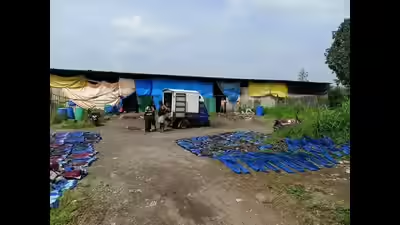
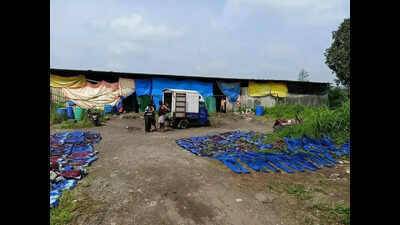
Ulhasnagar: Nearly a decade after being shut down in Ulhasnagar over pollution concerns, illegal jeans dyeing units have resurfaced in villages across Kalyan rural, Ambernath and Badlapur, triggering fresh environmental concerns.Environmentalists allege that these units, which use chemical-based dyes and processes to treat denim, are operating clandestinely in villages such as Karole, Usatne and Malangwadi. Untreated effluents are reportedly being discharged into local water bodies, polluting rivers including Kasadi, Muki and Gavar.Activist Shashikant Dayama, who works on river conservation in Thane district, said the problem has worsened over the past few years. “After the shutdown of such units in Ulhasnagar, many operators shifted base to remote village areas. Around 100 illegal jeans dyeing units are currently operational, releasing chemical waste into rivers and drains,” he claimed.According to activists, similar units have come up near Vasar village, Chinchpada and along Ambernath pipeline road, impacting Waldhuni river. In areas such as Vangani, Dahagaon, Vavoli and Wadeghar, untreated waste is allegedly being discharged into Ulhas river through drainage channels.Ulhasnagar, particularly Camp No. 5, has long been a hub for the jeans trade, with 500–600 small-scale manufacturing units. Fabric sourced from Gujarat is cut and stitched locally, after which the garments are sent for washing, colouring and drying — processes that involve heavy chemical usage. Once treated, the jeans are returned for ironing, packaging and distribution across domestic and international markets.Earlier, most of these units operated within Ulhasnagar itself. However, since the area is classified as residential, the Maharashtra Pollution Control Board (MPCB) could not permit a Common Effluent Treatment Plant (CETP). Following action by MPCB and other agencies in 2017, these units were shut down.Activists allege that operators have resumed operations in rural pockets to evade scrutiny. “These units are extracting groundwater through borewells and discharging hazardous waste into the soil by digging pits, leading to groundwater contamination,” Dayama claimed.Activist Vinod Tiwari said the units are functioning from isolated godowns. “Despite repeated complaints, there has been no stringent action. These units have been operating quietly for the last two to three years,” he said.When contacted, an MPCB official from Kalyan said closure notices have been issued to several such units. “We have directed municipal bodies, including Kalyan-Dombivli Municipal Corporation, Ulhasnagar Municipal Corporation and Ambernath Municipal Council, to demolish illegal structures. MSEDCL has also been asked to disconnect power supply. However, enforcement action is pending,” the official said.Environmentalists have also approached the National Green Tribunal, demanding immediate intervention to shut down the illegal units and prevent further damage to the region’s rivers and groundwater.