








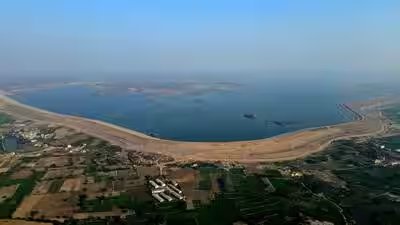
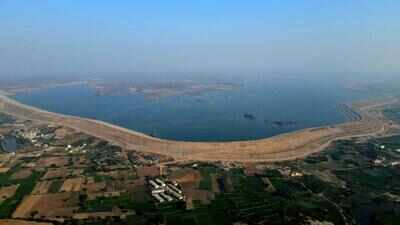
Hyderabad: With key water sources drying up and no fresh inflows into the Singur and Manjeera reservoirs, Hyderabad is preparing to draw drinking water from the state’s rural water grid under Mission Bhagiratha to address the growing supply crunch.The Hyderabad Metropolitan Water Supply and Sewerage Board (HMWSSB) has decided to tap an additional 25–30 million gallons per day (MGD) of Mission Bhagiratha water from Mallannasagar before the Singur reservoir reaches critical storage levels.The additional allocation is nearly equivalent to the combined supply capacity of the Himayatsagar and Osmansagar reservoirs and is expected to primarily benefit areas such as Kukatpally, Hydernagar, Uppal and Malkajgiri. These areas have recorded a sharp rise in demand for water tankers.Kukatpally has one of the deepest groundwater tables in the city, with water available only at around 150 feet, while groundwater in Malkajgiri has receded to nearly 70 feet. As a result, residents in these areas are increasingly dependent on water tankers to meet their daily needs.“We have received clearance from the forest department to lay a four-kilometre pipeline to draw Mission Bhagiratha water. The work will begin shortly and is expected to be completed within 50 to 60 days. This is part of our contingency plan to tackle drinking water shortages if the monsoon fails to replenish the reservoirs,” HMWSSB managing director K Ashok Reddy said.Contingency plan for Singur-Manjeera SystemAshok Reddy directed officials to scientifically identify all areas dependent on the Singur-Manjeera system, estimate their minimum drinking water requirements, assess likely shortfalls under various storage scenarios, and determine the quantity of water that can be diverted from alternative sources, including the Godavari, Krishna and Mission Bhagiratha systems.He also instructed officials to prepare a comprehensive water balance sheet detailing current reservoir storage, daily drawal, utilisable water, allocations and transmission losses to accurately estimate how long the existing reserves can sustain the city’s drinking water supply.