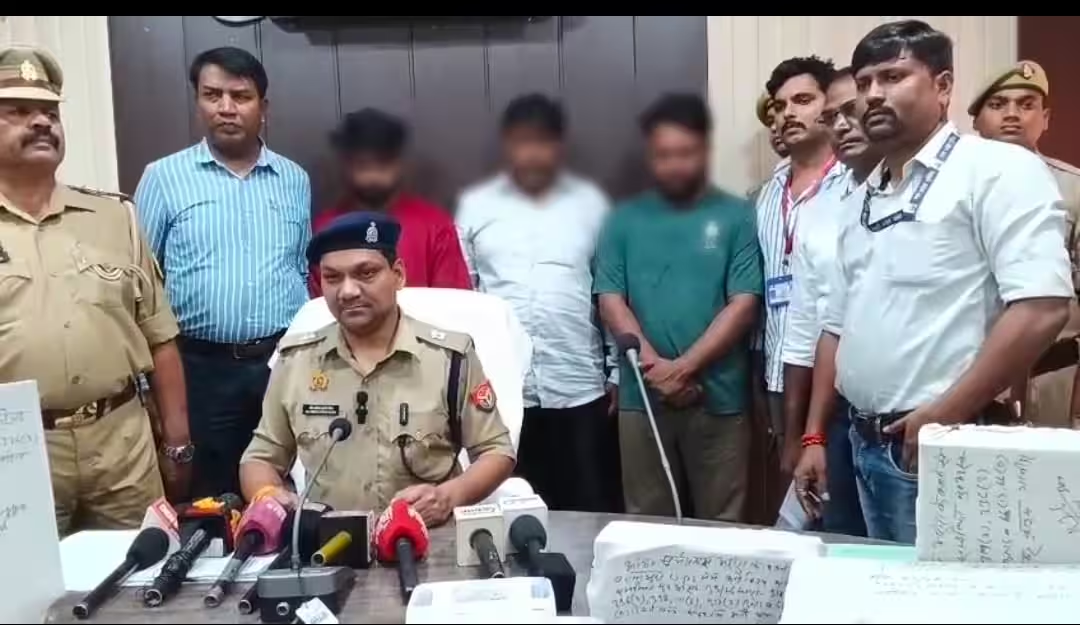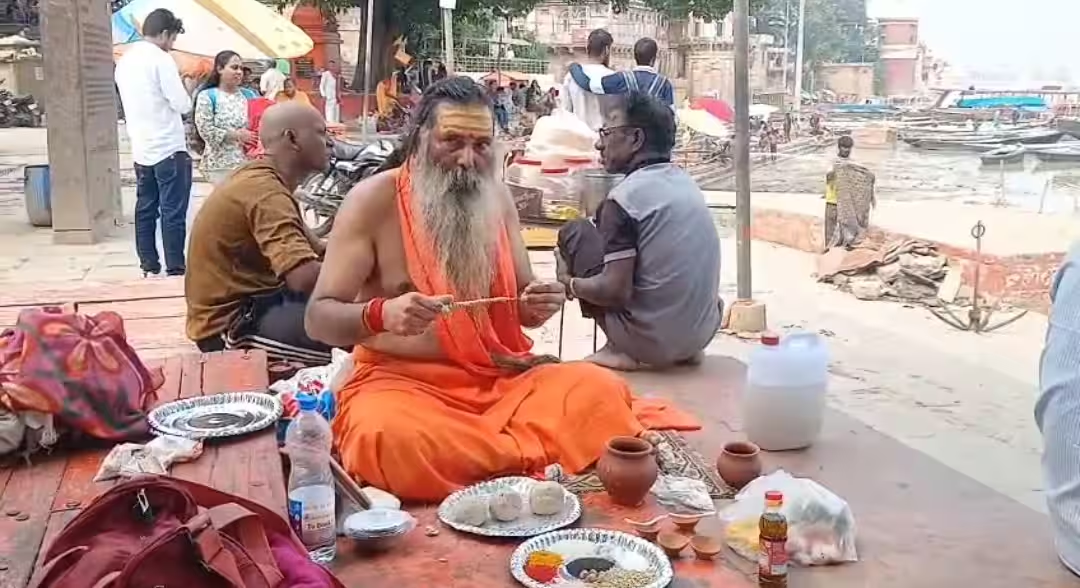










Varanasi: As the Ram temple prepares to select a CEO after the raging controversy over the donations theft, people in another temple town recall how the theft of 2.6 kg gold from the argha (golden base) surrounding the Kashi Vishwanath Jyotirlinga in January 1983 proved to be a turning point in the temple’s history. The incident paved the way for the Uttar Pradesh government to take over its management from the traditional mahant family and hand it to a government-appointed trust.The donation theft at the Ram Mandir in Ayodhya has revived memories of the 1983 incident among residents of Varanasi, particularly in the old city areas. The theft, committed on the intervening night of January 4 and 5, 1983, triggered widespread outrage and tension in Kashi. Residents recall that chants of “Har Har Mahadev”, accompanied by ringing bells and torchlight processions from rooftops after sunset, became a daily feature until police arrested the accused and recovered the stolen gold on January 22, 1983.The fallout was far-reaching. On January 24, 1983, the government led by then chief minister Sripati Mishra promulgated an ordinance transferring the temple’s administration to a government-constituted trust. The move was later backed by the Uttar Pradesh Shri Kashi Vishwanath Temple Act, 1983, which provided for the management of the shrine and its endowments.“It was a difficult period for devotees and residents of Kashi,” said veteran lawyer Radhe Mohan Tripathi. He recalled that the Act formalised government control over the temple’s administration following the theft and the subsequent inquiry.Members of the erstwhile mahant family still view the episode differently. Vachaspati Tiwari, a family member, alleged that the theft was part of a larger conspiracy aimed at facilitating the government’s acquisition of the temple. “My grandfather Kailashpati Tiwari challenged the Act. The Allahabad High Court rejected the plea, and the Supreme Court upheld the Act in 1997,” he said.Following the takeover, the role of the mahant family in day-to-day affairs became limited. The family now performs only the Saptarishi Aarti, one of the temple’s five daily aartis, besides conducting rituals such as Rangbhari Ekadashi, Annakoot and Rakshabandhan.The thieves had targeted the gold-plated ‘argha’ encircling the deity and allegedly decamped with around 2.6 kg of gold and other valuables. Residents recall an atmosphere of anxiety across the city. “People climbed onto their rooftops after sunset, lit mashals and chanted ‘Har Har Mahadev’ amid the ringing of bells,” said Shyamsunder Jaiswal, a resident of old Kashi. Vinod Gupta, then a resident of Mir Ghat, said rumours further heightened tensions.Police eventually arrested 11 persons allegedly involved in the theft on January 22, 1983, and recovered the stolen valuables. Several of the accused had reportedly been associated with the temple for years.The state government also ordered an inquiry into the temple’s management.The committee reportedly highlighted irregularities in administration, diversion of offerings and inadequate facilities for devotees. The findings strengthened the case for government intervention and ultimately led to the promulgation of the acquisition ordinance the same month.Under the new arrangement, the administration of the temple and its endowments was vested in the Shri Kashi Vishwanath Temple Trust, with a chief executive officer playing a central role in its management.Temple revenues subsequently rose steadily. The transformation of the shrine precinct into the Kashi Vishwanath Dham corridor in 2021 further boosted pilgrim footfall, temple income and the economy of Varanasi and the surrounding region.