







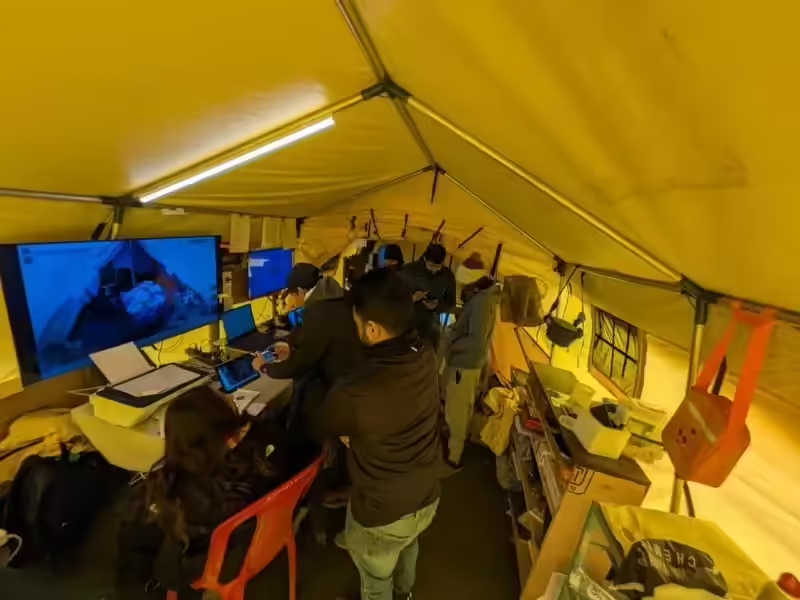
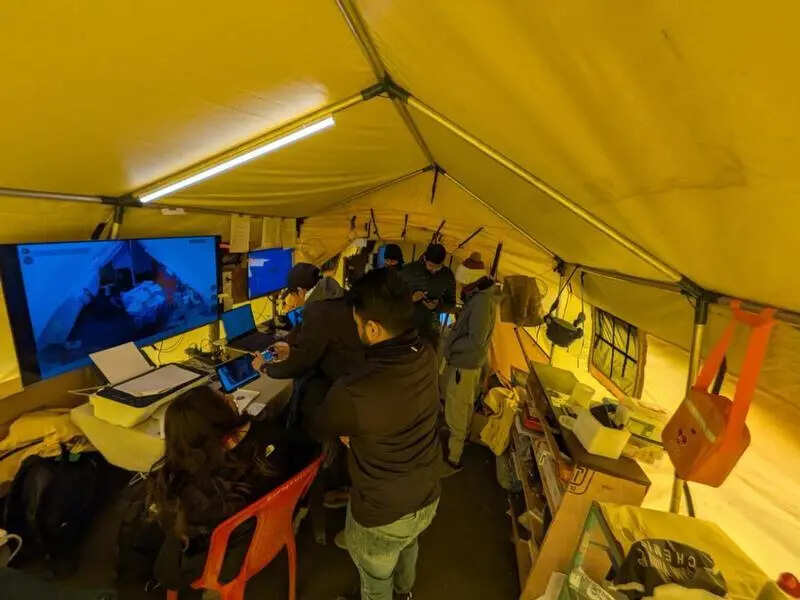
Bengaluru: When Indian Space Research Organisation (Isro) and the Institute of Aerospace Medicine (IAM) wrapped up their high-altitude human behaviour simulation near Leh on April 9, much of the focus was on what it would reveal about crew psychology. A notable aspect of the simulation was also that it was set up by Bengaluru-based firm Protoplanet.Protoplanet was tasked with building and operating the infrastructure for Mission MITRA (Mapping of Interoperable Traits and Response Assessment), which examined how small teams function under isolation, confinement, and stress in a low-oxygen environment. The site, located at an altitude of roughly 4,000 metres, offered conditions approximating some of the physiological and operational challenges of space missions. “Within a short planning window, we identified and secured a site near Leh and set up the core facilities needed for the simulation. These included compact living modules designed to restrict movement and personal space, mirroring the constraints of a spacecraft or orbital station,” Siddharth Pandey, director, Protoplanet, told TOI.The firm established a multi-site layout: two separate camps that could not see each other directly, overseen by a central mission control. This allowed Isro teams to practise remote coordination, a key requirement for planetary missions where crews may operate with limited real-time communication.The firm also enabled simulated extra-vehicular activities and indoor procedures that participants engaged in while dealing with communication delays and environmental stress.The firm put in place a basic life-support setup, including solar-powered systems with backups, and logistics to sustain teams for several days in sub-zero temperatures. “Crew members ate space-analogue food supplied by DRDO alongside freeze-dried rations, the same provisions used during Project HOPE mission in Sept 2025,” Pandey said.Wearable devices and on-site sensors were used to track health indicators and measure performance, including how participants handled tasks requiring precision and decision-making under strain. The aim was to generate data on both physical and cognitive responses.Given the terrain, safety systems were built into the exercise design. Emergency response arrangements, evacuation plans and coordination with local authorities and the armed forces were put in place.The Ladakh study is part of Isro’s broader effort to prepare for human spaceflight missions, including Gaganyaan. It also shows how private firms are being roped in to assist in these preparations.