









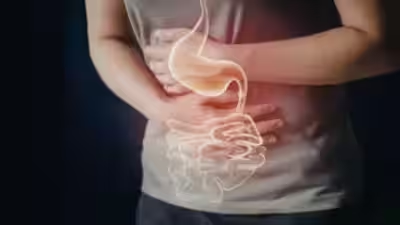

BENGALURU: As more women undergo fertility treatments, city doctors are seeing a growing number develop gastrointestinal (GI) problems linked to IVF cycles and hormonal changes.According to specialists, nearly 20-30% of women undergoing fertility treatment experience digestive symptoms ranging from bloating to altered bowel habits.“There is a strong link between hormonal fluctuations, fertility treatments, IVF cycles and gastrointestinal distress. Female hormones such as estrogen and progesterone directly affect gut motility, digestion, fluid retention and the gut microbiome,” said Dr Divya L, consultant obstetrician and gynaecologist at SPARSH Hospital, Yeshwantpur.
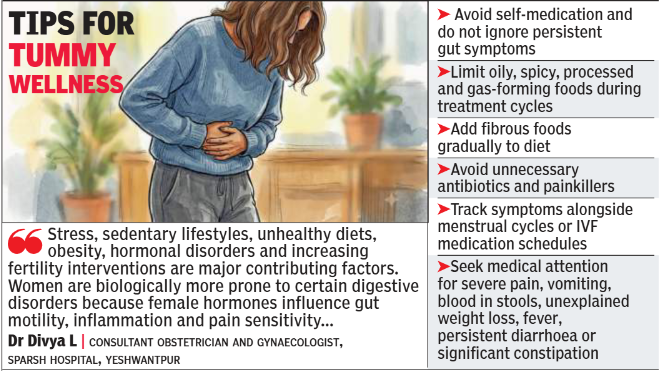
Tummy wellness tips
She explained that hormone levels rise significantly during IVF cycles because of ovarian stimulation medications, often leading to bloating, constipation, acidity, nausea and abdominal discomfort.“We’ve also observed that fertility treatments can affect the gut-brain axis, where emotional stress linked to infertility further worsens digestive symptoms,” she added.Doctors said that with declining fertility rates and rising fertility-related concerns, more women are opting for IVF and other fertility treatments, resulting in a noticeable increase in patients visiting OPDs with gut-related complaints.“More women are coming in with gut symptoms linked to hormonal phases, fertility treatments, PCOS, endometriosis, perimenopause and stress. Some are aware of the connection, but many are not,” said Dr CM Parameshwara, founder and CEO of Smiles Institute of Gastroenterology.According to him, the most common symptoms include bloating, abdominal heaviness, constipation, acidity, reflux, nausea, altered bowel habits, abdominal cramps, excessive gas, IBS-like symptoms and, in some cases, diarrhoea.Explaining how doctors identify whether GI issues are linked to hormonal changes, Dr Poornima M, senior consultant, obstetrics and gynaecology at Rainbow Children’s Hospital, Marathahalli, said specialists carefully study the patient’s medical history and symptom patterns.“If stomach issues worsen during menstrual cycles, IVF treatment, ovulation induction, pregnancy-related hormonal shifts or hormone therapy, it can indicate a hormonal connection. Doctors also assess the type, duration and severity of symptoms while ruling out other gastrointestinal conditions through tests, scans or endoscopy when required,” the doctor said.She added that symptoms often improve once hormone levels stabilise or treatment cycles end, further supporting the hormonal explanation.Doctors also consider stress, anxiety, sleep disruption and diet changes during fertility treatment, as these can significantly affect gut health.Doctors noted that, in general, there has been a steady rise in gut-related issues among women.“There has been a significant increase in women suffering from GI problems globally. Stress, sedentary lifestyles, unhealthy diets, obesity, hormonal disorders and increasing fertility interventions are major contributing factors. Women are biologically more prone to certain digestive disorders because female hormones influence gut motility, inflammation and pain sensitivity. Today’s lifestyle and rising metabolic disorders further worsen gut health among women,” Dr Divya said.