







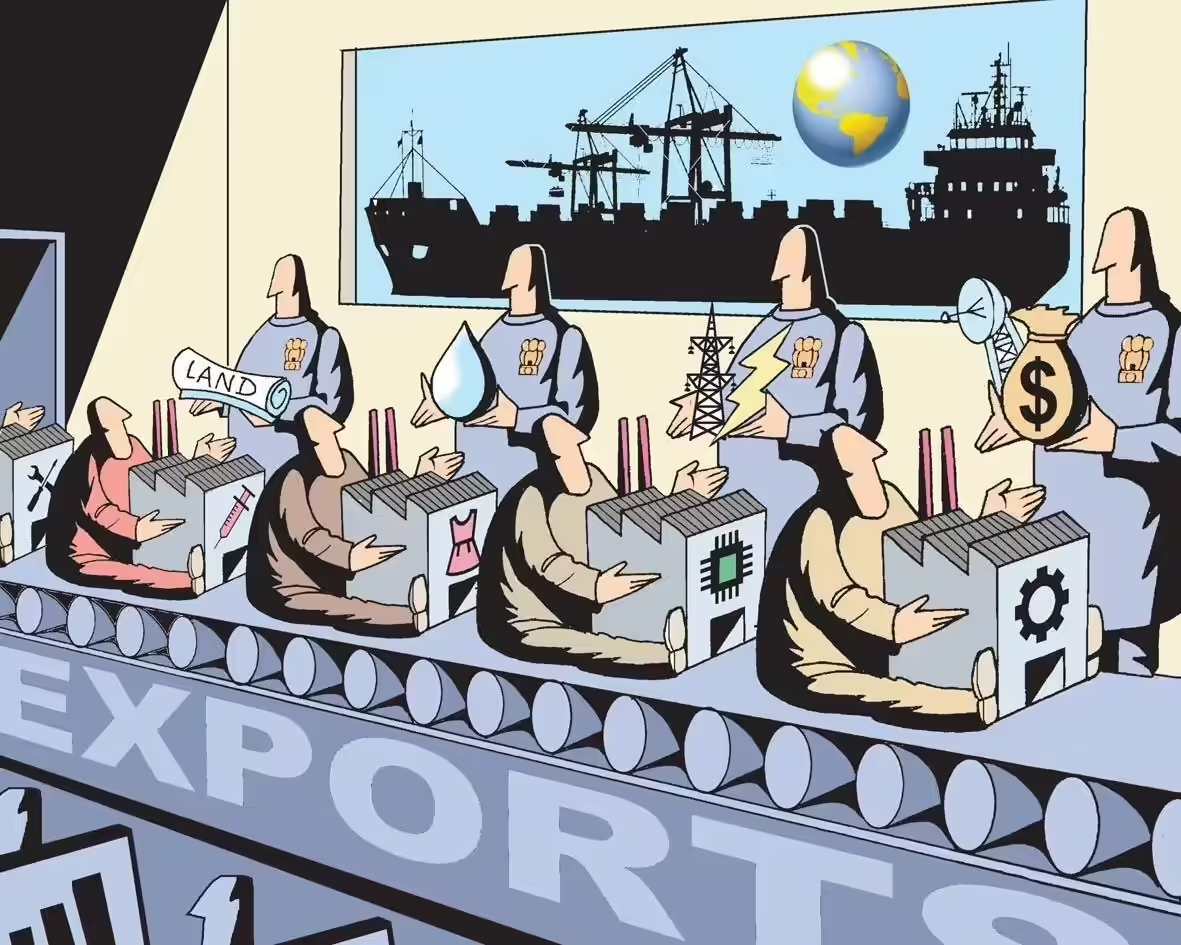
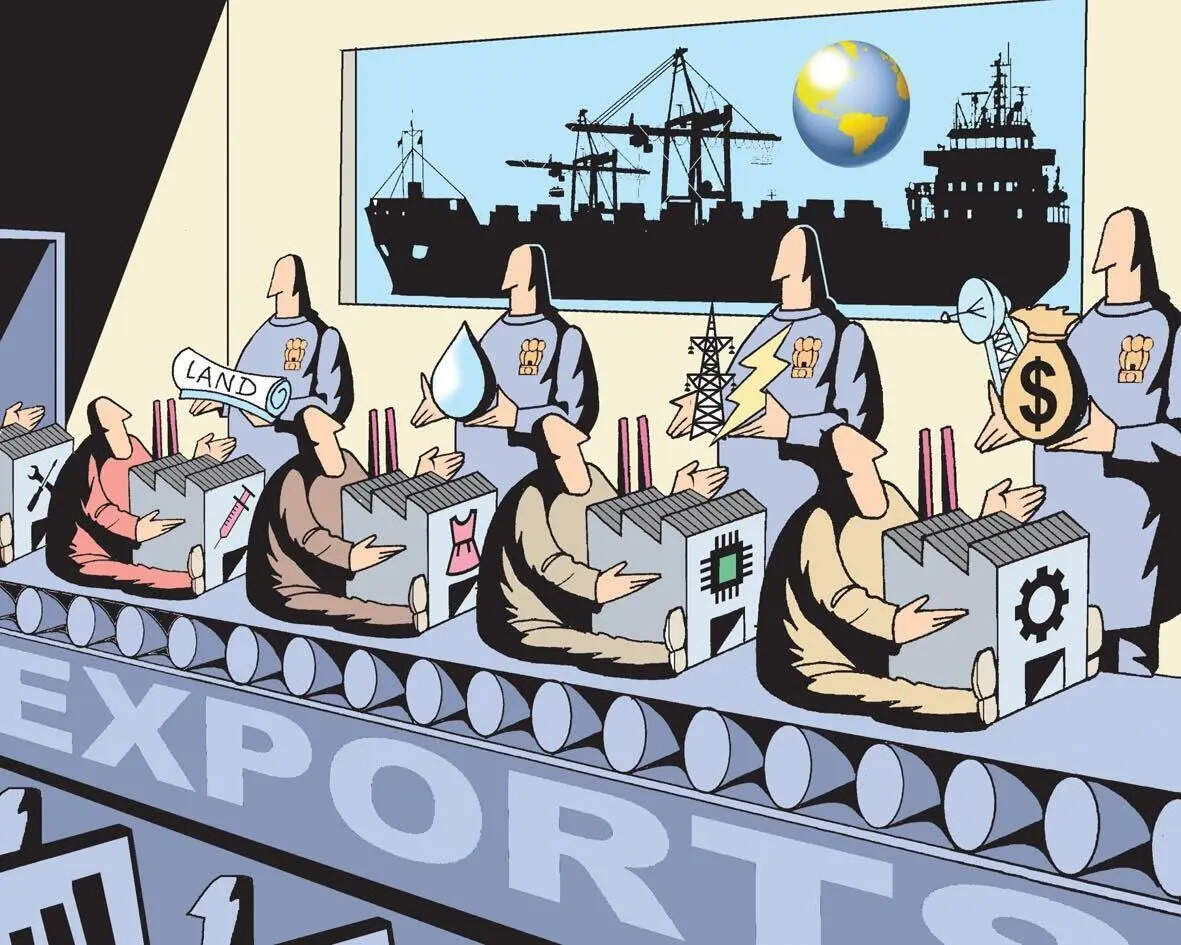
Ahmedabad: Gujarat has retained its position as India’s largest exporting state in 2025-26, accounting for more than a quarter of the country’s outbound trade even as global headwinds and softer commodity prices weighed on export values.According to data released by the Directorate General of Foreign Trade (DGFT), Gujarat recorded exports worth $110.63 billion during the fiscal year, representing 25.6% of India’s total exports. The state remained well ahead of Maharashtra, which ranked second with exports of $70 billion and a 16.2% share of the national export basket.While Gujarat maintained its dominance, exports declined 4.9% year-on-year compared to 2024-25. Trade officials attributed the fall primarily to tariff-related challenges in key international markets and subdued prices of major export commodities.DGFT officials noted that stable crude oil prices and continued weakness in natural diamond prices affected the overall value of exports from sectors that form a significant part of Gujarat’s trade profile.Dr Rahul Singh, joint director DGFT, said Gujarat’s sustained leadership reflects long-term structural advantages. “Gujarat has been at the top in the ranking of major exporting states. It has entrepreneurship, good infrastructure, proactive policies and port connectivity, which have played a key role in establishing it as a global supplier,” Singh said.Industry experts said petroleum and petrochemicals continue to anchor Gujarat’s export performance. Jamnagar remained the state’s largest exporting district, followed by Ahmedabad, Surat and Kutch, underscoring the importance of refining, manufacturing and port-based logistics ecosystems.Besides petroleum products, Gujarat’s export basket includes pearls and semi-precious stones, pharmaceuticals, organic chemicals, ceramics, agrochemicals, and iron and steel products.Sudhanshu Mehta, secretary of the Gujarat Chamber of Commerce and Industry (GCCI), said the state’s refining infrastructure remains a critical driver of exports. “Refineries like Reliance’s in Jamnagar along with Nayara Energy and IOC’s Koyali plant play a major role,” he said.Mehta added that investments in petrochemical hubs at Dahej and Vadodara have helped create a strong downstream manufacturing base. “Beyond refining, Gujarat developed petrochemical hubs in Dahej and Vadodara, which catalysed the growth of downstream industries,” he said.The expansion of these industrial ecosystems has enabled Gujarat to diversify its export portfolio and deepen its presence in international markets. “As a result, the state now leads in exports of chemicals, textiles, plastics, and pharmaceuticals to markets in Southeast Asia, Africa, and the Middle East,” Mehta said.Industry leaders also pointed to a mixed global environment during the year. Manish Kiri, chairman and managing director of a chemical company, said tariff barriers posed challenges for exporters, particularly in the United States. “US tariffs affected exports in 2025-26 but weak rupee increased competitiveness in the international markets,” he said.