





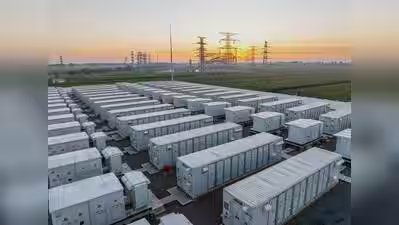
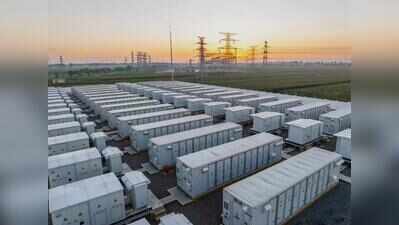
Ahmedabad: Gujarat has emerged as India’s second-largest market for installed battery energy storage capacity, accounting for 20% of the country’s cumulative 9.3 GWh capacity as of June 2026, according to a Mercom India Research report.Rajasthan led the country with a 36% share, while Maharashtra ranked third with 5%. Together, the three states accounted for at least 60% of India’s installed battery storage capacity.Gujarat’s position is stronger in the project pipeline. The state has the largest pipeline of standalone battery storage capacity in the country, ahead of Rajasthan and Andhra Pradesh, the report said.“Gujarat is taking the lead in battery energy storage systems (BESS). The state has the highest solar rooftop capacity in the country and ranks second in solar capacity. As renewable energy grows, the need for firm and round-the-clock power will also increase. Solar is available only during solar hours, while wind generation fluctuates seasonally. This makes a combination of solar, wind and energy storage increasingly important,” said Shalini Agarwal (IAS), MD, Gujarat Urja Vikas Nigam Limited.According to Mercom, India’s energy storage installations spiked in the first half of 2026 as large-scale standalone battery storage projects moved from tenders and policy announcement phase to installations on the ground.“The need for storage is growing with rising solar additions, higher daytime generation, rising curtailment, and harder-to-meet evening demand. The outlook is strong, with a large pipeline, but the growth will depend on how quickly tendered capacity moves to auctions and awards, and whether projects have bankable contracts, reliable grid infrastructure, stable supply chains, and workable project economics,” said Raj Prabhu, CEO of Mercom Capital Group.The Gujarat pipeline points to further expansion. Standalone battery storage accounts for more than half of India’s development pipeline. Solar-plus-storage and solar-plus-wind projects with storage each account for about 15%, according to Mercom. The development pipeline is more than eight times the country’s installed battery storage capacity.“For Gujarat, as an industrial state with strong growth in commercial activity, both BESS and pumped storage will be focus areas. Pumped storage projects have longer implementation timelines, while battery storage can be deployed faster. The state has therefore made BESS a thrust sector under its Viksit Gujarat Industrial Policy and is offering incentives to support investment,” Agarwal said.