








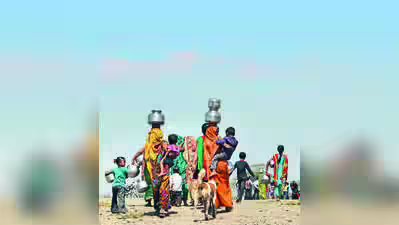
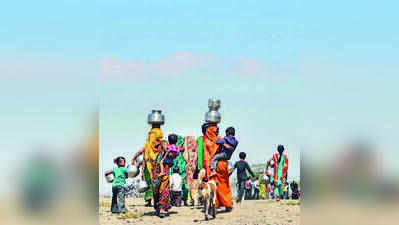
The spectre of acute water scarcity has returned to haunt Saurashtra and Kutch, ending nearly two decades of relative water security.Erratic monsoon patterns driven by El Nino conditions have left large parts of the peninsula under growing strain even before the season has run its course. Groundwater levels are falling; fodder is running short; and crops are wilting in the fields. Pastoralists have begun moving livestock in search of grazing land, while farmers growing groundnut and cotton are pressing for irrigation water and relief as losses mount.According to IMD data, the rainfall deficit in Saurashtra and Kutch is nearly twice the state average. Gujarat received 516.9mm against the normal of 643.7mm between June 1 and Sept 10, a deficit of 20%. Saurashtra and Kutch received 294.8mm against the normal 481.8mm, leaving a deficit of 38%.For much of the past 20 years, the visual vocabulary of drought had begun to fade from daily life in the region. Tanker queues, parched wells and long walks for water were no longer the defining images of Saurashtra and Kutch. Better rainfall and the spread of Narmada waters had, for years, quelled the region’s old anxieties. For those born after 1995, severe scarcity was largely a story from another time. This season, it feels closer.Herds move as fodder runs outIn the arid rangelands of Kutch and Devbhumi Dwarka, an acute shortage of green fodder and potable water is driving livestock breeders out of their traditional habitats. Pastoralists from Abdasa, Lakhpat and Nakhatrana have begun moving thousands of cows, buffaloes, sheep and goats towards north and central Gujarat in search of pasture and water.
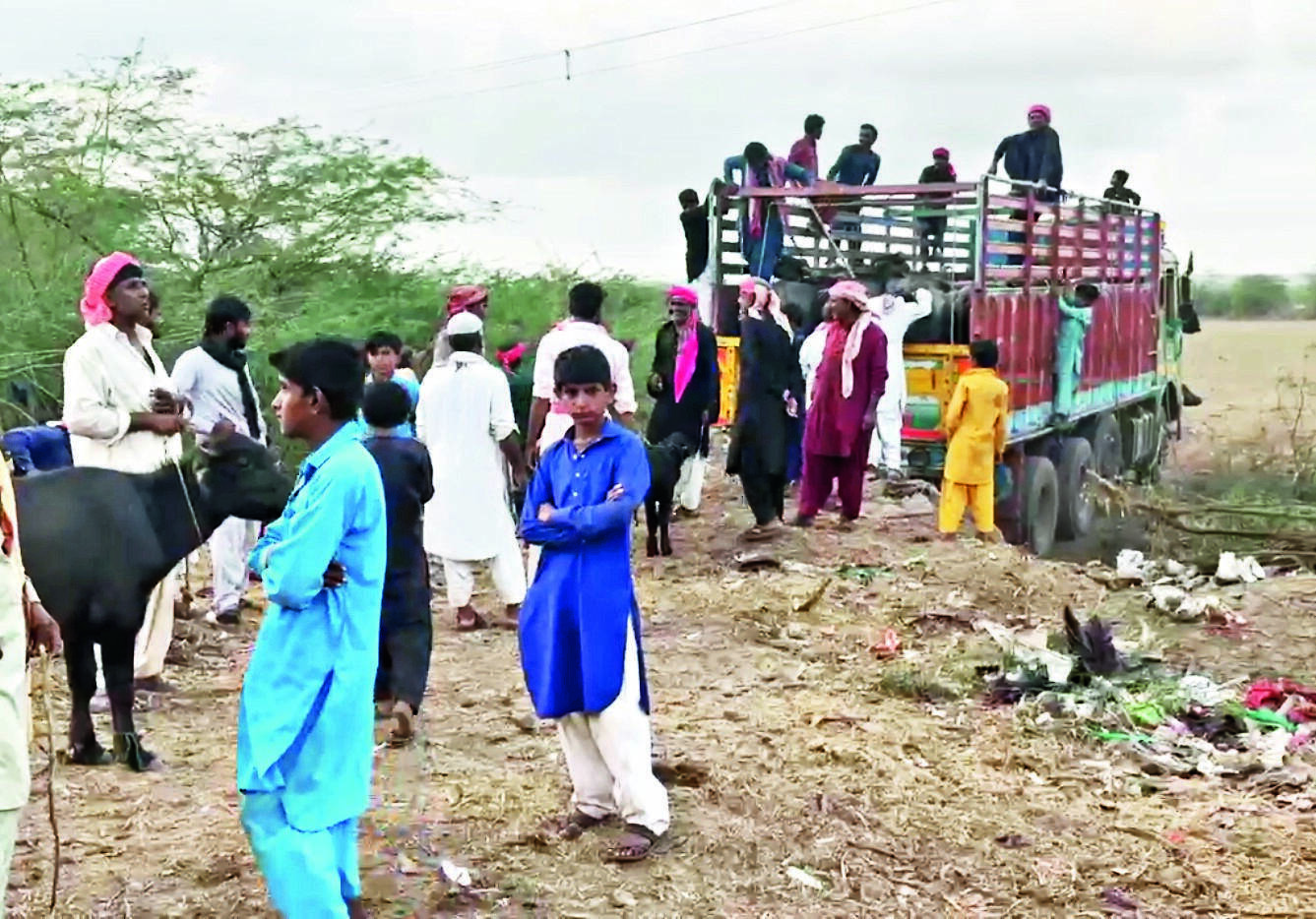
Pastoralists from Kutch have begun moving livestock towards north and central Gujarat
Ramesh Bhatti, programme director of Sahjeevan, said the impact has been uneven across Kutch. Narmada waters have cushioned Anjar, Rapar and Bhachau in the east, but western Kutch is seeing its first major pastoral migration since 2018. The concern spilled over into a statewide convention of panjrapol operators and pastoralists in Rajkot, where community leaders appealed to social organisations and animal welfare groups to begin relief efforts rather than wait for govt aid.The Kutch district administration said it opened 52 grass distribution depots, issued 27,750 cards and distributed 17.35 lakh kg of grass by Sept 10. Pastoral leaders say that is nowhere near enough.“We have 1.5 lakh animals. How is 17 lakh kg of grass sufficient?” said Isha Mutva, president of the Banni Breeders Association. “The govt provides grass for five animals under one card, while a single breeder may have 50 to 150 animals. What is being distributed is only a fraction of the requirement.”The fodder squeeze has hit the dairy value chain directly, causing a deficit in daily milk procurement and driving up retail prices for products such as paneer and ice cream. Valamji Humbal, chairperson of Kutch District Cooperative Milk Producers Union Ltd, or Sarhad Dairy, says daily milk procurement has fallen to about 4 lakh litres against an expected 5 lakh litres.Dry spell hits cash crops hardAgrarian groups in Saurashtra want severely affected areas declared drought-hit as groundnut and cotton crops face rising stress. Gujarat accounts for roughly 40% of India’s kharif groundnut production, with much of it concentrated in Saurashtra and Kutch. The state typically produces between 40 lakh and 50 lakh tonnes a year.
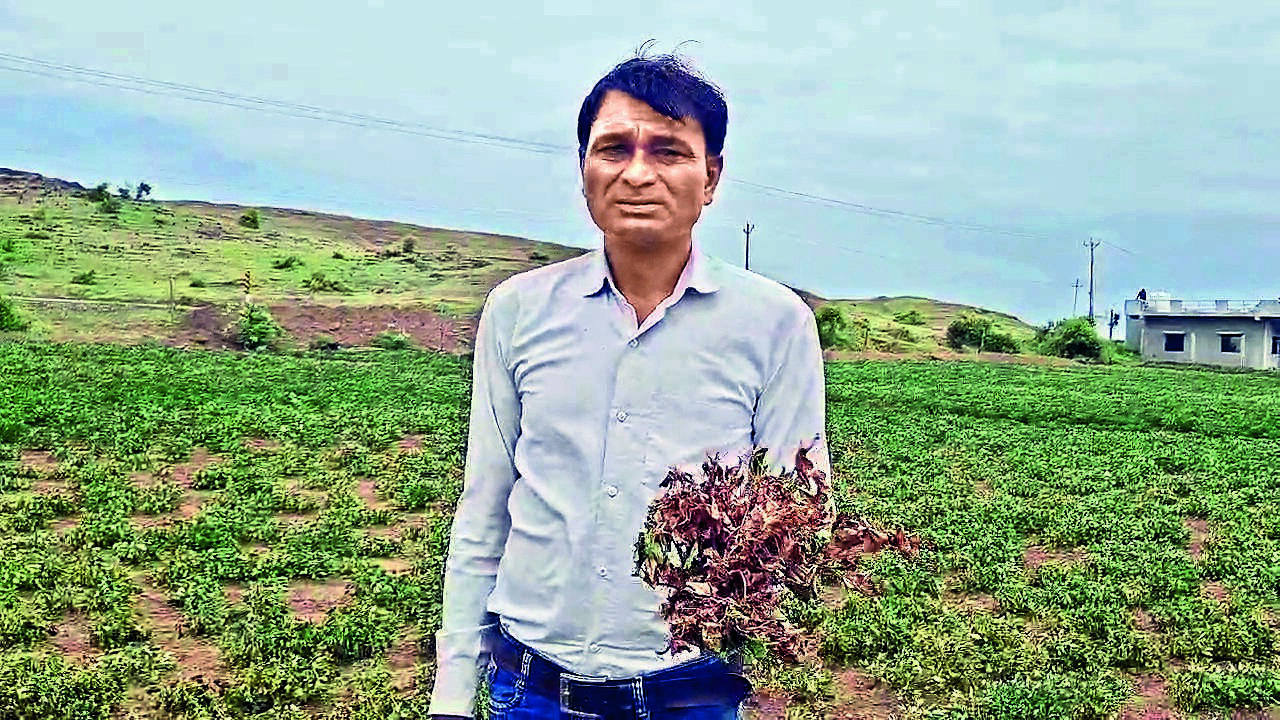
A farmer holds a wilted groundnut plant
“Farmers in Dwarka and Porbandar districts are being forced to harvest whatever is left in their fields because the crops have failed due to water scarcity,” warned Kishor Viradiya, president of the Saurashtra Oil Mills Association. “We fear a major groundnut crop failure this year if there is no significant rain in the next 10 days.” Viradiya said irrigated fields may still produce a crop, but much of the surviving groundnut could head to the raw peanut market rather than to oil mills for crushing. For farmers without access to irrigation, the damage is already more immediate.Ali Zakhra, a farmer from Zinzuda village in Amreli district, sowed cotton on 15 bighas and groundnut on another 12. His well has run dry and nearby rivers have little water left. “I sowed cotton three times this season hoping it would survive, but there was neither rain nor irrigation water as the local rivers had dried up. We have now let the cattle graze in our fields.”Pressure mounts for govt actionThe growing distress has also sharpened political pressure on the state govt.AAP leader Gopal Italia accused govt of being insensitive to farmers. “It has substantial funds lying unutilised and is spending crores on publicity events, yet it is not coming to the aid of farmers. If help does not come now, the distress could push farmers to suicide,” Italia said. Congress leader Amit Chavda also demanded immediate irrigation water and cash assistance. “Farmers need to be given water immediately to prevent complete crop failure,” Chavda said. “They have suffered losses on multiple fronts and need govt support now.”However, on Friday, Gujarat govt said in the assembly that it would not declare drought in districts solely on the basis of rainfall deficiency, stressing that a scientific assessment of crop conditions and ground verification would be required before taking such a decision.Govt said the state had received 75.43% of its seasonal average rainfall as of Sept 3. Meanwhile, IMD has forecast a wet spell until Sept 15, but it is unlikely to erase Saurashtra’s deficit.— With inputs from Kapil Dave