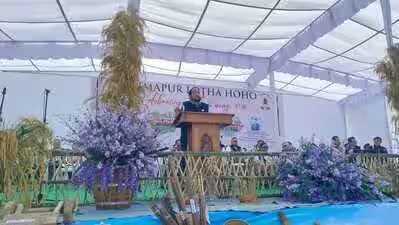









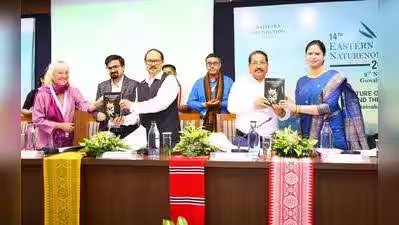
Guwahati: Calling for a shift from conventional approaches to sustainable development towards restoring degraded landscapes, improving soil health and strengthening ecological resilience, Gauhati University vice-chancellor Prof. Nani Gopal Mahanta said, “Nature takes hundreds of years to create a layer of fertile soil, yet a single spell of heavy rainfall can wash it away.”He was speaking at a day-long deliberation on sustainable landscapes, ecological restoration and the future of the Eastern Himalaya, hosted by Gauhati University recently as part of the 14th Eastern Himalayan Naturenomics Forum.Highlighting the close connection between hills, forests, farmlands, wetlands and rivers, he said soil erosion in the hills directly affects downstream rivers, agricultural lands and communities.Referring to recurring floods in districts like Dhemaji, Barpeta and Majuli, he called for integrated management of land and water resources, noting that nearly 40% of Assam’s geographical area is vulnerable to floods.He also underlined the role of traditional knowledge in conservation, citing the Apatani community’s centuries-old ‘Aji-Ni’ integrated rice-fish farming system in Ziro, Arunachal Pradesh, and the nearly 500-year-old ‘Zabo’ water-management system in Nagaland’s Phek district as examples of sustainable practices promoting water conservation, soil fertility and erosion control. He also highlighted Gauhati University’s campus as an example of biodiversity conservation.Assam Agricultural University vice-chancellor Prof. Dipjyoti Rajkhowa said the climate crisis demanded greater emphasis on ecological restoration across the Northeast and the Himalayan region.“At a time when we are confronting the crisis of climate change, the Northeast and the entire Himalayan region require not just conservation but restoration. It is our responsibility to restore ecological balance through sustainable and regenerative land management practices, because protecting the Himalaya means securing our future,” he said.The inaugural session also featured addresses by Adrit Mishra, chief operating officer, Tata Starbucks India; Meg Lowman, founder, Tree Foundation; and Vaswatii Sarmah Barthakur, head of regional strategy and ecosystem, TSAT, who shared perspectives on environmental challenges and emerging opportunities in the Eastern Himalaya.A key highlight was the release of Wild Plants of Assam-I: A Pictorial Guide, authored by Jintu Sharma, Dipankar Bora and Niku Das, documenting the state’s rich botanical diversity.The event also brought together scientists, researchers, policymakers and industry representatives for an interaction with Prof. Mahanta and Balipara Foundation founder and president Ranjit Barthakur.Participants from India, Japan, Bhutan, Nepal, Myanmar, Thailand, the US and New Zealand, along with students from across the Northeast, attended the forum.